
If the Church Disappeared Tomorrow, Bradford Would Feel It

It’s always the loudest and ugliest that get the most attention. That’s true in politics, online arguments — and it’s especially true when people talk about churches. The online space is filled with commentators who call out celebrity pastors and their $6,000 sneakers and private jets.
“Tax the churches!” they say. Or “Religion is just a business.” or “Churches are always asking for money!”
Believe me, I get the cynicism. A small number of celebrity pastors have abused their influence, and their scandals spread far and wide. But those headlines—shocking as they may be—don’t reflect what churches actually look like in places like Bradford.
What most people don’t see is that the average church in America is not a 5,000 seat media production powerhouse. The reality is much more humble: the median church is about sixty-five people in weekly attendance. A church that reaches 200 in attendance is in the top 10% of churches in America. That means the outlying massive megachurches with their television ministries that are asking you to send them “seed money” are a very small representation of what the church looks like.
A median salary for most pastors in the U.S. is around $45,000 to $55,000 a year—and many make far less, often working two jobs just to support their families. These aren’t CEOs of corporations. They’re community members who work long hours like everyone else, the same people who stand with you on your best days and in your hardest moments.
Most churches don’t have endowments or outside funding—quite the opposite. They survive almost entirely on the generosity of the people who attend and the community that believes their presence matters.
Lately I’ve welcomed a lot of young adults into the faith, and their questions remind me how much we take for granted. One asked me, “Where does the church get the money to do all this? Does the government help?” He couldn’t believe it when I told him the truth: most of what we do is funded entirely by the generosity of the people who sit in our chairs each week—people who give because they love God and love their neighbors, not because anyone twists their arm.
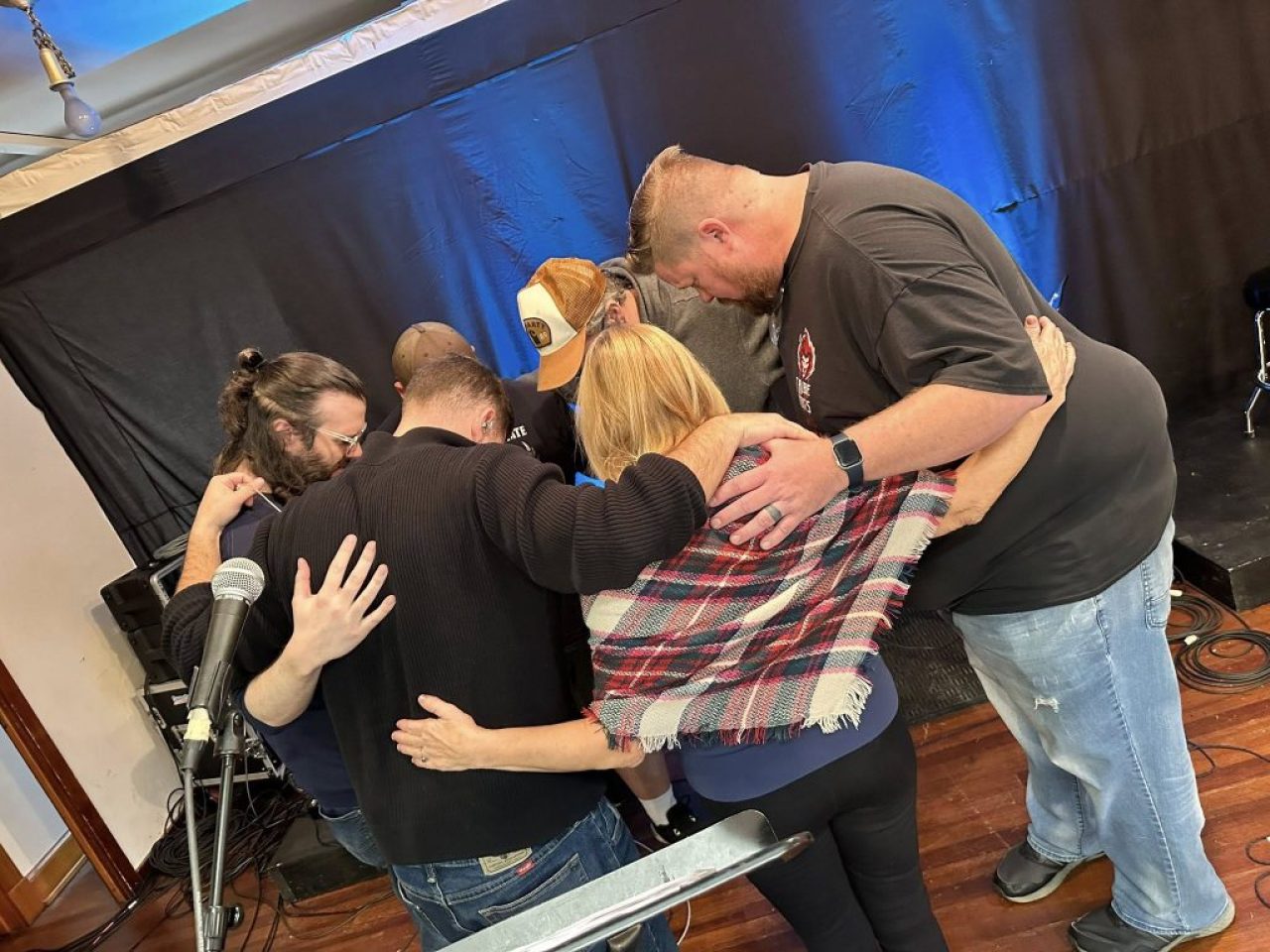
I’ve seen this firsthand at Open Arms Community Church here in Bradford. We’re not a megachurch, not a corporation — we’re a local congregation made up of ordinary people trying to make a difference in the place we all call home.
Living in McKean County is certainly a haven in comparison to other parts of the country where crime and crisis run rampant. We’re relatively safe if you compare the statistics to Philadelphia, for example. But we’ve seen some headlines this past year that have rocked us – so many stories of violence, child abuse, overdose deaths, and families falling apart under the weight of addiction and crisis. No child dreams of growing up to land in prison. No newlywed couple stands at the altar planning for alcoholism or domestic abuse. No teenager imagines their adult life beginning and ending with an overdose. People don’t choose these endings because they want them; they arrive there through layers of trauma, hopelessness, and despair that build slowly over time.
And that is precisely why the presence of a healthy church in a community matters. Churches aren’t just places for religious ritual; at their best, they are places where someone finds help before the crisis becomes the headline. They are spaces where people talk through their wounds instead of acting out of them. A church is where friendships provide accountability before someone makes the decision they can’t take back. It’s where a struggling parent learns skills that bring stability back into a chaotic home, and where an addict finds support through the long journey toward freedom — not judgment. It’s the quiet work of a volunteer talking a teenager out of a terrible decision at 10PM on a school night — work that never shows up on the front page but absolutely changes the outcome.
Much of what churches do is preventative work you’ll never see on the news. It’s not flashy. It doesn’t trend. It happens quietly, behind the scenes, in living rooms, over cups of coffee, in late-night phone calls, in hospital waiting rooms, and in the small, consistent moments where one life influences another. It is the kind of work that reduces despair long before despair becomes destructive. And it is the kind of work that no government program nor nonprofit model can fully replicate, because it depends on relationship, community, and the belief that every person — every single one — is worth fighting for.
People say the church only wants money. But what the church really wants is fewer funerals, fewer broken homes, fewer kids lost to despair, fewer headlines that break our hearts.
So yes, churches ask for support. But not because pastors are living the high life, and not because churches are sitting on piles of cash. Churches ask for support because the work of helping a community heal takes resources: buildings that stay open, staff who can give their time, meals that need to be purchased, programs that need materials, and a hundred other practical needs that make compassionate work possible. The church isn’t asking for money to prop up an institution. It’s asking for partnership to strengthen a community.
A better question to ask might be this: what would happen to a town like Bradford if the churches disappeared? What would happen to the families in crisis, the kids who need mentors, the elderly who are lonely, the people battling addiction, the ones on the edge of despair?
It’s not just the organization doing the work. It’s the people, and the church is the vehicle that allows them to get connected to relationships where people can help each other. Let’s ask the question: If you were in trouble at 11PM, who would you call for help? Many people don’t have someone. But if you’re in a good church, you are in a network of people who have your back.
The church isn’t perfect. No human institution is. But despite its imperfections, it remains one of the last places still committed to stepping into the darkest parts of people’s lives with hope, compassion, and the stubborn belief that redemption is possible. Not for money. Not for prestige. But because we love the place we live, and we refuse to give up on the people who call it home.
If our community is ever going to turn the tide on the despair captured in our headlines, we’re going to need strong families, safe kids, supportive friendships, open doors, listening ears, and the kind of hope that grows in relationship, not isolation. The church is one of the few institutions still fighting for all of that. And for that reason alone, it’s worth supporting.
December 2 is Giving Tuesday. I’m asking that even if you aren’t a part of a local church, that you consider giving to support one. You can give to any of the churches in our community and I know it will make a difference.
If you aren’t sure which church to choose, let me humbly recommend that you give to our Local Impact Fund at Open Arms Community Church. The vision at Open Arms is “Restored Lives in Christ” and “Transformed Community for God’s Glory”. We’re in the fight to make people’s lives better, to make our community better.
For more information about how to give this Giving Tuesday, visit https://openarmscommunitychurch.org/push-back-the-darkness/


December 3, 2025 @ 1:33 am
I know this is a fact, I’ve been released back into the community probably a dozen times over the course of 30 plus years and every single time id get out never went to church to many folks looking down there nose at me judging me rubbed me the wrong way all that religion asking for money never bothered me cause I never had any but the religion part of it threw me off and never went on a regular basis , until I found myself in Bradford Pennsylvania on a release back into the community raging drug addict on the loose again an opportunity come up where I was bored to death had this little tiny flame burning in me to do the right thing I was offered an opportunity to go to open arms church in Bradford Pennsylvania with a couple guys I was in a 3/4 house with so I went n i got connected and here it is 9 yrs later n im still out still alive 2 and 2 is still 4 , so 12 releases without an opportunity or without an offer i should say to go to church i never made it 9 months let alone 9 years. Know this being involved in a church i pray for people, if im not involved in a church I prey on people, and thats been fact checked by me personally. What happens to a community if the churches disappear it will not be a nice place to live no more
What a Town Loses When the Church Stops Showing Up - Josh Hatcher
January 23, 2026 @ 2:47 pm
[…] I explored that question directly in a piece I wrote for my own church and community in Bradford, Pennsylvania. In that article, I asked what would actually be lost if Open Arms Community Church […]