There are a hundred reasons why someone stops going to church.
Sometimes life just gets busy.
A Sunday gets missed. Then another. Before long, months have passed.
Sometimes it’s more complicated than that.
Maybe you had questions you didn’t feel like you were allowed to ask.
Maybe somebody in a church hurt you.
Maybe life changed. A relationship ended. You moved. Your family changed. You started working weekends. You walked through grief. You struggled with addiction. You made choices you’re not proud of.
Or maybe you’ve never really been to church at all.
Whatever your story is, we want you to know something:
You are welcome at Open Arms.
You don’t have to get your life together first
Sometimes people tell us, “I need to get some things straightened out before I come to church.”
But that’s not how Jesus works.
Throughout the Gospels, Jesus met people right in the middle of their lives. He ate with people other religious folks avoided. He welcomed people carrying shame. He listened to people with questions. He touched people everyone else kept at a distance.
They didn’t transform their lives so they could come to Jesus.
They came to Jesus, and He transformed their lives.
That’s still what He does.
You can bring your questions
Maybe you’re not sure what you believe anymore.
That’s okay.
Faith isn’t pretending you don’t have questions.
You don’t have to walk into Open Arms already agreeing with everything. You don’t need a theology degree. You don’t need to know the Bible.
Come. Listen. Ask questions. Meet some people. Discover Jesus for yourself.
Your questions don’t scare God.
If you’ve been hurt by church, we understand why coming back is hard
Churches are filled with imperfect people, and sometimes people hurt each other.
Sometimes that hurt is serious.
We aren’t going to dismiss it or tell you to simply get over it.
But we hope the failures of people won’t keep you forever from encountering Jesus.
If you’re willing to try again, you can take it slowly.
Sit in the back.
Listen.
You don’t have to tell anybody your whole story.
Just come and see.
You don’t have to pretend here
Our purpose at Open Arms is:
Real people helping people become more like Jesus as a family.
The first two words matter.
Real people.
We’re not interested in creating a room full of people pretending they’ve got life figured out.
We believe Jesus restores lives.
And restoration means there had to be something worth restoring.
So bring your story.
Bring your family.
Bring your questions.
Bring your struggles.
Bring your hopes.
Come as you are.
Maybe this Sunday is your Sunday
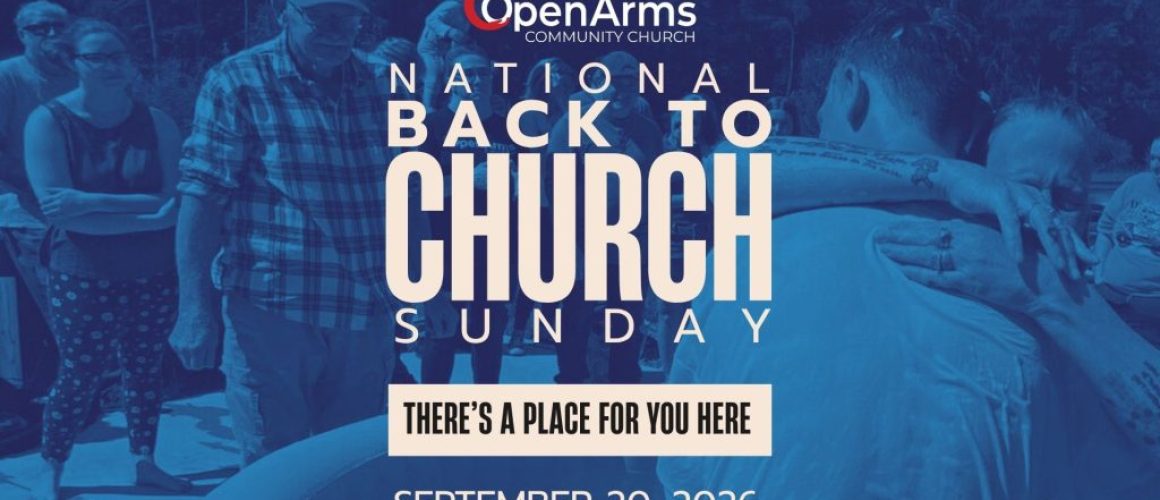
Sunday, September 20 is National Back to Church Sunday, and we’re inviting Bradford and the surrounding communities to join us at Open Arms Community Church.
If it’s been ten weeks, ten years, or you’ve never walked through the doors of a church before, you’re invited.
You don’t have to promise us anything.
You don’t have to sign up for anything.
You don’t have to know what comes next.
Maybe you just need to take one step.
We’ll be here when you do.
Back to Church Sunday Sunday, September 20 at 10 AM Open Arms Community Church 71 Congress St., Bradford, PA
If you have spent much time in church, you have probably experienced Communion in some form. Bread and juice are brought out, a prayer is offered, we eat, we drink, and the service continues. But why? Why has the Church continued this practice for nearly 2,000 years? Why did Jesus choose bread and a cup? Is Communion simply something Christians do to remember Jesus, or is something deeper happening when we gather at His table? In Part 15 of our BASICS series, Assistant Pastor Dan Robinson explores what Scripture teaches about Holy Communion and why this sacred meal continues to matter for followers of Jesus today.
Watch the Sermon
What Is Holy Communion?
Holy Communion is one of two sacraments, and the Church’s ongoing act of thanksgiving and remembrance by which we participate in Jesus’ death and resurrection. It is also known as the Lord’s Supper, because Jesus instituted it and is its host, and the Eucharist, a name rooted in the idea of thanksgiving. Whatever name we use, Communion is a sacred meal given by Jesus Christ to His Church.
Paul gives us one of the clearest biblical descriptions of Communion in his first letter to the Corinthians:
For I received from the Lord what I also passed on to you: The Lord Jesus, on the night he was betrayed, took bread, 24 and when he had given thanks, he broke it and said, “This is my body, which is for you; do this in remembrance of me.” 25 In the same way, after supper he took the cup, saying, “This cup is the new covenant in my blood; do this, whenever you drink it, in remembrance of me.” 26 For whenever you eat this bread and drink this cup, you proclaim the Lord’s death until he comes. 1 Corinthians 11:23–26
Communion was not an idea the early Church came up with later. Jesus intentionally gave this meal to His disciples on the night before His crucifixion. He took ordinary elements—bread and the cup—and connected them to what He was about to do on the cross.
That means Communion is much more than a religious tradition or a small snack near the end of a church service. When we come to the table, we remember Jesus Christ: His body given for us, His blood shed for us, His death for our sin, and His victory that gives us life.
Why Is Communion a Sacrament?
The Free Methodist Church recognizes two sacraments instituted by Christ: Baptism and Holy Communion. A sacrament is a sacred action through which something physical and visible points us toward an invisible spiritual reality.
In Baptism, there is water. In Communion, there is bread and the cup. These are ordinary, tangible things. We can see them, touch them, and taste them. Yet God has chosen to use these physical actions in the spiritual lives of His people.
We are physical beings, so God gives us tangible things to do as Christians. We are also spiritual beings, and God graciously uses these physical actions as a means through which He gives grace. Through the sacraments, we learn to imitate Jesus and become participants in His story.
Recognizing Communion as a sacrament keeps us from treating it casually. Jesus gave His disciples this meal on the night before His suffering and death and told them to do it in remembrance of Him.
And he took bread, gave thanks and broke it, and gave it to them, saying, “This is my body given for you; do this in remembrance of me.” Luke 22:19
Communion takes us back to the cross. It reminds us that Christianity is built on something God has actually done. Jesus gave His body for us. His blood was shed for us. He died for our sin, defeated death, and gave us life.
The bread and juice matter because Jesus chose them, but ultimately they point beyond themselves. Communion is about Jesus.
Why Do Christians Take Communion?
Paul’s teaching in 1 Corinthians shows us several important reasons Christians regularly receive Communion. At the table, we remember what Christ has done, proclaim the Gospel, examine our hearts, and experience our unity as the body of Christ.
We Remember
Jesus tells His followers to receive Communion in remembrance of Him.
and when he had given thanks, he broke it and said, “This is my body, which is for you; do this in remembrance of me.” 1 Corinthians 11:24
Remembering is deeper than simply recalling the fact that Jesus died. The cross should never become so familiar to us that we stop being moved by what happened there. Communion deliberately brings the reality of Christ’s sacrifice back to the center of our lives.
Humanity was consumed by sin and separated from God, yet the only perfect One to ever live took upon Himself the sin of the world. Jesus willingly gave Himself for us. When we receive Communion, we remember that the cross is not merely an event from ancient history. Christ’s death was for us. His sacrifice is the reason forgiveness, reconciliation, and new life are possible.
We Proclaim
Communion also makes a proclamation.
For whenever you eat this bread and drink this cup, you proclaim the Lord’s death until he comes. 1 Corinthians 11:26
Communion is a sermon without a pulpit. Every time the Church eats the bread and drinks from the cup, we proclaim the central truths of the Christian faith: Christ died. Christ rose. Christ saves. Christ is coming again.
Together, those truths tell the story of the Gospel. We remember a Savior who gave His life for us, celebrate a Savior who defeated death, trust the Savior who rescues us from sin, and look forward to the return of our King. Communion is therefore not merely something we receive. Through this simple meal, the Church continues to tell the story of Jesus.
We Examine Ourselves
Communion also calls us to look inward.
Everyone ought to examine themselves before they eat of the bread and drink from the cup. 1 Corinthians 11:28
That instruction can easily be misunderstood. Examining ourselves does not mean asking, “Am I perfect enough to receive Communion?” If perfection were the requirement, none of us could approach the table.
Instead, we should ask, “Am I willing to bring my sin honestly before Jesus?”
Communion should produce reflection and repentance. It gives us an opportunity to stop, examine the posture of our hearts, and invite the Holy Spirit to reveal what needs to be surrendered to God.
Sin can be uncomfortable to confront. We may hide it from other people or convince ourselves that because no one else knows about it, it does not matter. But Christ knows our hearts. We do not need to hide from Him.
The Communion table is not a reward for people who have everything together. We come because we need the grace of Jesus.
We Experience Unity
Communion also reminds us that Christianity is not simply about “me and Jesus.”
Is not the cup of thanksgiving for which we give thanks a participation in the blood of Christ? And is not the bread that we break a participation in the body of Christ? 17 Because there is one loaf, we, who are many, are one body, for we all share the one loaf. 1 Corinthians 10:16–17
Paul connects the one bread with the one body. Communion is not merely me and Jesus; it is us and Jesus. Jesus did not die only to reconcile isolated individuals to God. He created a people, a family, and a body.
When we receive Communion together, we are reminded that we belong to something larger than ourselves. We are connected to the people beside us, but we are also connected to followers of Jesus around the world who gather at the same table.
Different churches may worship differently. Christians come from different cultures, nations, backgrounds, and traditions. Yet in Christ, we are one body.
Communion Is a Means of Grace
Free Methodist doctrine describes the sacraments as a means of grace through faith. Through them, God works within believers to “quicken, strengthen, and confirm” our faith.
This does not mean that eating the bread and drinking the cup saves us. Communion is not a religious transaction in which performing the right action earns salvation or favor from God. It means God has graciously given His Church tangible practices through which He ministers His grace to His people.
We do not come to the table because we have earned grace. We come because we need grace.
That distinction matters. Grace, by definition, cannot be earned. There is nothing we can do or say to deserve the never-ending grace God has for His people. Yet God continually provides a way for us to draw near to Him. Communion is one of those ways.
As we come in repentance and faith, Communion strengthens us to continue trusting and following Christ.
What Happens to the Bread and the Cup?
Jesus’ words at the Last Supper have led to centuries of discussion among Christians about exactly what happens in Communion.
And he took bread, gave thanks and broke it, and gave it to them, saying, “This is my body given for you; do this in remembrance of me.”
20 In the same way, after the supper he took the cup, saying, “This cup is the new covenant in my blood, which is poured out for you Luke 22:19–20
There are several major ways Christian traditions have understood these words.
Transubstantiation, traditionally associated with Roman Catholic theology, teaches that the substance of the bread and wine becomes the actual body and blood of Christ, even though the outward characteristics of bread and wine remain the same.
Consubstantiation or sacramental union, often discussed in connection with Lutheran theology, holds that the bread and wine remain bread and wine while Christ’s body and blood are truly present with them.
The Free Methodist understanding is described here as real spiritual presence. We do not teach that the elements literally transform into Christ’s physical body and blood, nor do we affirm the literal bodily presence of Christ “with” the elements. But neither do we treat Communion as an empty symbol.
We affirm the real presence of Christ in the sacrament. Christ’s body is received in a “heavenly and spiritual manner” through faith. The bread and cup remain bread and the fruit of the vine, but Christ truly meets His people at His table through the Holy Spirit, and we receive Him by faith.
Communion is therefore more than remembering something that happened long ago. The risen Christ meets His people at His table as we receive by faith.
Why Bread and Grape Juice?
The simplest reason we use bread and the fruit of the vine is because these are the elements Jesus chose. But Scripture also gives them rich meaning.
Bread was ordinary in Jesus’ day, but it was a staple of life. Jesus Himself used bread to describe who He is:
Then Jesus declared, “I am the bread of life. Whoever comes to me will never go hungry, and whoever believes in me will never be thirsty. John 6:35
The broken bread points toward the body of Christ given for us. The cup points toward His blood poured out for our salvation and connects Communion with the biblical idea of covenant.
Moses then took the blood, sprinkled it on the people and said, “This is the blood of the covenant that the Lord has made with you in accordance with all these words.” Exodus 24:8
That covenant language appears again when Jesus gives the cup to His disciples:
20 In the same way, after the supper he took the cup, saying, “This cup is the new covenant in my blood, which is poured out for you.[a] Luke 22:20
Methodists have historically become associated with the use of unfermented grape juice for Communion, in part because of the Methodist connection to the temperance movement and pastoral concerns surrounding alcohol. The important distinction, however, is not the fermentation. The fruit of the vine represents Christ’s blood in the new and everlasting covenant.
The elements themselves are simple. Their significance comes from the One who gave them to us and what they proclaim about Him.
Who Can Receive Communion?
The Wesleyan and Free Methodist tradition practices an open table. This means you do not need to be a Free Methodist or a member of Open Arms Community Church to receive Communion.
But an open table does not mean a meaningless table.
The invitation is for those who truly and earnestly repent of their sins, seek to live in love and charity with their neighbors, and intend to follow Christ and draw near to Him through faith. This posture is deeply connected to Paul’s instruction that we examine ourselves before receiving Communion.
You do not need to have your entire life together. You do not need to pretend you have conquered every struggle. You do not need to reach some spiritual level where you no longer need grace.
Quite the opposite. If you recognize that you need Jesus, are willing to repent of your sins and turn toward Him, and desire to trust and follow Him, His table is exactly where you should be.
Age alone is not the defining issue, either. If someone can understand and articulate that Jesus loves them, Jesus died for them, they trust Jesus with their life, and the bread and cup remind us of what Jesus has done, those are the important pieces for understanding what it means to come to the table.
The table is open because grace is a gift. But we should never approach that gift casually.
Communion Looks Back, Within, Around, and Forward
One helpful way to bring all of this together is to consider the directions in which Communion asks us to look.
Communion Looks Back
We look back to the cross. Jesus told us to do this in remembrance of Him. We remember His body given for us and His blood shed for us. We remember the price of our salvation and the love that took Jesus to the cross.
Communion keeps us rooted in what Christ has already done. Our hope does not rest in our ability to save ourselves or make ourselves worthy of God. It rests in the finished work of Jesus Christ.
We remember what Christ has done.
Communion Looks Within
We examine our hearts. We invite the Holy Spirit to show us where sin has taken root, where repentance is needed, and where we have resisted God. We do not do this to determine whether we have finally become good enough for Jesus. We do it because honest repentance is part of drawing near to Him.
At the table, we acknowledge our need and open ourselves again to the grace God is giving us.
We receive what Christ is doing.
Communion Looks Around
We recognize the Church. There is one loaf because we who are many have been made one body in Christ. The people around us are not simply other individuals attending the same service. In Christ, they are family.
The table reminds us that following Jesus was never meant to be an individual pursuit. We belong to Christ, and through Christ we belong to one another.
We recognize who Christ has made us.
Communion Looks Forward
Finally, Communion points toward the future. Paul tells us that when we eat the bread and drink the cup, we proclaim the Lord’s death until He comes.
We are not merely waiting around to see what happens next. We anticipate the return of Christ. There is hope and expectation in anticipation. We anticipate the things we long for because we believe something good is coming.
Every celebration of Communion therefore points beyond itself. We remember the cross, but we also look toward the day when Christ returns.
We anticipate what Christ has promised to do.
Come to the Table
Holy Communion is much more than bread and juice. It is more than a church tradition we continue simply because Christians before us did it. Jesus gave this meal to His Church, and every time we gather at His table we are brought again to the heart of the Gospel.
We remember His sacrifice. We proclaim His death and resurrection. We examine our hearts. We experience our unity with His Church. We receive His grace through faith, and we look with hope toward His return.
So when you approach the Communion table, do not rush through the moment. Look back at the cross. Look honestly within your heart. Look around at the family Christ has created. Look forward to the return of the King.
We do not come because we have earned a place at His table. We come recognizing how desperately we need His grace.
We remember what Christ has done. We receive what Christ is doing. We recognize who Christ has made us. And we anticipate what Christ has promised to do.
Baptism is one of the most recognizable practices in Christianity. Even people who have never spent much time in church have probably seen a baptism at some point. Maybe they watched someone lowered beneath the water in a church baptistry, saw a pastor pour water over someone’s head, or grew up in a tradition where baptism meant being sprinkled with water as an infant.
But recognizing baptism isn’t the same thing as understanding it. Why do Christians do this? What does the water actually represent? Does baptism save us, or does salvation happen before baptism? Who should be baptized? What if you were baptized as a baby? Does it matter whether someone is immersed, poured, or sprinkled? Can you be baptized more than once? And when Christians talk about the “baptism of the Holy Spirit,” are they talking about the same thing?
Those were some of the questions we explored during our special Baptism Sunday at Marilla Landing. Pastor Dan Robinson and Pastor Zoe Hatcher from Open Arms Community Church were joined by Pastor Misty Surine from B-Free Church for a conversation about baptism before our churches had the privilege of celebrating baptisms together.
There probably couldn’t have been a more appropriate place for the conversation. We weren’t discussing baptism in the abstract. The water was right there, and before the morning was over, people would step into it and publicly declare their faith in Jesus.
Watch the full message on Youtube
Baptism has been part of the life of the Church from the beginning. Jesus Himself was baptized. He commanded His disciples to baptize others, and when the Gospel began spreading after His resurrection, new believers responded with repentance, faith, and baptism. Two thousand years later, followers of Jesus are still stepping into the water.
Matthew tells us that Jesus traveled from Galilee to the Jordan River to be baptized by John. John immediately recognized that there was something unusual about this. His ministry had been calling people to repentance, yet standing in front of him was Jesus, who had no sin from which He needed to repent. John initially resisted baptizing Him, but Jesus insisted that it was the right thing to do in fulfillment of God’s purposes.
That raises an important question. If Jesus was without sin, why would He submit to a baptism associated with repentance?
Part of the answer is obedience. Jesus was completely submitted to the will of His Father, and His baptism was part of that obedience. But He was also identifying Himself with the people He had come to save. Jesus did not enter the water because He was guilty of sin; He entered the water alongside guilty people. In a sense, this moment points forward to the cross, where the sinless Son of God would once again stand in the place of sinners and take upon Himself what belonged to us.
His baptism also marked a visible transition into His public ministry. As Jesus came out of the water, the Spirit of God descended like a dove and the Father’s voice declared His love and pleasure in His Son. The Father, Son, and Holy Spirit are all present in this moment, and John’s prophetic ministry is affirmed as Jesus willingly receives baptism from him.
Jesus didn’t merely tell His followers that baptism was important. He went first.
When Christians are baptized today, we are following His example while also declaring something about what He has done in us. Paul gives us one of the clearest pictures of this in Romans:
“We were therefore buried with him through baptism into death in order that, just as Christ was raised from the dead through the glory of the Father, we too may live a new life.”
The imagery is powerful. Baptism identifies us with the death, burial, and resurrection of Jesus. The old life is being surrendered and buried, and the believer rises from the water as a picture of the new life we have received in Christ. The water itself isn’t creating that new life; it is visibly expressing what Jesus has already begun within us.
This is why we often describe baptism as an outward expression of an inward faith. Something has happened in the heart: we have recognized our sin, turned toward Jesus, believed the Gospel, and surrendered ourselves to Him. Baptism brings that private decision into public view.
Jesus then made baptism part of the mission He gave to His followers.
These were among Jesus’ final instructions to His disciples before He left them. They were to go into the world, make disciples, baptize those disciples in the name of the Father, Son, and Holy Spirit, and teach them to obey everything Jesus had commanded.
We tend to give special attention to someone’s final words because they tell us what that person considers important. Jesus’ words leave no doubt that His followers were not supposed to keep the Good News to themselves. They were being sent into the world to make more disciples, and baptism would become one of the visible markers that a person had become part of this new community of faith.
When Peter preached the Gospel on the day of Pentecost, the people who heard him were deeply convicted and asked what they should do. Peter called them to repent and be baptized. About three thousand people accepted the message and were baptized that day.
Those people weren’t simply participating in a religious ceremony and then going home unchanged. They were turning away from an old way of life, publicly identifying themselves with Jesus, and becoming part of a new community. They would learn together, pray together, worship together, share life together, and grow as disciples together.
That gives us an important part of the meaning of baptism that can be easy to overlook. Baptism identifies us with Christ, but it also identifies us with His people. Christianity was never intended to be a private arrangement between an individual and God in which we have no meaningful connection to anyone else. When we follow Jesus, we become part of His family.
What Is a Sacrament?
The word sacrament can sound intimidating if you didn’t grow up in a church tradition that uses it regularly, but the idea behind it is actually very beautiful. Sacraments are signs of God’s gracious ministry toward us. Through them, God works within His people to strengthen and confirm our faith.
That doesn’t mean the water used in baptism is magical. There isn’t something chemically or spiritually different about baptismal water that physically removes sin from a person’s soul. At the same time, baptism shouldn’t be dismissed as an empty ritual that has no significance beyond symbolism.
God knows that we are physical beings. We don’t experience life only through abstract ideas; we see, hear, touch, taste, remember, and participate. Throughout Scripture, God repeatedly uses physical things to communicate spiritual realities. In baptism, an invisible work of grace is expressed through something we can see and experience.
A person has encountered the grace of God. They have recognized their need for Jesus, responded to Him in repentance and faith, and chosen to follow Him. Then, before the gathered Church, that person steps into the water and allows what has happened inwardly to be expressed outwardly.
The water doesn’t create the faith. Rather, baptism becomes a visible sign of God’s grace and a powerful reminder of the faith we have received.
What Is a Covenant?
Understanding baptism also means understanding the idea of covenant. A covenant is more than a casual agreement or a contract we abandon when it becomes inconvenient. It is a sacred promise involving God and His people, a commitment to live as disciples in response to the grace God has already extended toward us.
One of the pictures used in our conversation at Marilla was that baptism is both a wedding and a funeral.
Think about a wedding. Two people may already love one another before the ceremony begins, but something significant happens when they stand publicly before God and witnesses and make promises to each other. They are declaring that their lives now belong together in covenant. The ceremony doesn’t create their love, but it gives public expression to the commitment they are making.
There is something similar happening in baptism. The person entering the water is publicly identifying with Jesus and declaring before the Church that they belong to Him. Baptism is not merely saying, “I agree with some Christian beliefs.” It is a declaration that Jesus is Lord and that we intend to live as His disciples.
At the same time, baptism is a funeral because something is being left behind.
Romans 6 connects baptism with the death and resurrection of Jesus. When we identify ourselves with Christ, we also identify ourselves with His death. The old life ruled by sin and self is surrendered to Him. The water becomes a picture of burial, and coming out of the water becomes a picture of resurrection.
That doesn’t mean a newly baptized Christian suddenly becomes perfect. There is still a lifetime of discipleship ahead. There will be habits to change, sins to surrender, wounds that need healing, things to learn, and countless opportunities to become more like Jesus. Baptism isn’t a declaration that the process is finished. It is a declaration about who now has our allegiance.
We belong to Jesus, and because He was raised from the dead, we have been invited to walk with Him in new life.
Is Baptism Necessary for Salvation?
This may be one of the most important questions in the entire conversation. If Jesus commands baptism, and if the early Christians consistently connected repentance, faith, and baptism, does that mean a person is saved by being baptized?
The answer presented in the message was clear: baptism is not what saves us. Jesus saves us.
Paul writes:
“For it is by grace you have been saved, through faith—and this is not from yourselves, it is the gift of God—not by works, so that no one can boast.”
Salvation is the gift of God’s grace, received through faith. We aren’t saved because enough water touched us, because a pastor performed the correct ceremony, or because our parents made a religious decision for us when we were young.
We are saved because Jesus Christ died for our sins and rose again.
There comes a point when we have to face the reality of our own sin. It isn’t enough to recognize that the world is broken or that other people do terrible things. We have to recognize that sin is present in us, that it separates us from God, and that we cannot rescue ourselves from it.
The Good News is that Jesus has done for us what we could never do for ourselves. He took the punishment for our sin upon Himself at the cross. Through repentance and faith, we receive forgiveness and new life as a gift of grace.
Baptism does not purchase that grace. It publicly declares that we have received it.
That distinction, however, should never become an excuse for dismissing baptism as unimportant. Sometimes we can hear, “Baptism doesn’t save you,” and turn that into, “Then baptism doesn’t really matter.” But that isn’t the conclusion Scripture gives us. Jesus commanded His followers to be baptized, and obedience matters when we call Him Lord.
We don’t get baptized in order to convince Jesus to save us. We are baptized because the One who saved us has called us to follow Him.
Who Can Be Baptized? What About Infant Baptism?
Different Christian traditions have approached this question differently, and it has sometimes become a source of unnecessary division among believers. The approach presented in this message begins with two simple ideas: belief and a readiness to identify with Christ.
Do you believe in Jesus? Do you believe that He died on the cross and rose again? Have you trusted Him as Savior and surrendered yourself to Him as Lord? And are you ready to publicly identify yourself as one of His followers?
Those are the central questions.
For many people, however, another question immediately follows: What if I was already baptized as a baby? Does that count?
The tradition represented in this message recognizes infant baptism as a valid form of baptism and points, in part, to the household baptisms we find in Scripture.
When the Philippian jailer encounters Paul and Silas, the Gospel doesn’t remain an individual matter for him. The Word of the Lord is spoken to the people of his household, and the household is baptized. The account gives us a picture of faith affecting an entire family rather than remaining isolated within one person.
This speaks to the responsibility parents have for the spiritual formation of their children. Parents cannot save their children, and they cannot ultimately make the decision to follow Jesus for them. What they can do is establish a household where Jesus is known, Scripture is taught, prayer is practiced, the Church is part of ordinary life, and children are continually exposed to the Gospel.
Infant baptism can therefore express a parent’s covenant commitment to raise a child within a household of faith. Some churches express a similar commitment through child dedication. Either way, the parents are saying that they intend to raise this child among the people of God and teach them what it means to know and follow Jesus.
Eventually, though, every child must personally respond to the Gospel. There comes a point when the faith spoken over us by our parents has to become faith we personally confess.
This is why churches that practice infant baptism have historically also practiced confirmation or another form of public profession of faith. As a child grows old enough to understand the Gospel, that young person has an opportunity to say, in effect, “The faith my family taught me is now the faith I personally confess. Jesus is my Lord, and I choose to follow Him.”
So if you were baptized as an infant, you don’t need to look back on that moment as meaningless. You can be grateful that someone desired to raise you in the faith. The more important question now is whether you have personally responded to Jesus.
How Many Times Can—or Should—You Be Baptized?
People sometimes reach a significant moment in their spiritual life and wonder whether they should be baptized again. Maybe they were baptized when they were young and later wandered away from God. Perhaps they have recently experienced a profound spiritual renewal, or maybe they simply understand the meaning of their faith in a much deeper way than they did before.
The distinction made during the message was between baptism itself and reaffirming our baptismal vows. Technically, baptism is received once, while reaffirmation can happen at meaningful moments throughout a believer’s life.
A helpful comparison is the renewal of wedding vows. When a married couple renews their vows, they aren’t declaring that their first wedding didn’t count. They aren’t getting married for the first time all over again. They are taking an opportunity to publicly reaffirm the covenant they have already made.
In the same way, there may be moments when someone feels led to publicly reaffirm their commitment to Christ. The emphasis shouldn’t be on accumulating baptisms, as though each trip into the water somehow adds another layer of salvation. The significance is in the covenant being affirmed and the continuing work of the Holy Spirit in a person’s life.
What Is the Baptism of the Holy Spirit? How Is It Different From Water Baptism?
Water baptism is an act of obedience in which a follower of Jesus publicly identifies with Him. But the New Testament also talks about the work of the Holy Spirit in believers, including experiences where the Spirit comes upon people and empowers them for ministry.
When we repent and believe in Jesus, the Holy Spirit takes up residence within us. Jesus promised His disciples that He would not leave them alone but would send the Spirit to be with them.
The language Jesus uses gives us a beautiful picture of the Spirit’s presence. He is the Advocate and the Spirit of truth, not distant from God’s people but with them and in them. The message at Marilla explored this idea of the fullness of the Holy Spirit and the desire of God not only to dwell within His people but also to empower them for the mission He has given them.
Jesus tells us that the Father delights in giving the Holy Spirit to those who ask Him:
“If you then, though you are evil, know how to give good gifts to your children, how much more will your Father in heaven give the Holy Spirit to those who ask him!”
One of the illustrations used during the message was a parachute. A parachute equips a person to do something that would be impossible through natural human ability. You don’t become capable of safely jumping from an airplane because you have developed exceptional jumping skills. You are relying on something beyond your natural capacity.
In a much greater way, the Christian life was never intended to be lived entirely through natural human strength. We can have talent, intelligence, discipline, resources, and good intentions, but there is a mission before the Church that requires more than human ability.
We need the Holy Spirit to empower us to do what God has called us to do.
Does It Matter If I Was Immersed, Poured, or Sprinkled?
Another question that comes up frequently is whether the method of baptism determines whether a baptism is valid. If someone was sprinkled rather than completely immersed, were they really baptized?
The answer given in the message was that the heart is more important than the method. The tradition represented in the conversation recognizes immersion, pouring, and sprinkling as valid modes of baptism.
Immersion certainly provides a vivid picture of Romans 6. Going beneath the water resembles burial, and rising from it gives us a powerful visual representation of resurrection and new life. There is good reason that many churches practice baptism this way.
But the amount of water isn’t what gives baptism its meaning. God sees the heart of the person who is believing in Jesus and publicly identifying with Him. The water is the sign; Christ is the One to whom the sign points.
This also keeps us from allowing disagreements about the mechanics of baptism to obscure the much greater reality being celebrated. Whether a person is immersed, poured, or sprinkled, the central declaration remains the same: I belong to Jesus Christ.
What Are the Different Baptisms We See in the New Testament?
Part of the confusion surrounding baptism comes from the fact that the New Testament uses baptism language in several contexts. The message identified three baptisms that help us understand the progression of the New Testament story: John’s baptism of repentance, baptism in the name of Jesus, and the baptism or empowerment of the Holy Spirit.
John the Baptist appeared before Jesus’ public ministry calling Israel to repentance and preparing the way for the Messiah.
John’s ministry was important, but it was always pointing beyond itself. He was preparing people for Someone who was coming after him.
After Jesus’ death and resurrection, baptism in the name of Jesus identified believers with Christ and with the new life He gives. The New Testament also records believers receiving the empowering presence of the Holy Spirit.
Acts 19 brings these ideas together in one fascinating encounter.
When Paul arrives in Ephesus, he meets disciples whose understanding is incomplete. When he asks whether they received the Holy Spirit when they believed, they tell him they haven’t even heard that there is a Holy Spirit. Paul then asks what baptism they received, and they answer that they received John’s baptism.
They understood the call to repentance, but they didn’t yet understand the full significance of Jesus’ death and resurrection or the work of the Holy Spirit. Paul explains that John’s baptism had pointed forward to Jesus. After hearing this, they are baptized in the name of the Lord Jesus, and when Paul lays his hands on them, the Holy Spirit comes upon them.
What happens next is especially important because it reveals why the empowerment of the Holy Spirit matters.
Why Do We Need the Empowerment of the Holy Spirit?
The supernatural work of the Holy Spirit can easily become the center of our attention, but the Book of Acts consistently connects the Spirit’s power with the mission Jesus gave His Church. God’s Spirit isn’t given merely so Christians can have dramatic spiritual experiences. The Holy Spirit empowers God’s people to participate in God’s mission.
Paul begins speaking boldly about the Kingdom of God. When opposition develops, he continues teaching and equipping disciples elsewhere. This goes on for two years, and Luke tells us that the Word of the Lord spread throughout the province of Asia.
It’s difficult for us to appreciate how remarkable that is. They didn’t have the communication tools available to us today. There was no internet, livestreaming, social media, radio, television, or modern transportation network. Yet the Gospel spread across an enormous region because disciples were being equipped and disciples were making more disciples.
That is the result we should be looking for when we talk about the empowerment of the Holy Spirit. Spiritual gifts aren’t trophies proving that someone has reached an advanced level of Christianity. The Spirit equips the Church so that the Church can accomplish the mission of Jesus.
That same mission remains in front of us today.
What Will It Take to Reach Our Community With the Gospel?
It can be easy to read the Book of Acts and think of the mission field as somewhere far away, but the Great Commission includes the places where God has already planted us. Bradford is a mission field. So are our surrounding communities, workplaces, schools, neighborhoods, and homes.
The question raised during the message was simple but challenging: What would it take to see our city and region reached with the Gospel?
That question isn’t directed only toward pastors or people who consider themselves evangelists. The Great Commission belongs to the whole Church. God has given different gifts to different people, and not everyone’s role in the mission will look the same.
Some people teach. Others serve quietly. Some have a remarkable ability to encourage people who are hurting. Others are generous, hospitable, creative, practical, or gifted at building relationships. Some can explain the Gospel clearly, while others seem to recognize needs before anyone else sees them. None of those gifts need to look impressive to be useful in the hands of God.
The important question is whether what God has given us is available to Him.
Acts reminds us that ordinary disciples, empowered by the Holy Spirit, can have an extraordinary impact. We have access to tools the early Church could never have imagined, but none of those tools can replace the work of God. Technology can distribute a message, but it cannot transform a heart. Programs can create opportunities, but they cannot make someone spiritually alive.
Only God can do that.
And yet, amazingly, He chooses to involve us in the work.
Is Baptism for You?
After all of the theology, explanations, and questions, baptism eventually becomes personal. It’s possible to spend a great deal of time asking what baptism means without ever asking what Jesus is asking of us.
Have you put your faith in Jesus? Do you believe that He died for your sins and rose from the dead? Have you recognized your own need for forgiveness and turned toward Him in repentance? Have you surrendered your life to Him as Savior and Lord?
If so, have you publicly identified yourself with Him through baptism?
If you were baptized as an infant, have you personally confessed the faith that was spoken over you? Is Jesus simply the Lord your parents taught you about, or can you now say for yourself, “Jesus is my Lord, and I choose to follow Him”?
Maybe you’ve already been baptized, but God is doing a significant work of renewal in your life. Perhaps the question for you isn’t whether your first baptism “counted,” but whether God is inviting you to reaffirm the covenant and surrender represented by it.
There is also a question that extends beyond baptism itself. Are you asking God to fill and empower you with His Holy Spirit, not merely so that you can have a spiritual experience, but so that you can participate fully in the work He has placed before you?
Jesus has given His Church a mission, and our communities are filled with people who need the hope of the Gospel. We were never expected to carry that responsibility in our own strength. God has given us His Spirit, He has placed us within His Church, and He has given each of us ways to participate.
The challenge at Marilla was straightforward: You are needed on the field.
From Talking About Baptism to Celebrating It
After talking about baptism that morning, we had the privilege of watching the teaching become something we could see.
People came forward to publicly confess their faith in Jesus. Before entering the water, they were asked whether they believed in Jesus Christ as Savior and Lord, whether they had assurance that their sins were forgiven through faith in Him, whether they intended to live in obedience to Christ, and whether their baptism was a testimony to the world that they were followers of Jesus.
Those questions get to the heart of baptism because ultimately baptism isn’t about the water. It’s about Jesus.
Baptism is a visible sign of the grace God has already been working in a person’s life. It identifies us with the death, burial, and resurrection of Christ and publicly joins our confession with the community of believers who have made that same declaration across generations and around the world.
It also reminds us that baptism isn’t a graduation ceremony. Coming out of the water doesn’t mean that discipleship is complete. In many ways, it represents the beginning of a life spent learning to follow Jesus.
There will still be things to learn and areas of our lives to surrender. There will be seasons of joy and seasons that require perseverance. God will expose things in us that need to change, heal places that have been wounded, teach us to forgive, call us to serve, and continually shape us into the image of Christ.
Through all of those seasons, baptism gives us something tangible to remember. There was a moment when we publicly declared that the old life would no longer have the final word. We identified ourselves with Jesus and with His people, and we chose to follow wherever He leads.
That is why Baptism Sunday is worth celebrating. We aren’t merely celebrating people getting wet. We’re celebrating the grace of God that saves people, the resurrection of Jesus that makes new life possible, and the courage of believers willing to stand before the world and say:
A new chapter is beginning at Open Arms Community Church, and we’d love for our community to come celebrate with us.
Over the past several months, our building at 71 Congress Street has been filled with activity. Volunteers have painted, cleaned, moved furniture, installed technology, prepared classrooms, set up our new worship center, and tackled countless projects throughout the building.
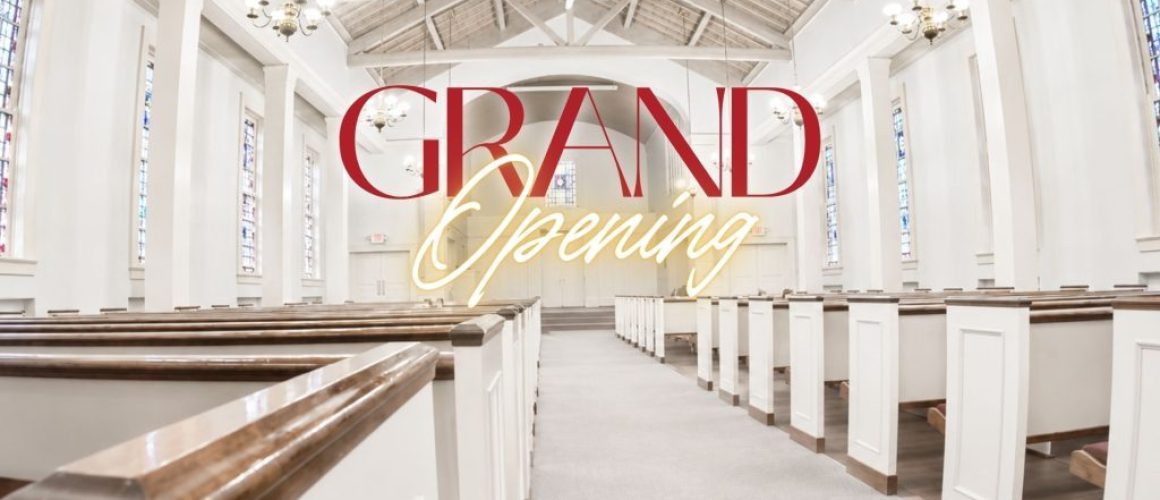
Now, we’re excited to open the doors and invite our friends and neighbors to come see what’s been happening.
Join us for our Grand Opening Open House on Saturday, August 22, from 10:00 AM to 2:00 PM, with an official Bradford Area Chamber of Commerce Ribbon Cutting at noon.
Come take a tour, enjoy some refreshments, meet people from Open Arms, make some new friends, and celebrate this exciting season with us.
A New Space for a New Season
For years, we’ve dreamed about making better use of the upstairs of our building.
That dream is becoming a reality.
Our new upstairs worship center gives us more room to gather, worship, welcome new people, and continue growing the ministries that serve our church and our community.
The project has involved much more than preparing a sanctuary. Children’s ministry spaces, classrooms, gathering areas, technology, and other parts of the building have all been part of the work.
There are still a few finishing touches underway—including the completion of our new accessibility lift.
The lift is almost complete and will be open soon. We’re excited to be nearing the finish line on this important part of the project and look forward to celebrating its completion in the near future.
Come See What’s New
During the Open House, you’ll have the opportunity to explore the building and see many of the changes for yourself.
Tour our new worship center, children’s ministry areas, classrooms, gathering spaces, and other improvements throughout the upstairs.
Members of the Open Arms family will be available throughout the day to welcome you, answer questions, and share some of the story behind the project.
We’ll also have finger foods and refreshments available, so feel free to stop in anytime between 10:00 AM and 2:00 PM.
Ribbon Cutting at Noon
At 12:00 PM, we’ll be joined by the Bradford Area Chamber of Commerce for an official Ribbon Cutting Ceremony.
This is a meaningful milestone for our church after months of planning, giving, construction, volunteer work, and prayer.
So many people have played a part in bringing this project this far, and we’re grateful for every person, business, volunteer, and supporter who has helped along the way.
Making Room for What Comes Next
We’re excited about the building, but what matters most to us is what will happen inside it.
We’re making room for children to learn about Jesus.
We’re making room for people to find hope and healing.
We’re making room for worship, friendship, laughter, prayer, and community.
We’re making room for new people to walk through the doors and discover that there’s a place for them here.
Our mission remains the same: Real people helping people become more like Jesus as a family.
This new space simply gives us more room to live that mission out.
Join Us
Grand Opening Open House
Saturday, August 22 10:00 AM – 2:00 PM
Ribbon Cutting Ceremony — 12:00 PM
Open Arms Community Church 71 Congress Street Bradford, PA
Dedication Service – Sunday, August 23 at 10 AM
The celebration continues Sunday morning!
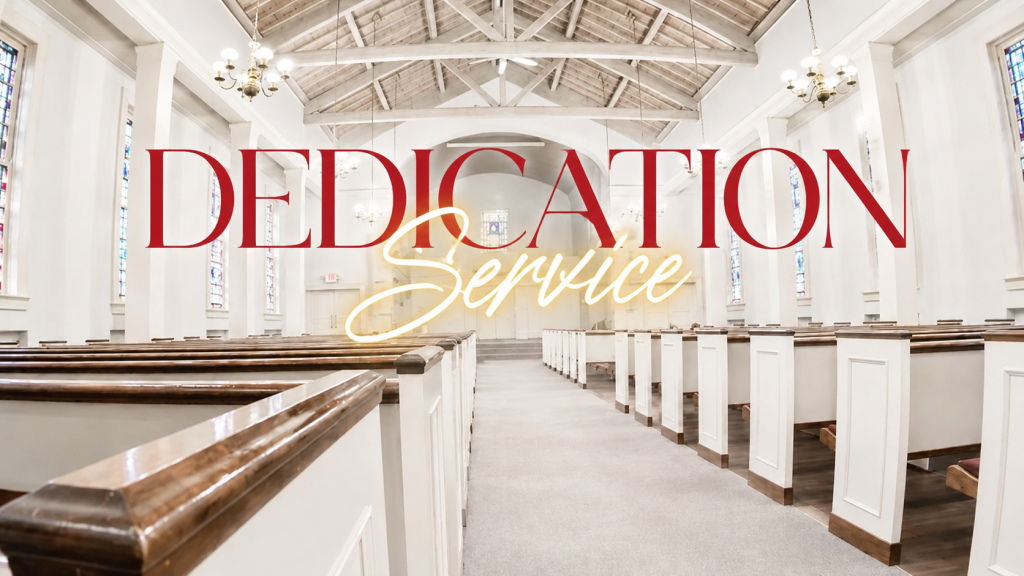
Following our Grand Opening and Open House on Saturday, we invite you to join us Sunday, August 23 at 10:00 AM for a special Dedication Service at Open Arms Community Church.
This is more than the opening of a new worship space. It’s an opportunity to pause, give thanks for everything God has done to bring us to this point, and dedicate this space to the work He will do here in the years ahead.
Over the past several months, countless people have prayed, given, worked, built, painted, cleaned, moved, and served to help prepare our new upstairs sanctuary. We are incredibly grateful for every person who has been part of making it possible.
But ultimately, this building isn’t the mission — it’s a place where the mission happens.
We’re dedicating this space to seeing lives restored in Christ. To families growing together. To children discovering who Jesus is. To people finding friendship and belonging. To worship, prayer, discipleship, and serving our community. And to helping real people become more like Jesus as a family.
Superintendent Chris Hill will be joining us for this special service as we celebrate, pray over our new worship space, and officially dedicate it to God and His purposes.
Make a Weekend of It
Come see everything during our Grand Opening & Open House on Saturday, August 22 from 10 AM–2 PM, including our ribbon cutting at noon, tours, refreshments, and an opportunity to explore our newly completed spaces.
Then come back Sunday morning at 10 AM as we fill the sanctuary and dedicate it to the work ahead.
Grand Opening & Open House Saturday, August 22 | 10 AM–2 PM Ribbon Cutting | 12 PM
Dedication Service Sunday, August 23 | 10 AM
Open Arms Community Church 71 Congress Street Bradford, PA
Whether you’ve been part of Open Arms for years, have visited us occasionally, or have never stepped through our doors before, you are invited to celebrate this milestone with us.
One of our favorite Sundays of the year is almost here.
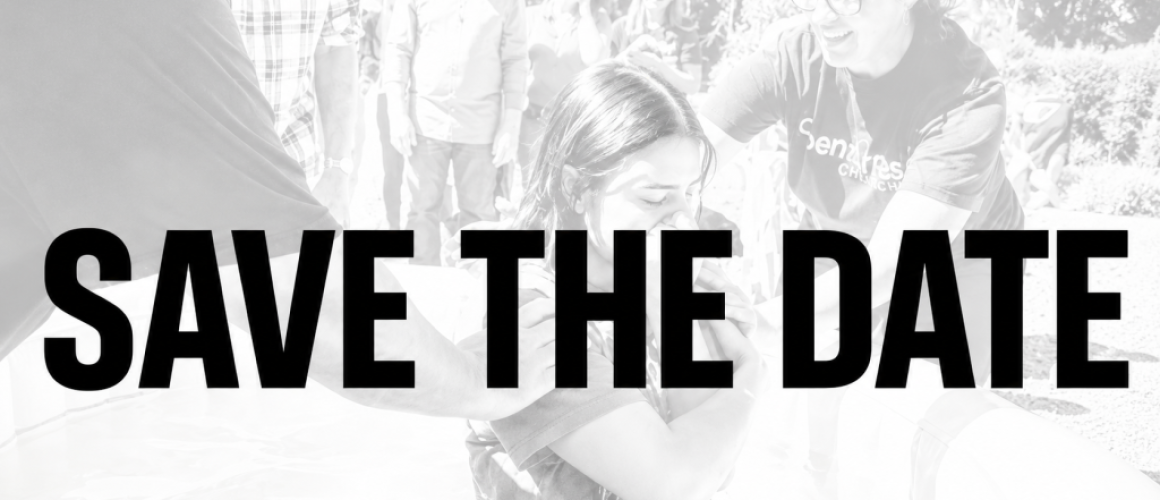
On Sunday, August 30, Open Arms Community Church will gather at Marilla Landing for a special outdoor worship service, baptisms, and a church picnic.
If you’ve never experienced one of our Baptism Sundays, this is a wonderful opportunity to worship together in God’s creation and celebrate the life-changing work He is doing in people’s lives.
One Service at Marilla Landing
Instead of meeting at our church building, we’ll gather for one combined worship service at 10:00 AM at Marilla Landing.
Following the service, we’ll celebrate baptisms as people publicly declare their faith in Jesus Christ. Afterward, we’ll enjoy a church picnic together.
It’s always one of the most encouraging Sundays of the year as we worship, celebrate, eat together, and enjoy time with our church family.
What Is Baptism?
Baptism doesn’t save us, but it is an important step of obedience for those who have chosen to follow Jesus.
It’s a public declaration that we’ve placed our faith in Christ and that our old life has been buried with Him, while we’ve been raised to new life through His resurrection.
Every baptism tells a story of God’s grace, forgiveness, and transformation.
Whether you’ve been following Jesus for many years or you’ve recently made a decision to trust Him, baptism is an opportunity to publicly share what God has done in your life.
Thinking About Being Baptized?
If you’ve never been baptized since placing your faith in Christ and you’d like to learn more, we’d love to talk with you.
Over the coming weeks, we’ll share more information about baptism and what to expect. If you’re interested in taking that next step, contact the church office or speak with one of our pastors.
Spend a summer afternoon enjoying great music, good food, and family fun during our FREE Community Block Party.
There’s something special about live music on a summer afternoon.
Friends gather around picnic tables. Kids laugh as they run from one activity to the next. Conversations happen naturally while talented musicians provide the soundtrack for the day.
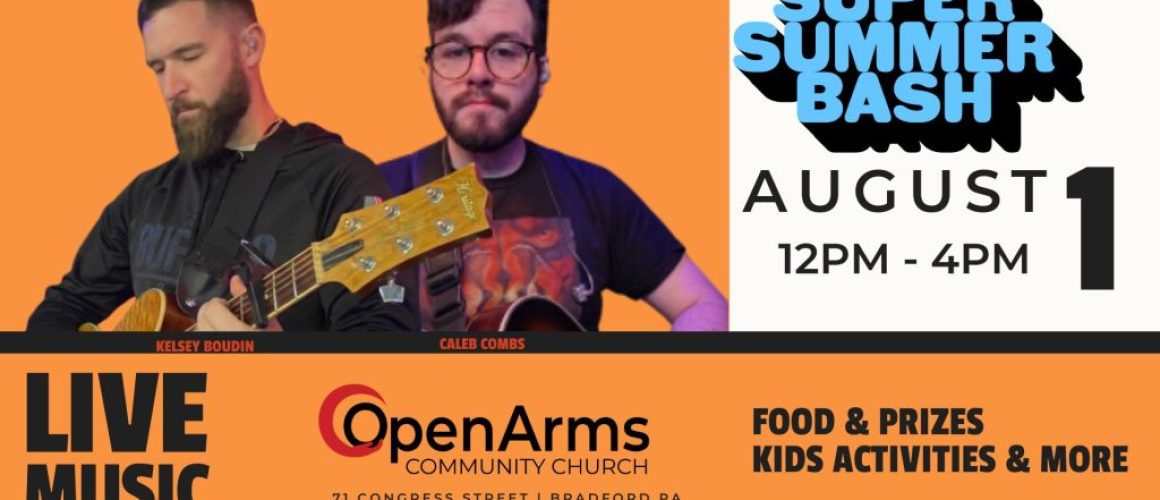
That’s the kind of atmosphere we’re looking forward to at Super Summer Bash 2026, and we’re excited to welcome Caleb Combs and Kelsey Boudin as part of our Community Block Party on Saturday, August 1.
Whether you’re joining us after the Big 30 Parade or simply looking for a fun way to spend the afternoon with your family, we hope you’ll pull up a chair, grab something to eat, and enjoy some great live acoustic music.
Live Music That Fits the Day
The Community Block Party is designed to be a place where families can relax, connect, and enjoy time together.
Throughout the afternoon, Caleb and Kelsey will be performing a variety of folk music, acoustic pop favorites, and praise & worship music, creating a warm, welcoming soundtrack for everything happening around the event.
It’s the kind of music that invites you to slow down, enjoy the moment, and make memories with the people you love.
Meet Caleb Combs
Caleb Combs is a musician and member of the worship team at Open Arms Community Church.
During Super Summer Bash, Caleb will be performing a blend of folk music, acoustic pop covers, and original songs. His laid-back acoustic style and thoughtful songwriting make him a perfect fit for a summer community gathering, whether you’re listening closely or simply enjoying the atmosphere with family and friends.
Meet Kelsey Boudin
Kelsey Boudin is also a musician and member of the worship team at Open Arms Community Church.
Kelsey will be sharing a collection of acoustic pop favorites and praise & worship music, helping create an inviting atmosphere where families can relax, sing along if they know the songs, and simply enjoy being together.
More Than Just Live Music
The music is just one part of an afternoon packed with fun for the whole family.
During the Community Block Party you’ll also enjoy:
Free food
Giant inflatables
Dave Jeffers Magic
Yard games and family activities
Door prizes
School supply giveaways (while supplies last)
Everything is completely free.
Whether you stay for an hour or spend the whole afternoon with us, we hope you’ll leave with a full stomach, happy kids, and some great memories.
Make It Part of Your Big 30 Weekend
If you’re visiting Bradford for Big 30 Weekend, we’d love to invite you to stop by before or after the parade.
Super Summer Bash is a chance to keep the celebration going with a free afternoon of music, food, laughter, and family fun. It’s our way of serving our community and creating a place where everyone feels welcome.
No tickets.
No admission fee.
Just a great afternoon with neighbors, friends, and families from throughout the Bradford area.
Event Details
Super Summer Bash Community Block Party
Saturday, August 1, 2026 Noon–4:00 PM
📍 Open Arms Community Church 71 Congress Street Bradford, PA
Admission: FREE
Make It a Full Weekend
The Community Block Party is the grand finale of Super Summer Bash 2026, a free three-day event for families.
Join us for:
Thursday & Friday (July 30–31):Kids Fun Nights, featuring our Camp Exodus: Journey with God adventure for children ages 3–12. Kids will enjoy dinner, games, music, interactive Bible lessons, and plenty of fun.
Saturday (August 1): Our Community Block Party with live acoustic music, Dave Jeffers Magic, inflatables, free food, games, school supply giveaways, and activities for the whole family.
Whether you’re part of the Open Arms family, visiting Bradford for Big 30 Weekend, or simply looking for something fun to do with your kids, we’d love to welcome you.
See one of the region’s favorite family entertainers—for FREE on Saturday, August 1.
There’s something about a great magic show that brings generations together.
Kids watch with wide eyes, trying to figure out how the impossible just happened. Parents laugh just as hard as the children. Grandparents find themselves grinning like kids again.
That’s exactly why we’re excited to welcome Dave Jeffers Magic back to Open Arms Community Church for this year’s Super Summer Bash Community Block Party.
If you’re planning to join us on Saturday, August 1, you’re in for a treat.
A Favorite Across the Region
For more than 25 years, Dave Jeffers has been entertaining audiences throughout Pennsylvania and New York, performing at schools, libraries, churches, festivals, fairs, and community events.
If you’re from the Bradford area, there’s a good chance you’ve seen him before. Dave has performed at the Bradford Area Public Library, and many families may remember his fun-filled performance during First Night at Open Arms Community Church earlier this year.
Wherever he performs, Dave brings the same combination of comedy, audience participation, and amazing illusions that keep both children and adults thoroughly entertained.
More Than Just a Magic Show
One of the things we love about Dave’s performances is that they aren’t something you simply sit and watch.
Kids become part of the show.
Volunteers are invited to help.
Parents end up laughing just as much as the children.
The audience isn’t just watching the magic—they’re helping create it.
It’s the kind of performance that creates memories families will still be talking about long after the day is over.
Why We Invited Dave
Every year, our goal with Super Summer Bash is simple:
Create a place where families can enjoy being together.
We want parents to relax.
We want kids to laugh until their cheeks hurt.
We want neighbors to connect.
We want to give our community an afternoon that’s simply full of joy.
Dave Jeffers fits that vision perfectly.
His shows are packed with fun, laughter, surprises, and plenty of “How did he do that?” moments, making him one of the highlights of this year’s Community Block Party.
Make It Part of Your Big 30 Weekend
If you’re coming to Bradford for Big 30 Weekend, we’d love for you to stop by before or after the parade and spend part of your day with us.
Our FREE Community Block Party includes:
Dave Jeffers Magic
Live music from Caleb Combs and Kelsey Boudin
Giant inflatables
Free food
Yard games
Door prizes
School supply giveaways (while supplies last)
Everything is completely free, and everyone is welcome.
Learn More About Dave Jeffers
Want to learn more about Dave or see videos of his performances?
Visit his official website to learn more about his family entertainment and the many events he performs throughout the region.
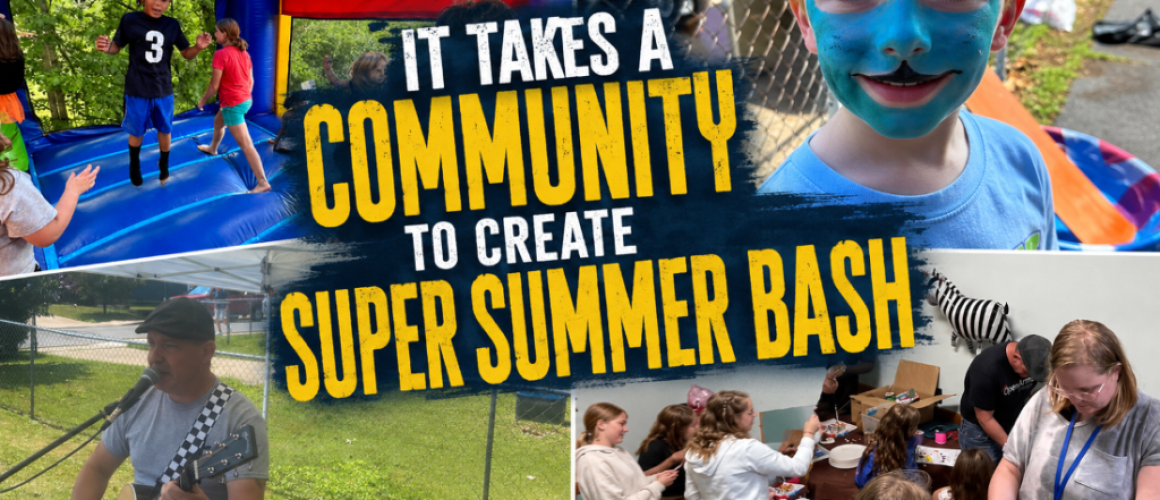
Every summer, something special happens at Open Arms Community Church.
Our parking lot fills with laughter.
Children race from one activity to another.
Parents catch up with old friends while enjoying a free meal.
Neighbors who may have never met before find themselves sitting together, sharing conversations and making memories.
That’s what Super Summer Bash is all about.
For one weekend each summer, we have the opportunity to serve our community by creating a place where families can simply enjoy being together—without worrying about the cost.
Last year, more than 300 children and their families joined us for Super Summer Bash.
This year, we’re praying that even more families experience the fun, friendship, and encouragement that make this event so special.
A Community Event Made Possible by the Community
One of the things we love most about Super Summer Bash is that it isn’t something Open Arms Community Church does alone.
Every year, local businesses, organizations, and generous individuals come alongside us to help make the event possible.
Their support allows us to keep everything completely free for the families who attend.
Free Kids Fun Nights.
Free food.
Free inflatables.
Free entertainment.
Free school supplies.
Free family fun.
That’s only possible because people throughout our community believe investing in families is worthwhile.
How You Can Help
As we prepare for this year’s event, we’re looking for community partners who would like to help provide supplies, prizes, or financial support.
Some of our current needs include:
Gift cards, prizes, and giveaway items
Bottled water
Hot dogs
Hot dog buns
Ice
Financial donations to help offset the cost of entertainment and activities
Whether your contribution is large or small, it helps create an experience that many local families simply couldn’t afford elsewhere.
More Than Just a Donation
When you donate to Super Summer Bash, you’re helping create moments that children will remember.
You’re helping a family enjoy an afternoon together without worrying about the cost.
You’re helping neighbors connect.
You’re helping children laugh.
You’re helping create a place where people feel welcomed, valued, and loved.
That’s an investment that reaches far beyond one weekend.
Thank You to Our Community
We’re incredibly grateful for every business, organization, church member, volunteer, and community partner who helps make Super Summer Bash possible.
Your generosity allows us to continue offering this event free of charge year after year.
Together, we’re building something that blesses families across the Bradford area.
Would You Like to Partner With Us?
If you’d like to donate supplies, sponsor part of the event, contribute financially, or simply learn more about how you can help, we’d love to hear from you.
Free food • Live music • Magic show • Inflatables • School supplies • Fun for the whole family
One of the best parts of summer in Bradford is seeing our community come together.
Whether it’s cheering at the Big 30 Parade, catching up with old friends, or watching kids laugh until they’re exhausted, there’s something special about a town that knows how to celebrate together.
That’s exactly what Super Summer Bash’s Community Block Party is all about.
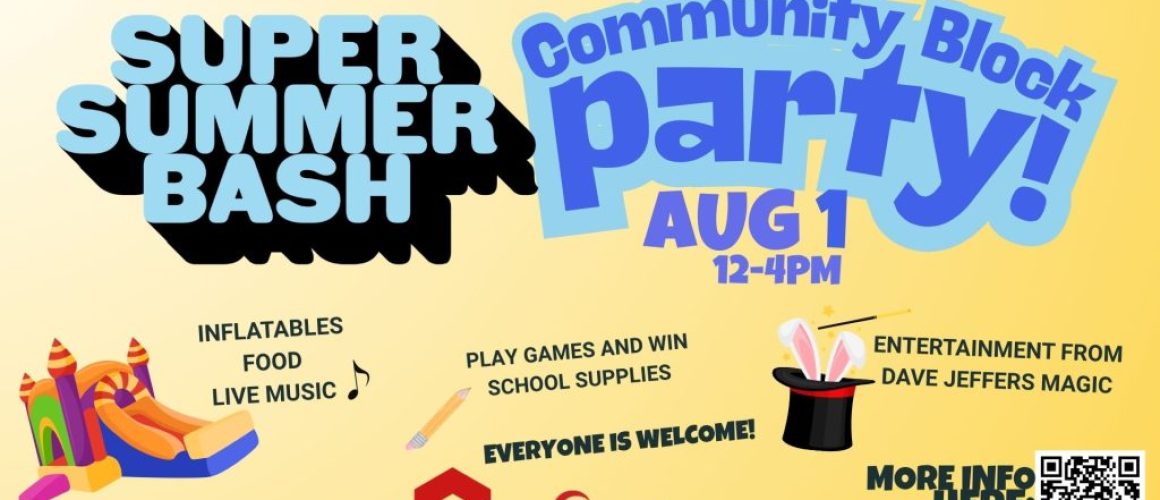
On Saturday, August 1, from Noon until 4:00 PM, Open Arms Community Church is opening its doors—and its parking lot—to everyone for a completely FREE afternoon of family fun.
If you’re looking for something to do after the Big 30 Parade, or just want to enjoy a fun afternoon with your family, we’d love to have you join us.
In Town for the Big 30 Parade?
Every year, thousands of people visit Bradford for Big 30 Weekend, and if you’re one of them, we’d love to invite you to stop by before or after the parade.
Our Community Block Party is just another way to celebrate everything that makes Bradford a great place to live—a chance for families to relax, have fun together, and enjoy an afternoon without worrying about the cost.
Everything is completely free.
There’s Something for Everyone
Whether your kids love to bounce, laugh, play, explore, or simply run around with friends, you’ll find plenty to keep everyone entertained.
Here’s just a sample of what’s waiting for you:
Giant inflatables
Free food
Yard games and activities
Door prizes
School supply giveaways (while supplies last)
Family-friendly entertainment
A welcoming place to connect with neighbors and friends
You don’t need to register, and you don’t have to attend Open Arms Community Church to come.
Just show up and enjoy the afternoon.
Don’t Miss Dave Jeffers Magic
One of the highlights of the day will be an exciting performance from Dave Jeffers Magic.
Dave has been entertaining families throughout the region for decades with a high-energy blend of comedy, audience participation, and amazing illusions.
Kids will be laughing.
Parents will be wondering how he did it.
It’s one of those shows the whole family can enjoy together.
Live Music Throughout the Afternoon
We’re also excited to welcome live music from Caleb Combs and Kelsey Boudin.
Their music will provide the soundtrack for a relaxing afternoon filled with community, conversation, and celebration. Whether you’re grabbing lunch, watching your kids play, or simply enjoying the day, we hope the music helps make the afternoon even more memorable.
Helping Families Get Ready for School
As summer begins winding down, many families are already thinking about back-to-school shopping.
We’ll be giving away school supplies while supplies last, helping local families prepare for the new school year.
It’s just one small way we hope to serve our community and bless our neighbors.
More Than an Event
At Open Arms Community Church, we believe church should be more than a place people go on Sunday mornings.
We want to be a church that serves our city.
A church that creates opportunities for families to connect.
A church that’s known for generosity, hospitality, and loving our neighbors well.
Super Summer Bash is one of our favorite weekends of the year because it gives us the opportunity to do exactly that.
Whether you’ve attended Open Arms for years, have never visited before, or are simply passing through town for Big 30 Weekend, we’d love to meet you.
Come hungry.
Bring the kids.
Invite some friends.
We’ll take care of the rest.
Event Details
Super Summer Bash Community Block Party
Saturday, August 1, 2026 Noon–4:00 PM
📍 Open Arms Community Church 71 Congress Street Bradford, PA
Admission: FREE
Make It a Full Weekend
The Community Block Party is the grand finale of Super Summer Bash 2026, which also includes two evenings of Kids Fun Nights on Thursday and Friday, July 30 & 31, featuring games, music, dinner, and our Camp Exodus: Journey with God adventure for children ages 3–12.
Whether you join us for one day or all three, we’d love to welcome your family.
Summer always seems to fly by. Before long, school supplies start filling the shelves, schedules get busy again, and another summer is coming to a close.
If you’re looking for one more memorable adventure for your kids before school starts, we’d love to invite your family to Kids Fun Nights at Open Arms Community Church.
Taking place on Thursday and Friday, July 30 & 31 from 5:30–8:00 PM, Kids Fun Nights are two evenings packed with fun, friendships, great food, music, games, and exciting adventures that your kids won’t soon forget.
And the best part?
Everything is completely FREE.
A Fresh Take on Vacation Bible School
If you grew up going to Vacation Bible School (VBS), you’ll recognize some familiar elements—but we’ve designed Kids Fun Nights to be an exciting experience for today’s kids.
Each evening includes:
A free dinner
High-energy games
Great music
Interactive Bible adventures
Small group activities
New friendships
Plenty of laughs
Whether your child has been to church every week or has never stepped inside one before, they’ll be welcomed, encouraged, and included.
Our goal is simple: we want every child to know they are loved.
This Year’s Theme: Camp Exodus – Journey with God
This year’s adventure is called Camp Exodus: Journey with God.
Throughout the two evenings, kids will travel through one of the Bible’s greatest adventures as they follow the story of Moses and God’s people leaving Egypt.
Along the way they’ll discover that God is:
Our Deliverer
Our Guide
Our Provider
Our Protector
Through games, activities, music, and storytelling, children will learn that no matter where life’s journey leads, God faithfully goes with us every step of the way.
Parents Are Invited Too!
One of our favorite traditions happens on Friday night at 7:00 PM.
Parents, grandparents, and families are invited to join us for a Family Ice Cream Social, where everyone can celebrate together and see what the kids have been enjoying.
It’s a great opportunity to meet other families, connect with our church, and simply enjoy a summer evening together.
Everyone Is Welcome
You don’t need to be a member of Open Arms Community Church.
You don’t need to know anything about church.
You don’t need to worry about fitting in.
If you’re looking for a safe, welcoming place where your kids can have fun, make friends, enjoy a free meal, and learn about God’s love, we’d be honored to have you join us.
Event Details
Kids Fun Nights
📅 Thursday & Friday, July 30–31
🕠 5:30–8:00 PM
📍 Open Arms Community Church
71 Congress Street
Bradford, PA
Ages: 3–12
Cost: FREE
Register Today
Kids Fun Nights are part of Super Summer Bash 2026, a three-day celebration that concludes with our free Community Block Party on Saturday, August 1 featuring inflatables, free food, live music, Dave Jeffers Magic, school supply giveaways, and fun for the whole family.