Living at the Intersection of Worship & Justice
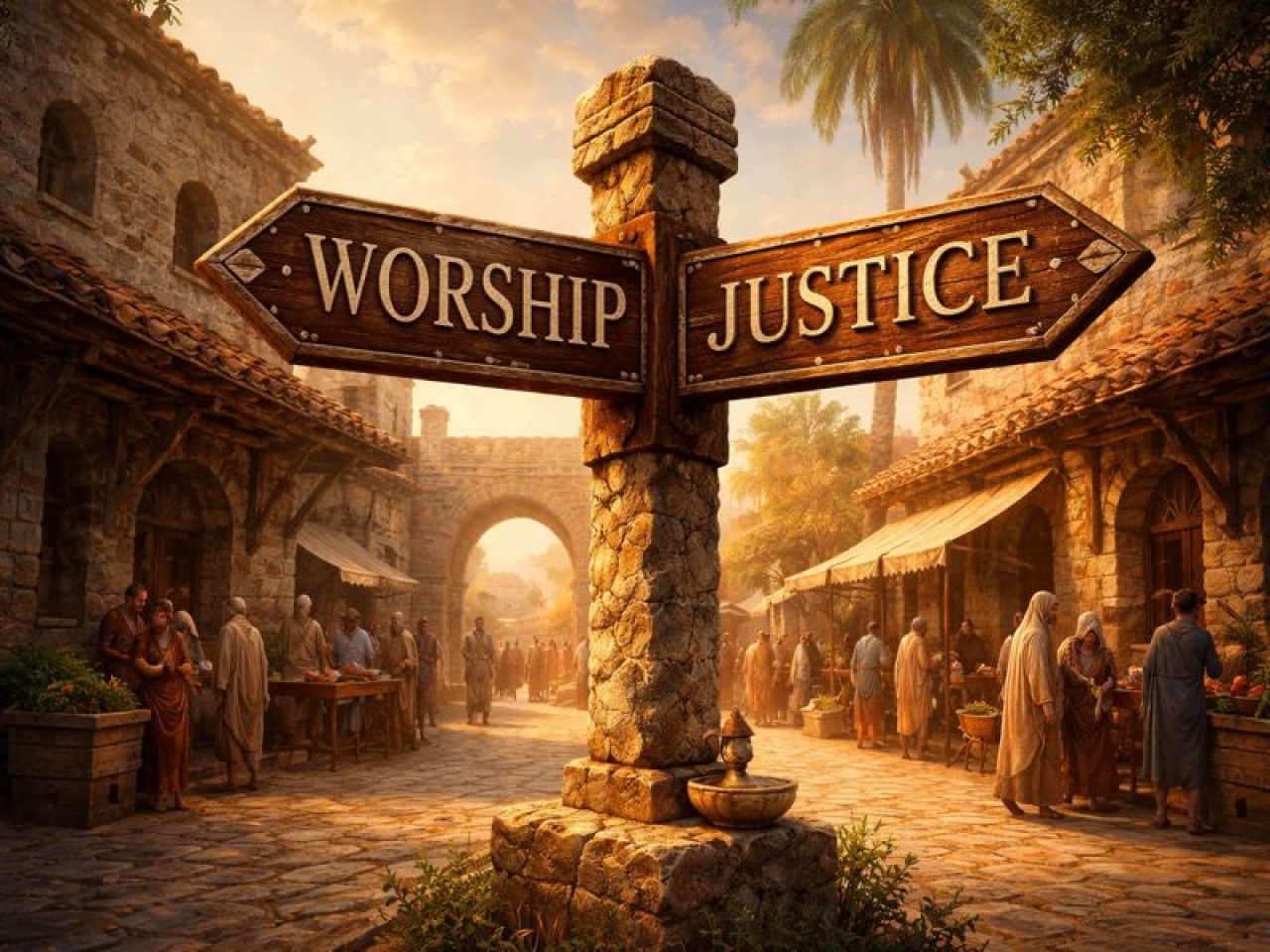
Last week, we discussed what God actually wants from us. We called out the performative nature of some Christians – yes, even some of the most faithful. Throughout Scripture we find so many references to God’s distaste for theatrics. What He calls us to live out daily is found at the intersection where worship and justice meet.
What happens at that intersection? Relationship happens. Truth happens. Building a life of service, of social justice, of washing feet without the expectation of blessings in return.
In Isaiah 58, God’s people are fasting and praying. (Spoiler alert: God’s not impressed.) Admittedly, they’re seeking Him, but they’re missing the point.
“Yet they act so pious! They come to the Temple every day and seem delighted to learn all about Me. They act like a righteous nation that would never abandon the laws of its God. They ask Me to take action on their behalf, pretending they want to be near Me.” (Isaiah 58:2, NLT)
Let’s emphasize that word: pretending. The work of children.
Sure, they’re doing the religious things. They’re showing up. They’re checking boxes, you might say. But God points out what’s missing: justice, mercy, and care for the hurting. So He describes the kind of worship He actually wants: freeing the oppressed, feeding the hungry, clothing the poor, and not turning away from neighbors in need.
Essentially, worship that never leaves the sanctuary and never ventures forth to help the world here and now isn’t really worship at all.
We sometimes pigeon-hole worship into the church building itself. It’s warm there. We have friends and family there. We pray. We sing. We go home. We feel good about it. But the justice God seeks happens out in the world — food pantries, sheltering the homeless, community advocacy.
That’s both beautiful and perhaps a bit uncomfortable, if you’re ill-prepared to walk the walk.
It’s easy to feel faithful because we attended church, sang the songs, and heard the sermon. But what happens when Monday rolls around and we’re back to the daily grind? How about Wednesday when the pressure mounts? Or Friday as the local bar calls on our drive home?
It’s harder to let that faith shape what we do with our time, money, patience, and compassion when life takes over. Isaiah’s message isn’t that worship is bad — it’s that worship without justice is empty. God wants hearts that bend toward Him and hands that reach toward others.
Jesus had more to say in Matthew 5. He told His followers they are the “salt of the earth” and the “light of the world.” Salt preserves. Light reveals. Both change what they touch. Faith, Jesus says, is meant to be visible. Not flashy, but meaningful. Not performative, but practical.
“Let your good deeds shine out for all to see, so that everyone will praise your heavenly Father.” (Matthew 5:16, NLT)
Note the part Jesus left unspoken. He didn’t say, “Talk louder about your faith.” He told us to Live it in a way people can see. The kind of faith He describes shows up in honesty at work, restraint in anger, generosity when it costs something, and courage when truth matters.
Justice and worship intersect when obedience becomes obvious in our everyday choices.
Paul adds another layer in 1 Corinthians 2. He reminds the church that God’s wisdom doesn’t look like the world’s wisdom. Paul didn’t rely on eloquence, status, or clever arguments. He relied on the Spirit’s power. Living our faith as Paul did keeps us from turning justice into self-righteousness and worship into a production.
True justice flows from humility. Real worship flows from dependence. Paul’s message is that both require the Spirit of God working in us and shaping motives, not just behavior.
Together these passages challenge us to the core:
- Is my worship changing how I treat people?
- Is my concern for justice rooted in God’s heart or just my opinions?
- Does my faith stay safely inside church walls, or does it travel with me into my work, my family, and my conflicts?
God doesn’t ask us to choose between worship and justice. He asks us to live at their intersection — in what might be a dangerous neighborhood.
“Then your salvation will come like the dawn, and your wounds will quickly heal. Your godliness will lead you forward … Then when you call, the Lord will answer. ‘Yes, I am here,’ he will quickly reply.” (Isaiah 58:8–9, NLT)
That’s not a reward system. It’s our purpose. So this week’s question isn’t “How do I worship?” It’s “Who does my worship bless?”