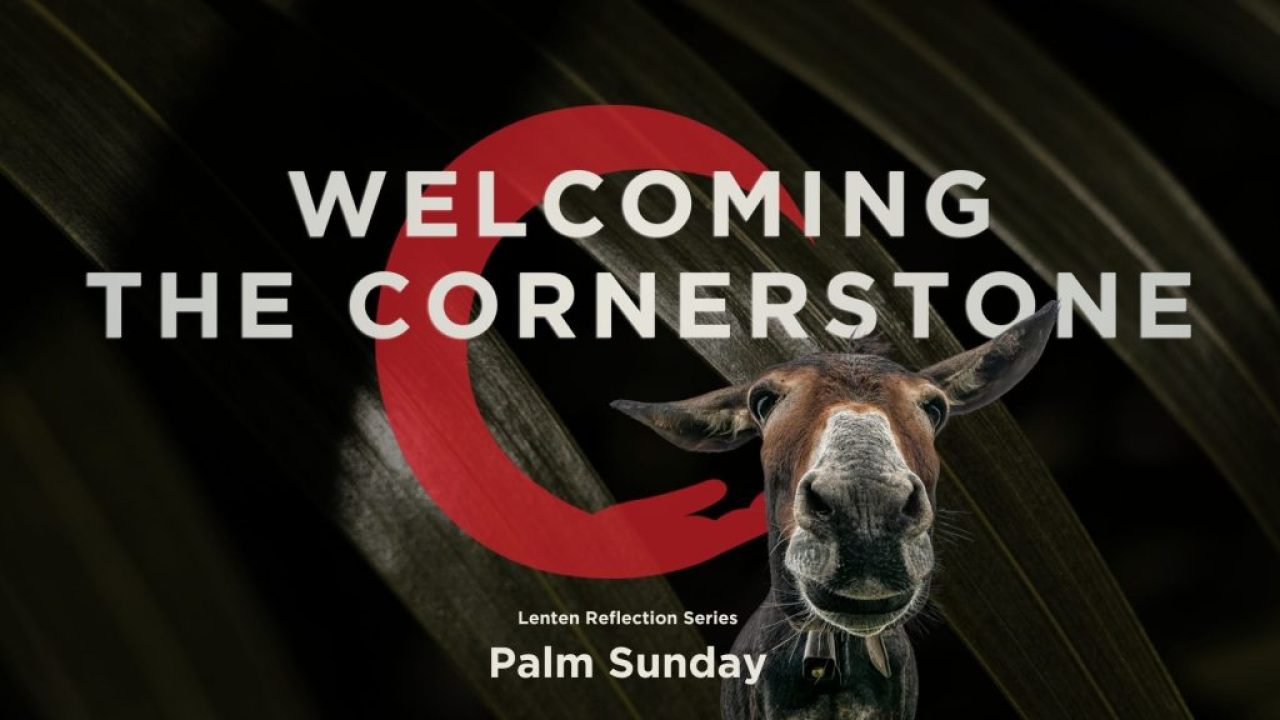
Hosanna in the Highest: Welcoming the Cornerstone
Palm Sunday Blog Post-2026
Palm Sunday marks the beginning of Holy Week—the final week of Jesus’ earthly ministry before the cross. It’s a day filled with celebration, expectation, and deep spiritual significance. As Jesus enters Jerusalem, the crowds are filled with praise, shouting words that still echo through churches today:
“Hosanna to the Son of David! Blessed is he who comes in the name of the Lord! Hosanna in the highest heaven!” (Matthew 21:9)
But what did these words truly mean? And what do they mean for us today?
Matthew records that as Jesus approached Jerusalem, He instructed two disciples to bring Him a donkey and its colt. This wasn’t random—it was the fulfillment of a prophecy written more than 500 years earlier:
“See, your king comes to you, righteous and victorious, lowly and riding on a donkey, on a colt, the foal of a donkey.” (Zechariah 9:9)
Kings in the ancient world often arrived in chariots drawn by powerful horses to display their strength. Jesus chose something different. He entered the city on a humble colt.
This moment revealed something profound about the kind of King Jesus is. He is not a king of domination but a king of peace. His authority is real, but His posture is humble.
Even in the details, we see God’s care and intention. Scripture reminds us again and again that God works through even the smallest details to accomplish His purposes.
When the crowd cried out “Hosanna,” they weren’t simply offering a casual word of praise. The word literally means “Save now!” It was both a cry for help and an expression of worship. The people recognized Jesus as the long-awaited Messiah and called on Him to rescue them.
Their song of praise came from Psalm 118: “Blessed is he who comes in the name of the Lord.”
This psalm was traditionally sung during festival processions, but on this day it carried even deeper meaning. The people believed the Messiah had finally arrived.
Psalm 118 also contains another powerful image: “The stone the builders rejected has become the cornerstone.”
In ancient construction, the cornerstone was the most important stone in a building’s foundation. It held the structure together and determined the alignment of everything built upon it. Without the cornerstone, the building would collapse.
The crowd celebrating Jesus likely didn’t realize the full weight of the words they were singing. Yet Jesus knew exactly what they meant. He knew He was the cornerstone.
He also knew that many of the same people praising Him would soon reject Him.
Not long after His triumphant entry, Jesus cleansed the temple, driving out those who were exploiting worshipers. This angered the religious leaders, who began challenging His authority.
In response, Jesus quoted Psalm 118 again and this time applied it directly to Himself:
“The stone the builders rejected has become the cornerstone.” (Matthew 21:42)
The very leaders responsible for guiding God’s people were rejecting the One sent to save them.
Jesus warned that how people respond to Him determines everything. Some will build their lives on Him, while others will stumble over Him.
Jesus described two possible responses to the cornerstone:
- Those who fall on the stone—humbling themselves in repentance—will be broken in a way that leads to healing and restoration.
Or:
- Those who are crushed by the stone are those who reject Jesus.
This is a sobering truth: Jesus offers mercy and forgiveness now, but rejecting Him carries eternal consequences.
Many people struggle with the exclusivity of the Christian claim that salvation comes through Jesus alone. Yet this was not an idea invented by the church—it was the teaching of Jesus Himself:
“I am the way and the truth and the life. No one comes to the Father except through me.” (John 14:6)
Jesus alone is the cornerstone of salvation.
Palm Sunday invites us to ask an important question: How will we respond to Jesus?
Will we cry out with the crowd, “Hosanna—save now!” acknowledging our need for a Savior?
Or will we stumble over His words and resist His authority?
Jesus invites us to come to Him today—to kneel, to surrender, and to build our lives on the cornerstone.