An Unknown God? How Paul Shared Jesus in a Culture That Didn’t Know Him | Open Arms Community Church in Bradford PA
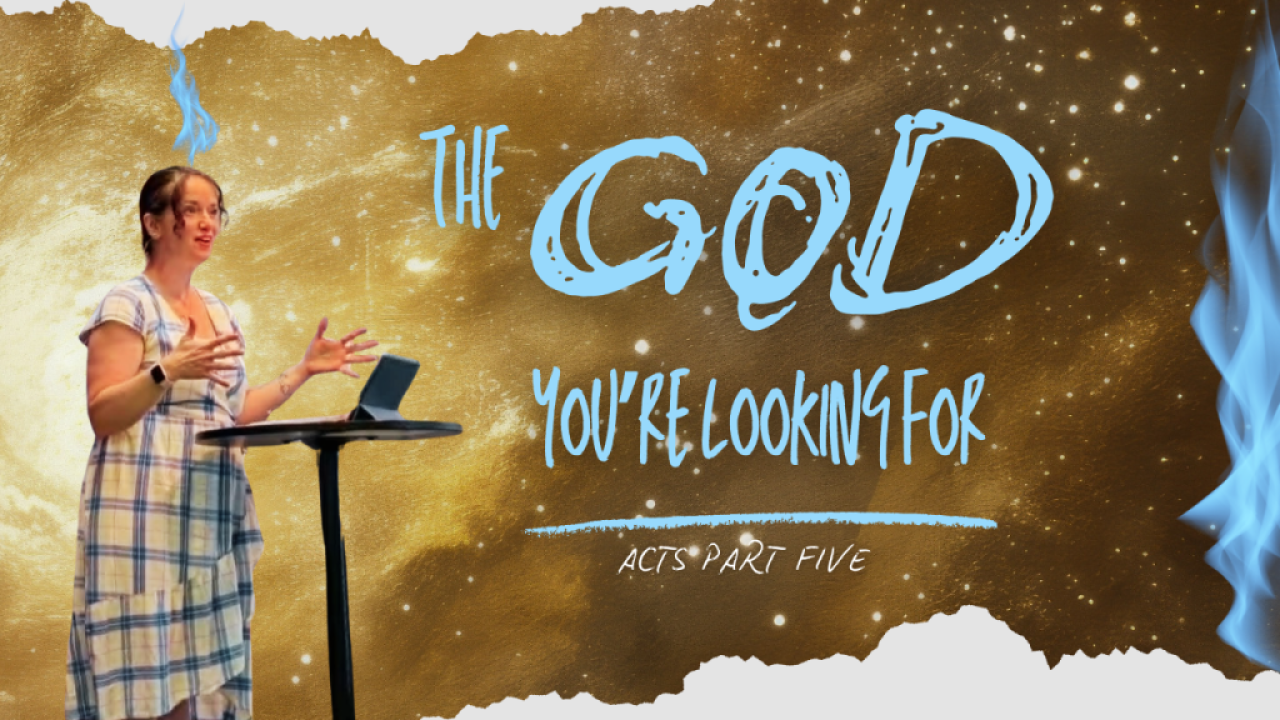
As our ACTS series continues, we follow the early church beyond Jerusalem and into the wider world. After witnessing the martyrdom of Stephen and the persecution that scattered believers, we now see a transformed Paul boldly carrying the Gospel to the Gentiles. In Acts 17, Paul arrives in Athens, a city filled with idols, philosophy, and religious ideas. Rather than beginning with Jewish history, he meets people where they are and introduces them to the God they do not yet know. In this message, Pastor Zoe Hatcher explores Paul’s approach to evangelism, the unchanging message of Jesus Christ, and the incredible gift of the Holy Spirit who lives within every believer.
Watch the full message below:
The Altar to an Unknown God
As Paul walked through Athens, he noticed something fascinating.
The city was filled with objects of worship. The Athenians had gods for nearly everything imaginable. Yet among all their idols was one altar bearing a unique inscription:
“To an Unknown God.”
Paul saw an opportunity.
Rather than condemning them immediately, he used something familiar to start a conversation about the One True God.
The Athenians were afraid they might miss a god and lose out on blessings or incur judgment. Paul took that fear and redirected it toward truth.
The God they did not know was the God who created the world, gave them life, and was already closer than they realized.
How Paul Shared His Faith
Paul’s approach offers a powerful example for believers today.
Use Examples People Understand
Paul pointed to something already familiar to his audience.
He didn’t begin with a history lesson about Israel because that would have meant little to the people of Athens. Instead, he started with their altar to an unknown god.
He entered their world before inviting them into God’s.
When sharing faith today, people may not understand church language, theological terms, or Bible stories. But they understand everyday experiences, relationships, fears, hopes, and questions.
Like Paul, we can begin where people are.
Establish Common Ground
Paul also quoted one of their own poets.
“For in him we live and move and have our being.”
By doing so, he showed that he understood their culture and could connect their search for truth to the Gospel.
Paul knew enough about their worldview to speak their language.
He wasn’t compromising truth.
He was building a bridge.
Christians are called to understand the culture around them well enough to point people toward Jesus without losing the message itself.
Tell the Gospel Story
Paul didn’t stop with common ground.
Eventually, he brought people to a decision.
He spoke about repentance.
He spoke about Jesus.
He spoke about the resurrection.
He spoke about coming judgment.
The bridge led somewhere.
It led to Christ.
When we share our faith, we should do the same. We can start with relationships, stories, and common experiences, but eventually we must point people to Jesus.
Why Many Christians Don’t Share Their Faith
Research consistently shows that many believers hesitate to talk about Jesus because they don’t feel like they know enough about the Bible.
That fear is understandable.
But it cannot become an excuse.
Paul certainly knew Scripture, culture, and philosophy, but he also shared what he knew.
We don’t need a seminary degree to tell people what Jesus has done in our lives.
We simply need to be willing.
The more we grow in our understanding of Scripture, the more confident we become. But faith is not something we wait to share until we feel fully prepared.
If we wait until we know everything, we’ll never begin.
Religious People Can Still Miss Jesus
The Athenians were deeply religious.
But they didn’t know God.
That reality still exists today.
Many people talk about faith.
Many people identify as spiritual.
Many people even call themselves Christian.
Yet they may not actually know Jesus.
Paul understood that religion alone cannot save anyone.
People need a relationship with the living Christ.
That is why believers cannot assume that everyone understands who Jesus is or what He has done.
The Gospel must still be proclaimed.
God Is Revealed and God Is Near
One of the central truths in Paul’s message is that God is not hidden.
He has revealed Himself through creation.
The world around us points to a Creator.
The beauty of nature.
The complexity of life.
The order of the universe.
All of it points beyond itself.
But Paul goes even further.
Not only has God revealed Himself, He is also near.
God is sovereign and in control of all things, yet He is close and personal.
He is not distant.
He is not uninvolved.
He is not unaware of what is happening in our lives.
Too often people try to shape God into what they want Him to be.
But God does not conform to our expectations.
Instead, we are invited to know Him as He truly is.
If you’ve ever struggled to understand God, the answer is not to reinvent Him.
The answer is to ask Him to reveal Himself.
And He does.
The Gospel Is Accessible and Non-Negotiable
Paul adapted his approach for every audience he encountered.
He spoke differently to Jews than he did to Greeks.
He quoted Scripture to some audiences and poets to others.
But one thing never changed.
The message.
The Gospel is accessible.
It is available to everyone.
It can be understood by children and scholars alike.
But it is also non-negotiable.
The message of Jesus Christ never changes.
Cultures change.
Styles change.
Technology changes.
Church methods change.
But Jesus remains the same.
He is still the Way, the Truth, and the Life.
The Gospel is still the power of God for salvation.
Always Be Ready
Peter gives believers a similar challenge.
Believers are called to be ready to explain the hope they have.
But notice how Peter says to do it.
With gentleness.
With respect.
Not with arguments.
Not with pressure.
Not with manipulation.
People have the God-given freedom to accept or reject Jesus.
Our responsibility is not to force a decision.
Our responsibility is to faithfully share the truth.
The Holy Spirit does the rest.
The goal isn’t to win an argument.
The goal is to introduce people to Jesus.
The Promise of the Holy Spirit
Toward the end of the message, attention shifts to one of Jesus’ greatest promises.
Before His crucifixion, Jesus prepared His disciples for His departure.
But He also promised they would not be left alone.
Jesus promised the Holy Spirit.
The Advocate.
The Comforter.
The Counselor.
The Encourager.
The Spirit of Truth.
This was not simply a replacement for Jesus’ physical presence.
This was the very presence of God dwelling within believers.
What the Holy Spirit Does
From Jesus’ teaching in John 14, we learn several powerful truths about the Holy Spirit.
The Holy Spirit:
- Never leaves us.
- Lives with us and in us.
- Teaches us.
- Reminds us of Jesus’ words.
- Convicts us of sin.
- Reveals God’s righteousness.
- Announces God’s judgment on evil.
- Guides us into truth.
- Gives wisdom and insight.
- Brings glory to Jesus.
- Empowers believers to live faithfully.
The Holy Spirit is not merely a theological concept.
He is God’s active presence in the lives of believers.
Through faith, we have access to His power every day.
Love Is More Than a Feeling
Jesus makes an important statement in John 14.
“If you love me, keep my commands.”
Love is not merely emotion.
Love is expressed through obedience.
Many people wait until they “feel” spiritual before following God.
But biblical love works differently.
Love chooses obedience.
Love chooses commitment.
Love chooses faithfulness.
The feelings often follow.
Just as healthy relationships require commitment, our relationship with Jesus grows as we trust Him enough to follow where He leads.
Learning the Dance
The Christian life can sometimes feel confusing.
Jesus says we are in Him.
He is in the Father.
The Spirit is in us.
The Trinity can feel difficult to understand.
Yet Jesus never asks believers to master the mystery before following Him.
He simply invites them into relationship.
A helpful picture is that of a dance.
When learning to dance with an instructor, the student does not need to know every step in advance.
The instructor leads.
The student follows.
The Holy Spirit works the same way.
He teaches.
He guides.
He corrects.
He encourages.
Our role is not to lead.
Our role is to follow.
He knows the steps.
We simply need to trust Him enough to move when He moves.
The Holy Spirit Is Our Super Friend
The Greek word used for the Holy Spirit in John 14 is Parakletos.
It means one who comes alongside.
An advocate.
A comforter.
A helper.
A friend.
Unlike a distant memory of someone we once knew, the Holy Spirit actively speaks, guides, convicts, comforts, and encourages believers today.
Many people wonder whether they have ever heard God’s voice.
Often, the Holy Spirit speaks through thoughts that draw us toward obedience, forgiveness, love, truth, and righteousness.
He guides us toward Jesus.
He points us toward God’s will.
He speaks because He is alive.
The God Paul preached in Athens was not an idol made of stone.
He was not distant.
He was not unknown.
He was alive.
And through the Holy Spirit, He is still drawing people into relationship with Himself today.
What Is Your Next Step?
Maybe you’ve been treating God as someone distant or unknown.
Maybe you’ve had questions about Jesus but never taken the next step toward Him.
Or maybe you’ve been trying to follow God in your own strength instead of relying on the Holy Spirit He has given you.
The same God Paul proclaimed in Athens is still calling people to Himself today. He is not distant. He is not unknowable. He is inviting you into a relationship with Him.
Plan a Visit
If you’re ready to learn more about Jesus, ask questions, or connect with our church family, we’d love to meet you. Plan Your Visit..
Give Online
If Open Arms Community Church has encouraged you, helped you grow in your faith, or become a place you call home, consider partnering with us as we continue sharing the hope of Jesus in Bradford and beyond. Give Online.
Open Arms Community Church
71 Congress Street
Bradford, PA 16701
Join us Sunday mornings at Open Arms Community Church.