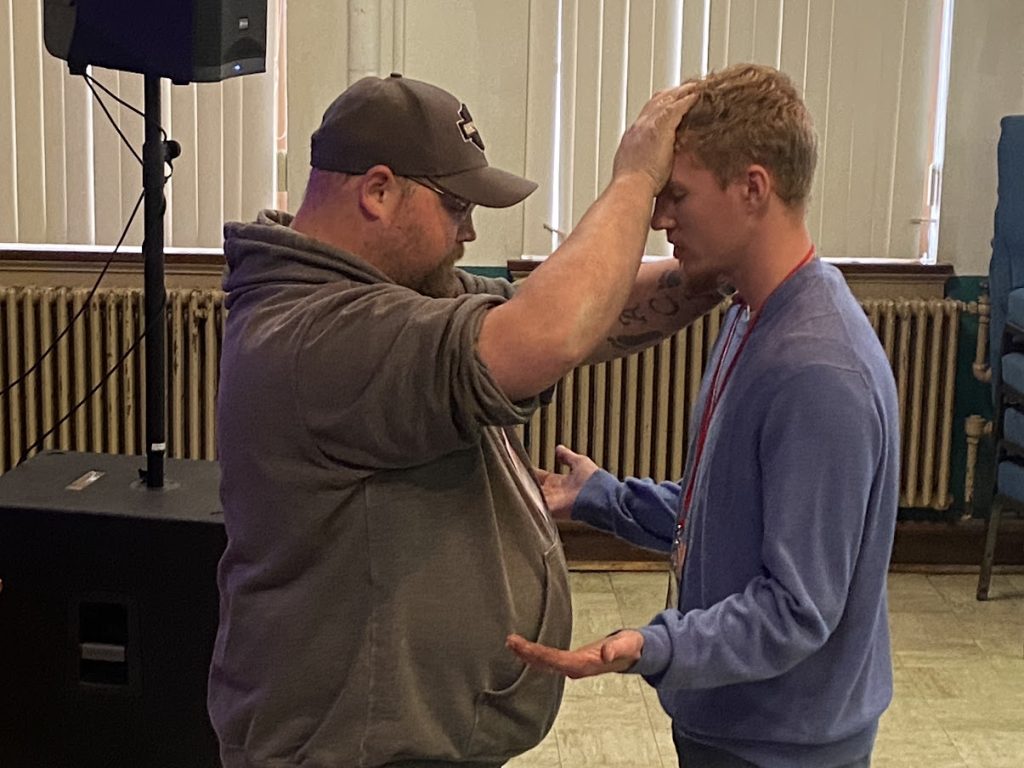
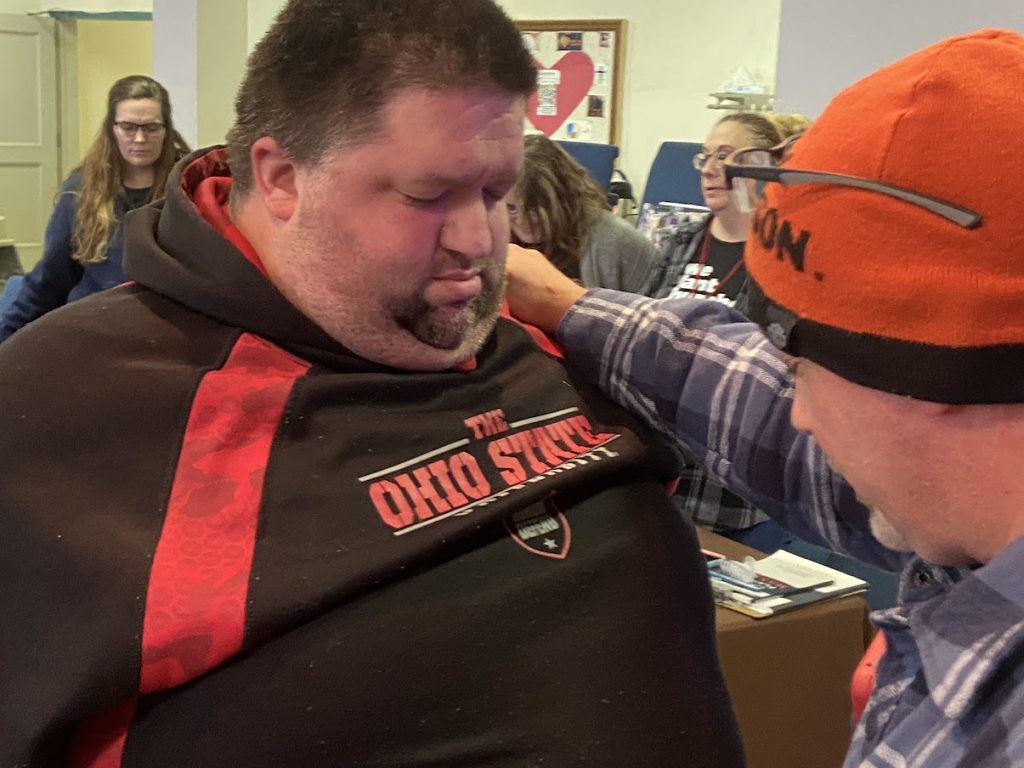
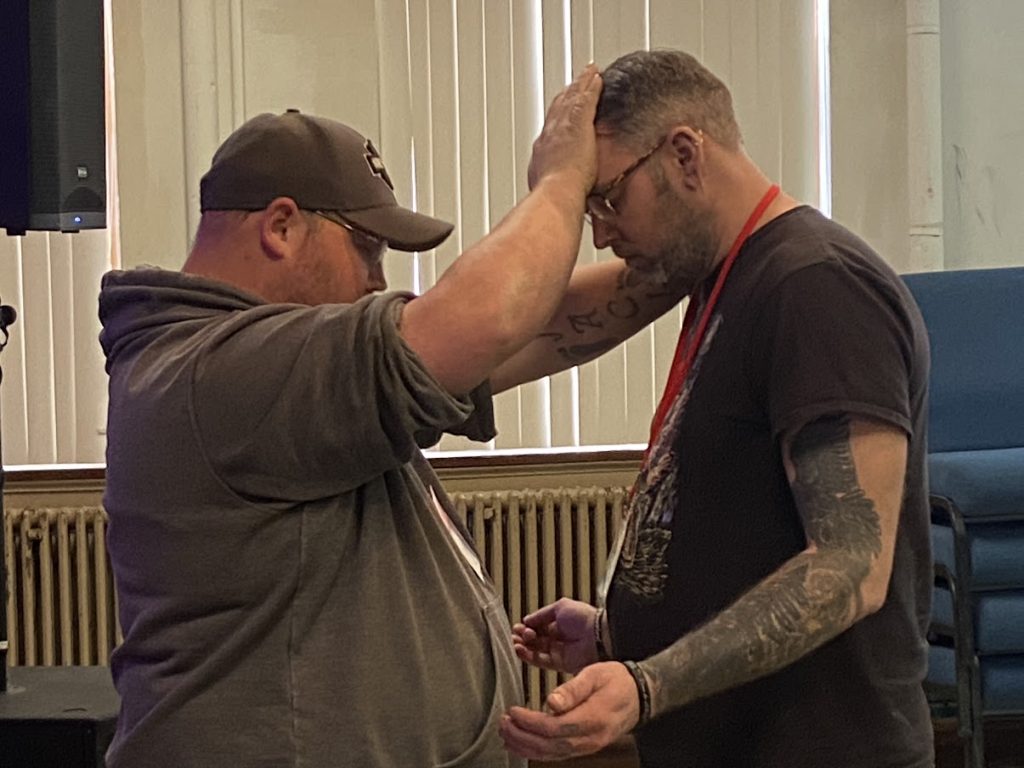
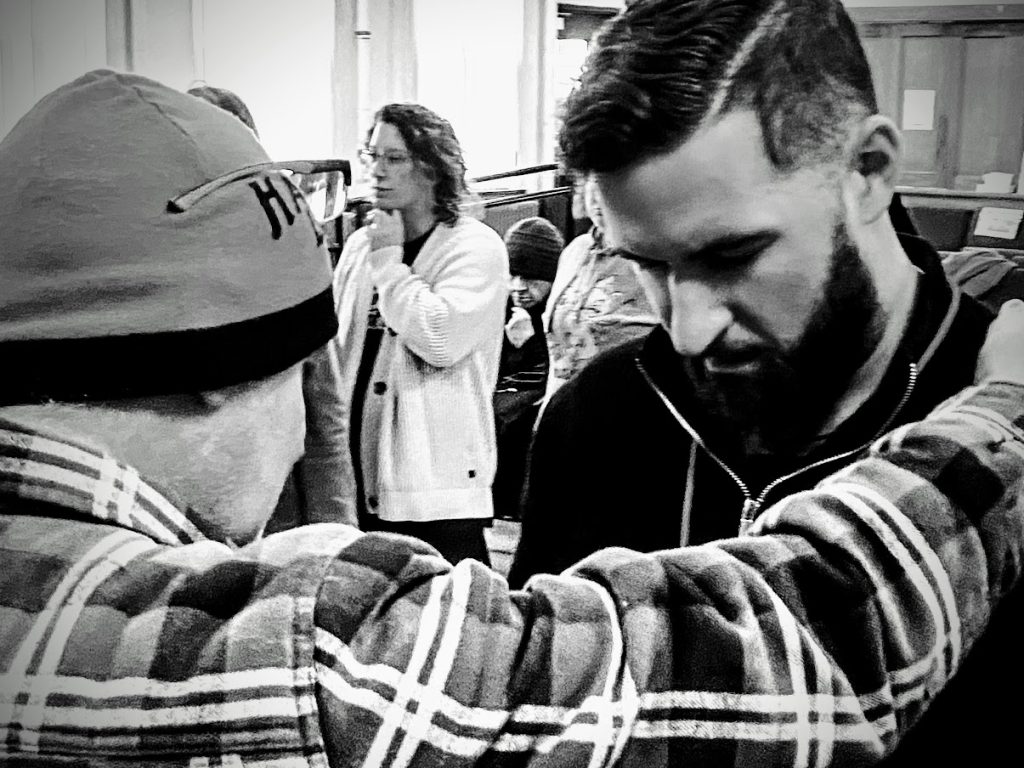
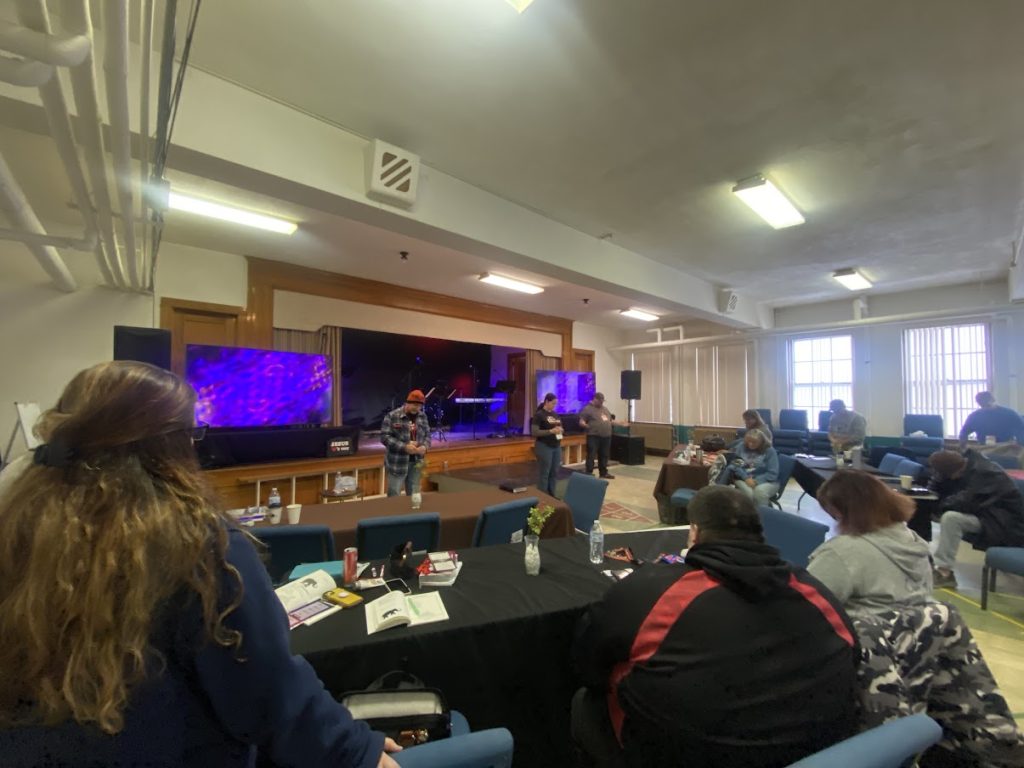
Last week in our Basics series at Open Arms Community Church in Bradford, PA, we asked an important question: Who is the Holy Spirit?
Now we take the next step:
What does the Holy Spirit do?
It sounds like a simple question until you begin looking through Scripture. The Bible describes the Holy Spirit teaching, guiding, convicting, comforting, empowering, revealing truth, giving spiritual gifts, helping us understand God’s Word, and equipping us to serve.
But all of those individual works point toward something bigger: the Holy Spirit is at work transforming us into people who look more like Jesus.
The Christian life is not simply a matter of believing the right things and then trying harder to become a better person. God gives us His Spirit. He works within us, revealing what needs to change, leading us into truth, giving us what we need to serve, and empowering us to live as witnesses for Christ.
Watch the Full Sermon
Watch Dave Arnett’s complete message, “What Does the Holy Spirit Do?”, from Part 12 of the Basics series at Open Arms Community Church.
[EMBED YOUTUBE VIDEO HERE]
The Holy Spirit Is Our Helper
Before Jesus returned to the Father, He promised His disciples that they would not be left to carry out His mission alone. He would send the Helper—the Spirit of truth.
But when the [a]Helper comes, whom I shall send to you from the Father, the Spirit of truth who proceeds from the Father, He will testify of Me. 27 And you also will bear witness, because you have been with Me from the beginning.
John 15:26–27 (NKJV)
“But now I go away to Him who sent Me, and none of you asks Me, ‘Where are You going?’ 6 But because I have said these things to you, sorrow has filled your heart. 7 Nevertheless I tell you the truth. It is to your advantage that I go away; for if I do not go away, the Helper will not come to you; but if I depart, I will send Him to you. 8 And when He has come, He will convict the world of sin, and of righteousness, and of judgment: 9 of sin, because they do not believe in Me; 10 of righteousness, because I go to My Father and you see Me no more; 11 of judgment, because the ruler of this world is judged.
12 “I still have many things to say to you, but you cannot bear them now. 13 However, when He, the Spirit of truth, has come, He will guide you into all truth; for He will not speak on His own authority, but whatever He hears He will speak; and He will tell you things to come. 14 He will glorify Me, for He will take of what is Mine and declare it to you. 15 All things that the Father has are Mine. Therefore I said that He [a]will take of Mine and declare it to you.
John 16:5–15 (NKJV)
Jesus describes an active ministry of the Holy Spirit. He convicts. He guides us into truth. He reveals what comes from God. And through it all, He glorifies Jesus.
This gives us an important starting point for understanding the work of the Holy Spirit. His work isn’t primarily about creating dramatic spiritual experiences. He is working to draw us toward Christ and make the character of Christ increasingly visible in us.
And that is a work every one of us desperately needs.
The Holy Spirit Transforms Our Lives
Scripture doesn’t flatter us about our natural condition.
for all have sinned and fall short of the glory of God,
Romans 3:23 (NKJV)
Sin isn’t merely a collection of particularly terrible things done by particularly terrible people. It runs through every human heart. Left to ourselves, our desires turn inward. We become preoccupied with what we want, what we deserve, what makes us happy, and how other people can help us get it.
Paul describes some of the fruit that grows from a life ruled by those desires:
Now the works of the flesh are evident, which are: [a]adultery, [b]fornication, uncleanness, lewdness, 20 idolatry, sorcery, hatred, contentions, jealousies, outbursts of wrath, selfish ambitions, dissensions, heresies, 21 envy, [c]murders, drunkenness, revelries, and the like; of which I tell you beforehand, just as I also told you in time past, that those who practice such things will not inherit the kingdom of God.
Galatians 5:19–21 (NKJV)
Hatred, jealousy, selfish ambition, anger, envy, sexual sin, division—these things leave damage behind. They break relationships, wound people we love, and pull us farther away from the life God created us to live.
When we come to Jesus, however, God does more than forgive our past.
He begins changing our future.
Now He who establishes us with you in Christ and has anointed us is God, 22 who also has sealed us and given us the Spirit in our hearts as a guarantee.
2 Corinthians 1:21–22 (NKJV)
God gives us His Spirit, and the Holy Spirit begins the lifelong work of transforming us.
That word lifelong matters.
What If Change Is Taking Longer Than You Expected?
Sometimes we hear dramatic testimonies of people meeting Jesus and experiencing immediate transformation. An addiction disappears. A destructive habit ends. A relationship is restored. Their entire direction seems to change overnight.
God certainly can work that way.
But not every transformation happens instantly.
You may sincerely love Jesus and still discover old desires fighting for control. You may know you’ve been forgiven and still find yourself struggling with anger, pride, lust, bitterness, selfishness, fear, or patterns of thinking you’ve carried for years.
Paul describes this struggle:
I say then: Walk in the Spirit, and you shall not fulfill the lust of the flesh. 17 For the flesh lusts against the Spirit, and the Spirit against the flesh; and these are contrary to one another, so that you do not do the things that you wish.
Galatians 5:16–17 (NKJV)
There is a real conflict between the flesh and the Spirit. Following Jesus does not mean that every old desire immediately disappears. It means we are learning to walk in the Spirit rather than allowing those desires to rule us.
That can be frustrating when we want instant results.
We pray, God, why am I still struggling with this? Why isn’t this easier yet? Why do I keep having to surrender the same thing?
But slow transformation is still transformation.
Spiritual growth isn’t measured only by whether temptation still exists. Sometimes growth looks like recognizing temptation sooner. Repenting more quickly. Becoming less defensive when confronted. Opening Scripture instead of trusting your emotions. Forgiving in days instead of carrying bitterness for years. Saying yes to God in an area where you once refused Him.
The question isn’t whether you’ve arrived.
Are you walking with the Spirit and allowing Him to keep changing you?
Transformation Requires Surrender
We cannot transform ourselves into the image of Christ through sheer willpower. But we can resist the One who is transforming us.
The Holy Spirit may reveal something that needs to change, but we still have to decide whether we will surrender it.
There are parts of ourselves we protect surprisingly well. We justify our attitudes. We excuse our habits. We blame our circumstances. We tell ourselves, That’s just who I am.
But Jesus never called us to protect the old version of ourselves.
He called us to die.
Most assuredly, I say to you, unless a grain of wheat falls into the ground and dies, it remains alone; but if it dies, it produces much [a]grain.
John 12:24 (NKJV)
Jesus uses the image of a seed falling into the ground. If it remains exactly as it is, it remains alone. But when it falls into the ground and dies, something new grows from it.
There is a beautiful devotional truth in that picture:
You are the ground.
The Word of God cannot remain something we merely hear on Sunday or read on a page. The seed has to fall into us. God’s truth has to take root deeply enough to confront our desires, reshape our thinking, and change the way we live.
It can’t be just words.
It has to become part of us.
When the Word Becomes Real
There is a difference between knowing what a Bible verse says and allowing the Holy Spirit to make its truth personal.
You can read about forgiveness without forgiving.
You can know that God commands us to love our enemies while continuing to hate someone.
You can quote verses about trusting God while allowing fear to control every decision.
You can know that all have sinned and still spend your life comparing yourself to people you consider worse than you.
Then there are moments when the Word stops being something we are merely reading and becomes a mirror held up to our own hearts.
Suddenly, the question isn’t What’s wrong with everybody else?
It’s What’s happening in me?
This is one of the ways the Holy Spirit uses Scripture. He brings the truth of God’s Word to bear on the actual condition of our hearts. He exposes what we would rather ignore and reveals our need for a Savior.
And that leads us to one of the Holy Spirit’s most important—and sometimes most uncomfortable—ministries.
The Holy Spirit Convicts Us of Sin
Most of us enjoy encouragement more than correction.
We want God to comfort us, strengthen us, give us peace, and remind us that He loves us. And He does all of those things.
But sometimes one of the most loving things God can do is show us that we’re wrong.
The Holy Spirit reveals sin because sin destroys us. He loves us too much to quietly watch us remain enslaved to something that is damaging our relationship with God, hurting other people, or slowly hardening our hearts.
If we say that we have no sin, we deceive ourselves, and the truth is not in us. 9 If we confess our sins, He is faithful and just to forgive us our sins and to cleanse us from all unrighteousness. 10 If we say that we have not sinned, we make Him a liar, and His word is not in us.
1 John 1:8–10 (NKJV)
Our natural response is often self-defense.
I’m not as bad as that person.
Everybody does it.
They started it.
You don’t know what I’ve been through.
That’s just my personality.
It’s really not that big of a deal.
We can find a hundred ways to justify ourselves. But the Holy Spirit knows what lies beneath those explanations. He sees our actions, but He also sees our motives. He knows the wounds we’re protecting, the desires we’re feeding, the resentment we’re holding onto, and the things we’ve carefully hidden from everyone else.
And because He loves us, He brings them into the light.
Conviction Is a Gift
Conviction can be painful, but it is not something to fear.
It is something to receive.
When the Holy Spirit puts His finger on something in our lives, we have a choice. We can humble ourselves, agree with God, repent, and allow Him to change us.
Or we can keep ignoring Him.
The danger is that repeated resistance can make us increasingly insensitive to His prompting. Something that once troubled our conscience can eventually become something we barely notice.
That is why conviction is a gift.
Conviction and condemnation are not the same thing. Condemnation tells us there is no hope: You’re filthy. You’ll never change. God doesn’t want you.
Conviction says: This needs to change. Bring it to God. There is forgiveness. There is freedom. There is a better way.
The Holy Spirit doesn’t expose our sin so that He can humiliate us. He exposes it so that we can repent, receive the grace of God, and walk more closely with our Father.
The difficult part is often not understanding what God wants.
It’s surrendering our pride.
Sometimes spiritual growth begins with a frighteningly simple prayer:
“Holy Spirit, show me what needs to change.”
Then comes the harder prayer:
“And when You show me, help me surrender it.”
That is where transformation begins.
The Holy Spirit Guides Us Into Truth
Transformation requires more than recognizing what is wrong. We also need to know what is true.
That can be harder than it sounds.
We live surrounded by voices telling us what to believe about God, ourselves, relationships, success, happiness, sexuality, money, purpose, and almost everything else. Some of those voices sound convincing. Some appeal directly to our emotions and desires. Some even use spiritual language.
Jesus promised that we would not be left to sort through all of that alone.
“But when the [a]Helper comes, whom I shall send to you from the Father, the Spirit of truth who proceeds from the Father, He will testify of Me.
John 15:26 (NKJV)
However, when He, the Spirit of truth, has come, He will guide you into all truth; for He will not speak on His own authority, but whatever He hears He will speak; and He will tell you things to come. 14 He will glorify Me, for He will take of what is Mine and declare it to you. 15 All things that the Father has are Mine. Therefore I said that He [a]will take of Mine and declare it to you.
John 16:13–15 (NKJV)
Jesus calls the Holy Spirit the Spirit of truth. He guides us toward what is true, brings the teachings of Jesus to mind, and continually points us toward Christ.
This is one reason our relationship with God’s Word matters so much. The Holy Spirit does not lead us away from Scripture in search of some better or more exciting truth. He helps us understand and apply the truth God has already revealed.
The Bible can be something we merely read, or it can become something that shapes us. As we approach Scripture with a heart that genuinely wants to know God, the Holy Spirit uses His Word to reveal God’s character, expose our motives, challenge our assumptions, and show us the way of Jesus.
Sometimes that means He comforts us.
Sometimes He corrects us.
Sometimes He brings a familiar passage to mind at exactly the moment we need it.
And sometimes He shows us that something we have believed for years simply isn’t true.
How Do We Tell Truth From a Lie?
Not every thought deserves to be trusted simply because it feels true.
You’ll never change.
God could never forgive you.
If you had more money, then you’d finally be happy.
Getting even will make you feel better.
You have to look out for yourself because nobody else will.
If following Jesus costs you something, it can’t be God’s will.
Lies often promise something they cannot deliver.
Jesus gives us a helpful contrast:
The thief does not come except to steal, and to kill, and to destroy. I have come that they may have life, and that they may have it more abundantly.
John 10:10 (NKJV)
One way to discern what we are believing is to look at where it leads.
Does this belief move me toward the character of Jesus—or away from Him? Does it produce love, obedience, humility, freedom, and good fruit? Or does it feed bitterness, destruction, selfishness, division, fear, and sin?
God’s truth leads us toward life.
The enemy’s lies ultimately lead toward destruction.
Jesus gives us the answer for remaining grounded when the world around us is full of competing voices:
Then Jesus said to those Jews who believed Him, “If you abide in My word, you are My disciples indeed. 32 And you shall know the truth, and the truth shall make you free.”
John 8:31–32 (NKJV)
Notice the connection between truth and abiding in His Word.
If we want the Holy Spirit to guide us into truth, we need to give Him something to work with. We need to know the Scriptures. We need to spend time with Jesus. We need to become familiar enough with God’s character that lies begin to sound foreign to us.
The goal isn’t simply to win arguments about what is true.
The goal is to live in the freedom that truth produces.
The Holy Spirit Gives Us Spiritual Gifts
The Holy Spirit doesn’t only work in us. He also desires to work through us.
God has given His Church an incredible variety of people, abilities, personalities, experiences, and spiritual gifts. None of us has everything the Church needs—and that’s intentional.
If a son asks for [a]bread from any father among you, will he give him a stone? Or if he asks for a fish, will he give him a serpent instead of a fish? 12 Or if he asks for an egg, will he offer him a scorpion? 13 If you then, being evil, know how to give good gifts to your children, how much more will your heavenly Father give the Holy Spirit to those who ask Him!”
Luke 11:11–13 (NKJV)
God is a good Father who gives good gifts to His children.
Paul describes some of the ways the Holy Spirit equips believers:
There are [a]diversities of gifts, but the same Spirit. 5 There are differences of ministries, but the same Lord. 6 And there are diversities of activities, but it is the same God who works [b]all in all. 7 But the manifestation of the Spirit is given to each one for the profit of all: 8 for to one is given the word of wisdom through the Spirit, to another the word of knowledge through the same Spirit, 9 to another faith by the same Spirit, to another gifts of healings by [c]the same Spirit, 10 to another the working of miracles, to another prophecy, to another discerning of spirits, to another different kinds of tongues, to another the interpretation of tongues. 11 But one and the same Spirit works all these things, distributing to each one individually as He wills.
1 Corinthians 12:4–11 (NKJV)
There are different gifts, but the same Spirit.
That means your gift may not look like someone else’s.
And that’s okay.
In fact, that’s the point.
The Holy Spirit knows us completely. He knows our strengths and weaknesses, and He knows precisely how each of us can contribute to what God is doing through His Church. Spiritual gifts aren’t trophies proving how spiritual we are. They are tools given so that we can serve others and glorify God.
This changes the question we ask.
Instead of Why can’t I do what they do? we can ask:
What has God entrusted to me, and how can I use it faithfully?
You Have a Place in the Body of Christ
Comparison can make us overlook what God has placed in our own hands.
We see someone preach and think, I could never do that.
We hear someone sing and wish we had their voice.
We watch someone lead and assume their role must be more important than ours.
But the Church isn’t supposed to be a collection of people competing for the most visible gifts. Scripture describes us as something much more connected:
a body.
Do you not know that you are the temple of God and that the Spirit of God dwells in you?
1 Corinthians 3:16 (NKJV)
Now you are the body of Christ, and members individually. 28 And God has appointed these in the church: first apostles, second prophets, third teachers, after that miracles, then gifts of healings, helps, administrations, varieties of tongues. 29 Are all apostles? Are all prophets? Are all teachers? Are all workers of miracles? 30 Do all have gifts of healings? Do all speak with tongues? Do all interpret? 31 But earnestly desire the [a]best gifts. And yet I show you a more excellent way.
1 Corinthians 12:27–31 (NKJV)
Every part has a purpose.
A body with one strong leg and no other functioning parts isn’t a healthy body. The different parts need each other. In the same way, every person matters in the Body of Christ.
You may never stand behind a pulpit.
You may never lead worship.
You may never hold a position that gets announced from the stage.
That does not mean your ministry is insignificant.
Yes, a Clean Toilet Can Be Ministry
Sometimes the most spiritual thing you can do is clean a toilet. 🚽
That may sound funny, but it exposes something important about the way we define ministry.
Imagine someone quietly making sure the church building is clean before people arrive. Nobody applauds. Nobody sees their name on a screen. They may finish the job before most people even walk through the doors.
Then a family arrives for the first time.
The building is clean. The bathrooms are cared for. The space communicates that somebody thought about them before they arrived.
Could that be ministry?
Absolutely.
Is the person who serves that way somehow less important than the person who preaches the sermon?
No.
Every gift and talent in the Body of Christ can be used to encourage others and glorify God.
We create an unhealthy picture of the Church when we divide people into those who “do ministry” and everybody else.
If you belong to Jesus, you have a part to play.
Maybe your gift is teaching. Maybe it’s hospitality. Maybe you know how to repair things. Maybe you’re good at listening to hurting people. Maybe you can organize chaos. Maybe you naturally notice needs everyone else walks past. Maybe you can cook, encourage, lead, give, pray, create, build, clean, welcome, or serve behind the scenes.
Don’t despise what God has put in your hands because it doesn’t look like what He put in someone else’s.
And don’t assume God can only use you in the areas where you already feel confident. There may be moments when He asks you to step outside your normal role and do something completely unfamiliar. When He does, obedience matters more than comfort. We can trust Him to supply what we need for what He asks us to do.
The question isn’t whether your gift looks impressive.
The question is:
Will you use it?
The Holy Spirit Empowers Us to Be Witnesses
Ultimately, the Holy Spirit’s work in us is never intended to stop with us.
Jesus gave His disciples a mission that was far beyond their natural ability.
And being assembled together with them, He commanded them not to depart from Jerusalem, but to wait for the Promise of the Father, “which,” He said, “you have heard from Me; 5 for John truly baptized with water, but you shall be baptized with the Holy Spirit not many days from now.” 6 Therefore, when they had come together, they asked Him, saying, “Lord, will You at this time restore the kingdom to Israel?” 7 And He said to them, “It is not for you to know times or seasons which the Father has put in His own authority. 8 But you shall receive power when the Holy Spirit has come upon you; and you shall be [a]witnesses to Me in Jerusalem, and in all Judea and Samaria, and to the end of the earth.”
Acts 1:4–8 (NKJV)
Jesus didn’t simply tell His disciples to try harder to be courageous.
He promised them power.
The Holy Spirit would empower them to become witnesses—to tell others what they had seen, heard, and experienced in Jesus Christ.
That same mission belongs to the Church today.
And for many Christians, this is where things become uncomfortable.
We may be willing to attend church. We may read our Bibles. We may pray. We may even serve.
But talking to another person about Jesus can feel intimidating.
What if I don’t know what to say?
What if they ask a question I can’t answer?
What if I say it wrong?
What if they think I’m weird?
But being a witness doesn’t require knowing the answer to every theological question.
A witness simply tells what they know to be true.
You Have a Testimony
You don’t need fancy words to tell someone what Jesus has done in your life.
Paul himself refused to make the Gospel depend on impressive speech.
And I, brethren, when I came to you, did not come with excellence of speech or of wisdom declaring to you the [a]testimony of God. 2 For I determined not to know anything among you except Jesus Christ and Him crucified. 3 I was with you in weakness, in fear, and in much trembling. 4 And my speech and my preaching were not with persuasive words of [b]human wisdom, but in demonstration of the Spirit and of power, 5 that your faith should not be in the wisdom of men but in the power of God.
1 Corinthians 2:1–5 (NKJV)
Our confidence isn’t supposed to rest in our ability to be persuasive.
It rests in the power of God.
If Jesus has saved you, forgiven you, restored you, carried you through grief, freed you from something that once controlled you, given you hope in a dark season, or changed the direction of your life, you have something to say.
You have a testimony.
The details won’t look like anyone else’s, and they don’t need to. You aren’t being asked to preach someone else’s story.
You can simply tell the truth about what Jesus has done for you.
And perhaps someone desperately needs to hear it.
Your Story Is Meant to Point to Jesus
The Holy Spirit does not transform us merely so that we can have better lives. He transforms us so that our lives can become evidence of the grace of God.
Jesus describes His followers as light:
“You are the light of the world. A city that is set on a hill cannot be hidden. 15 Nor do they light a lamp and put it under a basket, but on a lampstand, and it gives light to all who are in the house. 16 Let your light so shine before men, that they may see your good works and glorify your Father in heaven.
Matthew 5:14–16 (NKJV)
Light isn’t meant to be hidden.
There should be something visible about the work God is doing in us. People should be able to see grace changing the way we treat others, forgiveness changing the way we respond when we’re hurt, generosity changing the way we handle what we have, and hope changing the way we walk through difficult seasons.
Our lives become part of our witness.
That doesn’t mean we have to pretend we’ve figured everything out. In fact, sometimes the most powerful testimony is simply an honest one: This is who I was. This is where Jesus met me. This is what He has done. And this is what He is still changing in me.
The Holy Spirit gives us the courage to tell that story.
“We Cannot But Speak”
When Peter and John were threatened by religious leaders and ordered to stop speaking about Jesus, their response was remarkably simple.
But so that it spreads no further among the people, let us severely threaten them, that from now on they speak to no man in this name.”
18 So they called them and commanded them not to speak at all nor teach in the name of Jesus. 19 But Peter and John answered and said to them, “Whether it is right in the sight of God to listen to you more than to God, you judge. 20 For we cannot but speak the things which we have seen and heard.”
Acts 4:17–20 (NKJV)
They had encountered Jesus. They had seen what He had done. Silence was no longer an option.
That kind of boldness doesn’t necessarily mean becoming louder, more argumentative, or more confrontational. Biblical boldness is the courage to remain faithful to Jesus even when doing so costs us something.
The Holy Spirit can give us courage to speak when we would rather remain silent. He can help us love people who don’t agree with us. He can give us words when we don’t know what to say. And He can teach us to care more about someone’s need for Jesus than our fear of how they might respond.
Jesus makes it clear that following Him is not something we are meant to hide.
“Therefore whoever confesses Me before men, him I will also confess before My Father who is in heaven. 33 But whoever denies Me before men, him I will also deny before My Father who is in heaven.
Matthew 10:32–33 (NKJV)
The question isn’t whether every Christian needs to become a preacher.
The question is whether we’re willing to be known as people who belong to Jesus.
From Consumers to Participants
There is a subtle trap in the Christian life: we can consume spiritual things without ever allowing them to move us into action.
We attend church. We listen to sermons. We sing worship songs. We go to Bible studies. We read Christian books and watch Christian videos.
All of those things can be good.
But if all we ever do is receive, we have missed something important about what the Holy Spirit wants to do in us.
The Spirit doesn’t only want to teach us. He wants to send us.
He doesn’t only want to give us gifts. He wants us to use them.
He doesn’t only want us to experience God’s love. He wants that love to overflow into the lives of other people.
A healthy Christian life gradually moves us from asking, “What am I getting from this?” toward asking, “How can God use me?”
That change—from consumer to participant—is part of spiritual maturity. The Holy Spirit begins to give us God’s heart for people. We start noticing needs we once ignored. We begin caring about whether other people know Jesus. Serving stops feeling like an interruption and starts becoming part of what it means to follow Christ.
The work of the Holy Spirit within us eventually becomes the work of the Holy Spirit through us.
Don’t Leave God’s Gifts Unopened
Imagine receiving gifts that were carefully chosen for you, beautifully wrapped, and placed right in front of you.
Then imagine never opening them.
You acknowledge that they’re there. You might even be grateful for them. But year after year, they remain wrapped and unused.
What a waste.
That picture gives us a challenging way to think about the gifts and opportunities God has entrusted to us.
The Holy Spirit gives gifts for a purpose. They aren’t decorations for our spiritual lives. They are meant to be received, developed, and used for God’s glory and the good of others.
That leaves each of us with an important question: Will we receive what God has given us and faithfully use it, or will we leave His gifts unused?
Every gift surrendered to God can become a way to serve others, strengthen the Body of Christ, and help us become the witnesses Jesus has called us to be.
Some of us may be asking God for something new while ignoring what He has already placed in our hands.
Maybe you have the ability to encourage people, but you rarely take the time to do it.
Maybe you can teach, but fear has kept you quiet.
Maybe God has given you resources that could meet someone else’s need.
Maybe you have a gift for hospitality but haven’t opened your home.
Maybe you see needs in the Church and keep waiting for someone else to address them.
The question isn’t simply, “What gifts do I have?”
A better question might be:
“What am I doing with what God has given me?”
Don’t Grow Roots in a Pew
Jesus told a sobering story about servants who were entrusted with resources while their master was away.
Matthew 25:14–30 (NKJV)
The servants did not all receive the same amount.
That matters.
God does not ask you to produce someone else’s results with someone else’s gifts. He asks you to be faithful with what He has entrusted to you.
The danger is not having a smaller gift.
The danger is burying it.
Maybe the Holy Spirit has prompted you over and over to take a step, serve somewhere, speak to someone, use an ability, share your testimony, or become more involved in what God is doing.
At some point, there has to be a response.
The challenge from this message is memorable:
Don’t sit there and grow roots in a pew. 🌱
You have been called to serve.
You have been called to be a witness.
You have been given something that can be used for the glory of God.
Church isn’t a place where a handful of gifted people perform ministry while everyone else watches.
We are the Body of Christ.
Every part matters. Every gift matters. Every act of obedience matters.
You don’t need to wait until you feel exceptionally talented, knowledgeable, spiritual, or confident.
You can start by saying yes to the next thing God puts in front of you.
What Is the Holy Spirit Doing in You?
So, what does the Holy Spirit do?
He transforms us.
He convicts us when sin is pulling us away from God.
He guides us into truth.
He uses God’s Word to expose lies and reveal the heart of God.
He gives spiritual gifts so that we can build up the Body of Christ.
He empowers ordinary believers to become witnesses for Jesus.
And through all of it, He is forming us into people whose lives bring glory to Christ. These are the major ministries emphasized throughout this message.
But knowing what the Holy Spirit does isn’t enough.
The more personal question is:
What are you allowing the Holy Spirit to do in you?
Is He convicting you about something you’ve been defending?
Is He exposing a lie you’ve believed?
Is He asking you to surrender something you’ve been holding onto?
Has He given you a gift that you’ve left unused?
Is there someone He keeps prompting you to encourage, serve, forgive, invite, or tell about Jesus?
The Holy Spirit’s prompting calls for a response.
We can resist Him, or we can surrender.
We can bury what we’ve been given, or we can use it.
We can remain consumers, or we can become participants in what God is doing.
We can sit comfortably in the pew, or we can get up and follow wherever Jesus leads.
A Prayer of Surrender
Maybe the best response isn’t complicated.
Holy Spirit, show me what needs to change. Guide me into truth. Help me recognize the gifts You have given me. Give me the courage to use them. Show me the people around me who need to see and hear the love of Jesus. And when You prompt me to move, give me the courage to say yes.
God has not called us to transform ourselves.
He has given us His Spirit.
Our part is to keep surrendering, keep listening, keep obeying, and keep allowing Him to make us more like Jesus.
Visit Open Arms Community Church in Bradford, PA
If you’re looking for a church in Bradford, PA, we’d love to welcome you to Open Arms Community Church. Come worship with us, meet our church family, and discover what it looks like to follow Jesus together.
Support the Ministry of Open Arms
Your generosity helps Open Arms Community Church continue sharing the Gospel, serving our community, and helping people become more like Jesus as a family.