You know the great thing about rock bottom? Bedrock is the ideal place to build a strong foundation.
Kelsey Boudin
Life throws painful moments at us, like arrows, and they always seem to land right at the core of old wounds. But in those moments, life also holds up a mirror. Lies are laid bare. Reality shocks us.
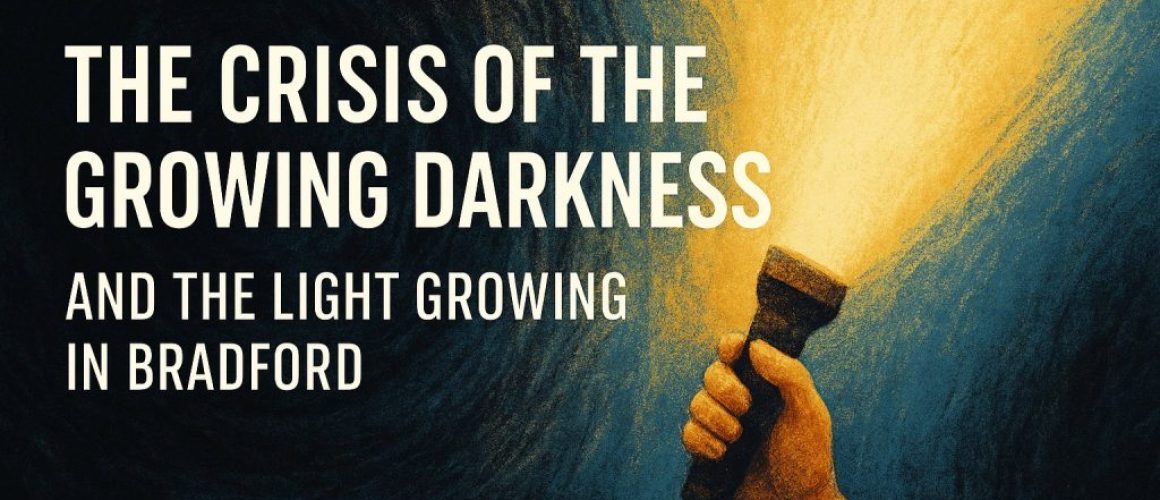
Lying on my living room floor just a few short months ago, I found God again – at age 36. Then I promptly found Open Arms Community Church in Bradford. For pushing back the darkness in my life – and for so many other reasons soon to be discussed – I urge area residents to support the church’s Local Impact Fund this Giving Tuesday (Dec. 2) at https://openarmscommunitychurch.org/push-back-the-darkness/.
Truth be told, I had been to Open Arms before, several years back before the church moved to its current location on Congress Street. The pastor’s husband has long been one of my best friends. A true man of God, he had always held the doorways to faith open to me, with a friendly nod saying, “Come in out of the cold, man.”
I did. For a while.
But like so many others, faith can be short-lived. We begin to feel better about our adult problems and human foibles. We may mask or rationalize away our addictions. If we’re feeling stronger, why do we need God? “Thanks for the pick-me-up, God. I’ll take it from here,” many of us have in some way said. That mindset, of course, never works. As Jesus’s parable of the farmer sowing seeds (Matthew 13) notes, the seeds spread on footpaths, shallow soil and among thorns get picked off, blown away, dried up or choked out.
We need deep, fertile soil. Open Arms is that deep, fertile soil.
I immediately joined the men’s group – aptly called the Tribe of Lions – and gained the strongest and most honest support system I’ve ever met. Men from different walks of life and perspectives, with personal issues all their own, coming together to help shoulder their brothers’ burdens.
I felt the call to serve. I had also for years neglected my creative passions like art and music, so I dusted off my guitar and joined the praise band. Joining the band has allowed me to fill my creative cup, flow it forth to others and praise God with beautiful music.
I’m also an alcoholic, a decades-long battle that ends now with support from the church’s Homecoming Recovery support group. This one is undoubtedly the most intimate of all, with members at various stages of recovery from any number of addictions. Here we’ve encountered something not often found at home or out in the community: genuine love and understanding. We aren’t judged. Our life struggles and triggers aren’t looked upon with suspicion or condemnation. Through discussion, support, prayer and Scripture reflection, we’re given the opportunity to finally heal deep wounds that guide our actions beyond reach of the conscious mind.
Open Arms Community Church features so many programs like these – called microchurches – to help men, women, teens and children. Just as importantly, the church is outwardly focused into the Bradford community and surrounding areas, which so desperately need help. The move downtown was strategic, placing the church at the heart of neighborhoods crushed by addiction, violence, broken families and despair.
Thoughts and prayers alone make for a pretty poor ministry. The good folks at Open Arms dive deep into the muck of life to rescue and redeem.
Miracles aren’t instant gifts, divine interventions and deliverances. More often, they’re good works – groups of average people brought together to use their skills and compassion for God’s purpose.
I’ve seen this in action.
Regardless if you’re religious, the truth is the good work Open Arms Community Church is doing within your friends, families and neighbors deserves support.
(Kelsey Boudin lives in Olean, NY and can be reached at kelsey@grandriveragency.org.)
When I think of the word neighborhood, my mind drifts back to the worlds of Sesame Street and Mister Rogers—places where people knew each other’s names, differences were celebrated, and kindness was the default posture. Nostalgia has a way of softening reality. For many of us, that was never the world we lived in. And for most of us here today, it still isn’t.
I’m a pastor and a church planter. I’ve spent years studying community, watching how it thrives in some cultures and struggles in others. In many parts of Asia and Africa, the church grows rapidly within collectivist societies where interdependence is not optional—it’s essential for survival. People rely on one another daily, and that reliance builds strong communal bonds.
America, however, has a different dream—one shaped around rugged independence. Success here is often defined by not needing help from anyone. In a culture that prizes isolation as achievement, true community becomes almost impossible. If you believe you don’t need others, why would you value them? Why invest in connection?
That fiercely independent mindset may be a cultural ideal, but it is not a blueprint for human flourishing. It is certainly not a biblical one. We are wired for connection. We are called to love, support, and learn from each other. To do that, we need humility—and the willingness to learn both from Scripture and from the cultures that are doing community well.
A Different Vision for Bradford
Enter Open Arms Community Church. And other ministries like Communities of Transformation (CoT), Destinations Bradford, Bright Alternatives, and the Bradford Ministerium Churches. These organizations are filled with groups of individuals from varied backgrounds who commit not just to improving their own lives but to growing together. Not as isolated problem-solvers but as a community.
I believe God has a dream for our city—yes, our own Bradford, Pennsylvania. A dream of people who are willing to share their lives, help one another, and rebuild the social fabric we’ve allowed to fray.
This isn’t an idealistic pipe dream, but a dream that I believe God gave me in the summer of 2020. I was standing in the field at the old Central Christian school. I had a vision of a community worshipping together in unity. At that moment, I saw children climbing the old oak tree on the property, filling the playground, which had been restored. I saw a bounce house filled with children happily jumping and playing. Parents talking and laughing together at their children. Then I looked up towards the hill and saw someone preaching to a crowd of gathered people, listening intently to God’s Word. It overwhelmed me; I said to God, “I don’t know how to see this come to fruition”. He said in response in my heart, “What will happen to them if you don’t?”
Since then, I have devoted myself to seeing a unified community of worshippers in Bradford. We have seen so many breakthroughs. People working together that previously have never considered helping one another. People put aside their differences to seek the unity of our city in order to help others. People coming to faith that previously had none and were broken beyond repair. People recovering from addiction and turning their lives around.
But transformation requires participation. Bradford has roughly 7,000 residents. Our congregations and other organizations have a fraction of that number of active participants. The work ahead of us is enormous.
And it starts with asking ourselves a deceptively simple question:
How many of us actually know our neighbors?
National research is startling: – Only 10% of people can name all eight of their immediate neighbors. – Only 3% know meaningful personal details about every household. – Less than 1% know their neighbors’ deeper hopes, challenges, or fears.
We walk past each other daily—strangers living yards apart.
Bradford’s Challenges Are Real, but So Is Its Value
Our city faces undeniable struggles: – Among the highest drug overdose death rates in the country – Higher-than-average excessive drinking rates – Nearly half of adults diagnosed with a mental illness – A poverty rate 13% higher than the national average
We can read those numbers and decide Bradford is broken beyond repair. Or we can choose to view our city—and the people who make it—through a different lens: one that recognizes their value, potential, and humanity.
Loving Our Neighbors Isn’t a Metaphor
When Jesus named the two greatest commandments—loving God and loving people—He wasn’t offering a poetic suggestion. He was laying out the foundation for a thriving, compassionate society.
That’s why that is our Purpose at Open Arms Community Church.
For many Americans, the idea of loving neighbors the way we love ourselves or our families is revolutionary. But that revolution starts with proximity.
Several months ago, I realized I’d lived in my home for 18 years without truly knowing the people living around me. I knew faces. I knew greetings exchanged at the mailbox. But I didn’t know what kept my neighbors up at night, what they celebrated, or how I could pray for them.
If we want to change a community, we must first choose to enter it.
As Eugene Peterson paraphrases John 1:14 in The Message: “The Word became flesh and blood, and moved into the neighborhood.”
Jesus didn’t love from afar. He showed up.
Our church chose to take that call seriously—we physically moved downtown last spring to be closer to the people we serve.
How a Neighboring Movement Begins
If Bradford is going to change, it won’t happen through programs alone. It will begin with neighbors deciding to be neighbors again.
Here’s where we start:
SEE — Ask to see people the way Jesus sees them. ACCEPT — Embrace their differences, even when they challenge us. PRAY — Bring their needs before God and ask how you can help meet them.
This isn’t a theory. It’s a movement waiting to happen.
A Different Kind of Community Is Possible
Bradford doesn’t need more isolation. It needs people willing to invest in one another, share life, and build trust. It needs neighborhoods full of people who are visible, available, and compassionate.
It needs people willing to ask for a heart that sees, accepts, and acts.
If you’re searching for a place to start, Open Arms Community Church is one such place. But whether you come to one of our services or simply knock on a neighbor’s door, the true transformation of Bradford begins with one simple step:
My wife listens to a podcast every morning by JD Walt called “The Wake-Up Call”. I have listened alongside her on occasion, and I had the privilege of briefly bumping shoulders with JD at the New Room Conference last year.
I decided to start listening for myself as I’m on a quest for a bit of a mental and spiritual reset. Too much scrolling on my phone has my dopamine levels all out of whack. The current climate on social media has turned toxic, and so my options are watching people I love argue with each other, or the “brain rot” content that occasionally makes you chuckle, but definitely doesn’t build your soul.
This morning’s episode resonated deeply with me, for a few reasons. I’ll start with the end of the podcast first. At the end of each episode JD sings a hymn. Today’s hymn was what he called “The Baptist Fight Song” and while growing up in an old fashioned Baptist Church, I’ve never heard that phrase, but before he said the title, I knew he meant “Just As I Am.”
I was driving while listening, and that song broke open my tear ducts. I’m sure I was all over the road this morning, wiping tears from my eyes as I was transported back to my childhood and teenage years, standing up at the end of sermon, listening to Mrs. Florence Sinsabaugh in her finest polyester dress, as she let the foot pedals on the organ swell, and both hands holding out the long chords, while Judy Youngblood accentuated with the piano. Pastor H.D. Youngblood would lead us in singing, waving his hand to keep the time, and between verses, he’d call us home. Rarely did anyone go up to the altar. But with every head bowed, and every eye closed, hands were raised to pledge commitment to Jesus.
We didn’t applaud much in the Baptist Church, but inside out hearts, we were cheering when Pastor would say, “I see that hand, Thank You Lord.”
We’d usually sing verses 1, 2, and 5, and there was usually an instrumental verse in there too.
1.
Just as I am, without one plea,
But that Thy blood was shed for me,
And that Thou bid’st me come to Thee,
O Lamb of God, I come! I come!
2.
Just as I am, and waiting not
To rid my soul of one dark blot;
To Thee whose blood can cleanse each spot,
O Lamb of God, I come, I come!
3.
Just as I am, though tossed about
With many a conflict, many a doubt;
Fightings within, and fears without,
O Lamb of God, I come, I come!
4.
Just as I am, poor, wretched, blind;
Sight, riches, healing of the mind;
Yes, all I need, in Thee to find,
O Lamb of God, I come, I come!
5.
Just as I am, Thou wilt receive,
Wilt welcome, pardon, cleanse, relieve;
Because Thy promise I believe,
O Lamb of God, I come, I come!
6.
Just as I am, Thy love unknown
Has broken every barrier down;
Now, to be Thine, yea, Thine alone,
O Lamb of God, I come, I come!
And I was reminded of another very personal story, that has echoed deeply in my family lore. My maternal grandfather was a bad man. The best thing he had ever done was to abandon his family. That may sound like a bad thing, but the truth is, abandoning them was the best thing. I won’t get into telling the story that really belongs to my mother and her siblings. I’ll just say he was a bad man.
Abandoned, my grandmother turned to Jesus, and paved the way for her family. They met Jesus, many of them probably hearing Pastor Youngblood sing Just As I Am, and our family’s direction was changed.
At some point, my grandfather had stumbled into a church, probably drunk. He told the story, “If that preacher would have sang one more verse of Just As I Am, I’d have walked up to that altar.” – But of course he didn’t.
Years later, after leaving a lifetime of pain and struggle in his wake, my grandfather called my grandmother. “Deanie, I’m dying. I have cancer. Would you come out and see me?”
The story I remember is that he was found laying on the ground with a pile of cigarette butts on one side, and a pile of beer cans on the other. The cancer had eaten through most of him, and he was on his way out of this world.
My grandmother went out, and invited the rest of the family.
They didn’t go because they wanted to be with him. They went because they had a mission, to introduce Grandpa Dave to grace. To plead for his soul to be saved.
They preached the gospel, sang songs, and Uncle Mike started playing Just As I Am. When he got to the end of the song, the old man said, “Keep playing.” Grandpa Dave prayed, probably for the first time in his life. He asked for forgiveness for his sins. And in the remaining few days of his life, there was a change. Tiny fruits of the Spirit growing in the small window he had left.
Just as he was. Without a plea, except that Jesus’ blood was shed for him.
————–
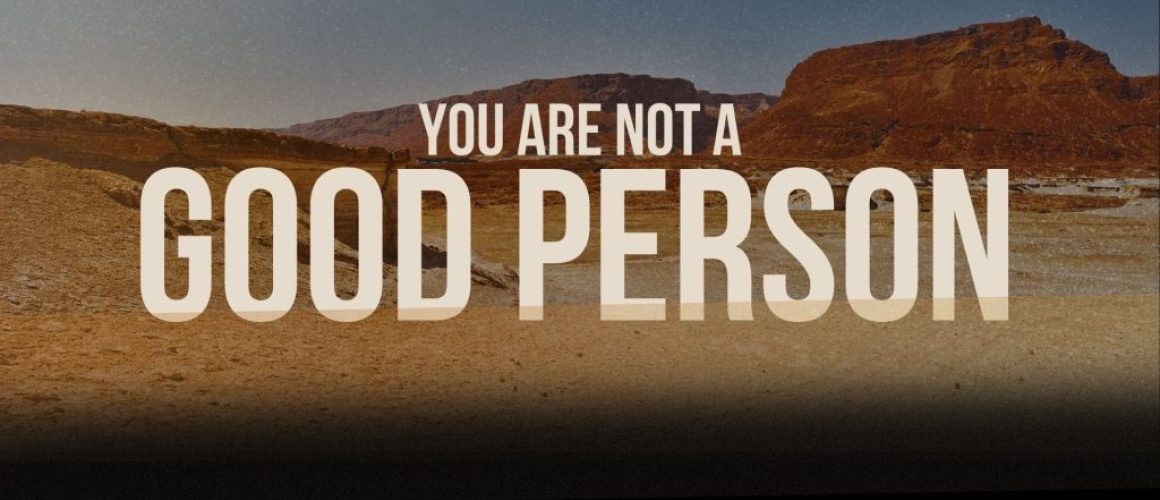
The podcast episode was centered around this thought. A woman told JD in conversation, “I don’t want you to think I’m not a good person.”
JD’s response, “You’re not a good person. And I’m not a good person.”
This truth is one we need to grasp fully.
I see it echoed on the social media feed that I’m trying to ignore right now.
Virtue signalling.
Folks pointing fingers at the “evil” they see on the other side.
“Those folks are violating what the Bible clearly commands!”
“Those folks are bigots and hypocrites!”
With the inference that “I’m better.”
We post things on the internet, and say things in conversation because we want others to think we are good people.
“I’m a good person. I don’t condone sin.” “I’m a good person. I hate racism.” “I’m a good person. I love America.” “I’m a good person. I challenge broken systems!”
“I’m a good person. I want justice!” “I’m a good person. I stand with So and So!”
Don’t get me wrong, a lot of these might be good things, to stand up for the oppressed, to long for justice, to support your country, to stand for truth and righteousness.
But the thing is, none of us are good people.
That’s what’s so hard for people to accept. That’s what’s so scandalous about the gospel.
We don’t earn right standing with God by your good deeds.
We don’t deserve to be seen as heroes and martyrs and virtuous.
When Jesus delivered the sermon on the mount, and he said this:
“You have heard that our ancestors were told, ‘You must not murder. If you commit murder, you are subject to judgment. But I say, if you are even angry with someone,you are subject to judgment! If you call someone an idiot,[e] you are in danger of being brought before the court. And if you curse someone,[f] you are in danger of the fires of hell.” -Matthew 5
I’d encourage you to read that whole passage. If I paraphrase what he’s saying,, “You guys are missing the point. In order to earn God’s favor, you have to be better than the commands. The commands say ‘Don’t murder.’ But if you hate someone in your heart or call them an idiot, you’re just as bad. If you lust after a woman, it’s just as bad as having sex with her.”
He’s making a point and establishing his authority, and emphasizng that all of us are not good people.
Paul reiterates it:
“For all have sinned and fall short of the glory of God” – Romans 3:23
This is the beauty of it.
He paid the cost for us.
“He himself is the sacrifice that atones for our sins—and not only our sins but the sins of all the world.” – 1 John 2:2
We aren’t good people. We are all sinners, and all of us are short of God’s expectations. And even if we kept the commandments in practice, we’d break them in our hearts.
But thank God!
“But God showed his great love for us by sending Christ to die for us while we were still sinners.” –Romans 5:8
He meets us just as we are, and He makes up for what we lack, so that we can be right with him.
Sometimes, we who He has redeemed forget where we came from. We forget that we’re only right with God because of what Jesus did. We’re not good people. We’re His people. He paid for us. He bought us with His suffering on the cross.
Anything good in us is because God put it there. Even before we knew Him, the good in us was the reflection of His image in us, because He made us. And now that we have surrendered to Him, the good is not because of us. It’s because of Him.
Let us never forget that.
written by
Josh Hatcher
Josh Hatcher is the Communications Director at Open Arms Community Church. He is married to Pastor Zoe Hatcher, and leads the Tribe of Lions Microchurch for men. He also is the founder of Manlihood.com
This month, we have been talking about our love styles and how to learn to love each other better in our relationships. The information from this series is drawn from the book “How We Love” by Milan and Kay Yerkovich.
We have talked about falling into frustrating patterns in our relationships we call “the dance” where we go round and round with our partners, perpetuating
the same broken cycle. Last Sunday, we heard from Pastors Rich and Annette Dennison about their “dance” and how they’ve learned to communicate and love one another in a way that honors God.
We are learning to realize that the problems in our relationships didn’t begin with our current relationship, they began much earlier, in our childhood. We learned how to love from our parents and caregivers and formed attachment styles and ways to respond to those who either gave us comfort, or the lack thereof. If you are curious to find out what love style you likely are, click here to take the survey:
There you will find out not only what type of love style you have, but ways to learn to grow from that broken style to a secure love style in your relationships.
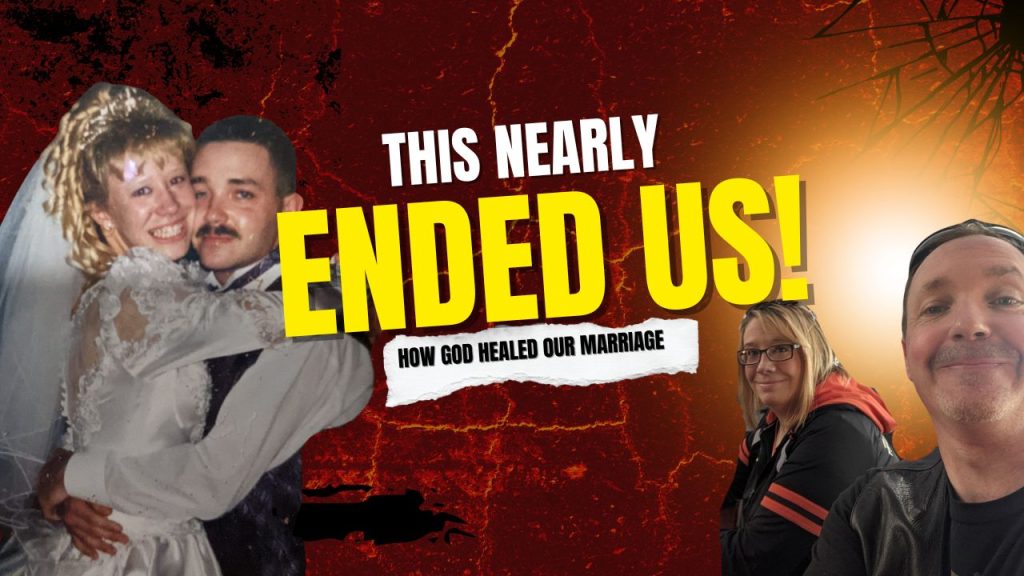
Stay tuned to our messages this month as I will be sharing this Sunday with my husband Josh Hatcher about our story and what we have learned through our journey together, learning to love in a new way. Then Sunday August 24, we will close out the series where I will be talking about the comfort circle; the way that we can learn to give and receive comfort in our relationships in a healthy way. We hope to see you there!
Maybe you’ve been feeling it lately– that tug in your heart. You can’t quite explain it, but you know God is calling you deeper. Or maybe you’ve been away from Him for a long time, and something in you is saying, “It’s time to come home.”
I know that feeling. I’ve been there. And I want to tell you my story.
I Thought I Knew Him
I grew up in a Christian home. My parents had both walked away from destructive paths and found hope in Jesus.Before I was born, my dad had been an alcoholic and a violent man, but when he met Christ, he never drank again and became known for his kindness. My mom broke free from a similar cycle and chose a new life.
From the time I was in utero, I was in church. I loved church. Sweet and kind people. Warm and inviting organ music. Cookies with the cream in the middle and kool aid. Wooden toys and Jesus coloring pages. Songs and sermons that sweetly comforted me and snuck into my heart. We called all of the older people “Grandpa” and “Grandma” as though they were our own family.
I remember being very young, and lying to my mother. I think it may be the first time she recognized that her sweet little boy could sin. She told me how to pray to invite Jesus into my heart. I would like to think that I was sincere, but I’d find a deeper truth later.
I was baptized as a child shortly after that. I believed in God, I loved Jesus, but looking back, I realize I mostly went through the motions because I wanted to make my parents proud. It was meaningful in its own way, but my heart was still empty. I knew about Jesus — but I didn’t know Him.
The Breaking Point
By the time I was in eighth grade, the loneliness and brokenness had piled up. I was bullied. I felt unwanted. I was angry at myself, at others, and at the world. I carried dark thoughts — thoughts I acted on in ways I’m not proud of, and thoughts I almost acted on in ways I might not have survived.
I decided I was going to end my life. I had every intention of cutting my wrists. But in the middle of those thoughts, a fear gripped me:
What if I don’t really know Him? If I die, will I be in hell? Will I be separated from Him forever?
I knew God was real. But I realized maybe I wasn’t in Christ.
The Night Everything Changed
That night – and in the days that followed – I wrestled with God. I came to a point where I got down on my knees, literally, and told Him I was done running.
I asked Him to forgive me. I told Him I accepted what Jesus had done for me when He died on the cross – that His death paid the price for my sin. I chose to follow Him, to serve Him as my Good King.
And something happened. I can’t explain it any other way – but it was like I stepped out of the darkness into the light.
Peace settled in. Joy I had never known before came alive in me. It didn’t mean I never struggled again, but it meant I never struggled alone.
I told the Pastor at our little country church I wanted to be baptized. He smiled. He had dunked me several years before. But he knew that there had been a change in me. The first time, it was just a bath. This time, it was a commitment – a public declaration of what God had done for me.
Why I’m Telling You This
Here’s the thing: this isn’t about religion. It’s not about rules. It’s about a relationship with the One who made you, who loves you, and who gave His life for you.
Jesus isn’t just an inspiring teacher. He is God in the flesh. He died to pay for your sin, and He rose again so you could have real life – both now and forever.
And He’s calling you. Whether you’ve never known Him, or you’ve been away for years, He’s saying, Come home.
This Is Your Moment
You don’t have to have it all together. You don’t have to clean yourself up first.
All you have to do is turn to Him. Tell Him you believe. Ask Him to forgive you. Trust Him to lead you. He will meet you right where you are.
There are seasons when something inside of us feels… off. You might feel tired, numb, angry, or overwhelmed—and you can’t quite explain why. Maybe you’ve wrestled with anxiety or addiction. Maybe you feel like you’re stuck in patterns you should have broken by now. Or maybe—if you’re honest—it just feels like some part of your soul has gone cold.
You’re not alone.
But more importantly—you’re not without hope.
God specializes in resurrection.
He’s not just in the business of saving your soul for eternity—He wants to heal you here and now, breathe life into the parts of you that feel dead, and restore you from the inside out.
Why Do I Still Feel Broken?
We often try to deal with our emotional pain by managing symptoms. We work harder, eat more, scroll endlessly, escape into porn or alcohol, or throw ourselves into church work while feeling spiritually hollow.
But the problem is deeper than behavior.
In Soul Care, Rob Reimer writes:
“You can’t build a healthy soul on a foundation of lies. The foundation must be truth.”
That truth doesn’t come from self-help clichés. It comes from Jesus—the One who said, “Then you will know the truth, and the truth will set you free” (John 8:32, NLT).
Your behaviors are the fruit, not the root. If you want real healing, you have to get to the root—and let Jesus and the Holy Spirit do what only they can do.
How Do I Begin Inner Healing?
Healing isn’t about striving harder or checking off a spiritual to-do list. It’s about surrendering to the process—led by the Holy Spirit, anchored in the Word, and walked out in community.
Here’s how that journey can start.
1. Take Ownership (Confess and Come Clean)
We love to blame others or minimize our own dysfunction. But healing starts with confession—raw honesty before God and others.
“God desires truth in the inward parts.” — Psalm 51:6 (KJV)
You may not be responsible for what happened to you—but you are responsible for how you respond now.
“The Holy Spirit will not heal what you pretend is not there.” — Rob Reimer, Soul Care
Start by naming it. The sin. The wound. The shame. The fear. You can’t fix what you won’t face. But once you name it, you disarm its power.
2. Tell Yourself the Truth (Renew Your Mind)
The lies we believe about ourselves often started in childhood pain and trauma. “I’m not wanted.” “I’m a burden.” “I always mess things up.” These lies aren’t harmless—they become the lens through which we see the world.
“Our lives are shaped by the stories we tell ourselves—and many of those stories are lies.” — John Eldredge, Get Your Life Back
The Bible calls us to “be transformed by the renewing of your mind” (Romans 12:2, NLT). This means replacing toxic beliefs with the truth of God’s Word.
As Dallas Willard put it:
“You are what you do with your mind.”
So speak truth out loud:
“I am a child of God.” (John 1:12)
“I am not condemned.” (Romans 8:1)
“I have a sound mind.” (2 Timothy 1:7)
Renewal is warfare—and the battlefield is your thought life.
3. Dig Deep (Let the Holy Spirit Heal the Root)
This is the messy part. This is where most people stop—because it gets uncomfortable. But this is where the real work of healing happens.
“Freedom comes when we confess the truth, forgive the offender, and break agreement with the lie.” — Rob Reimer, Soul Care
Let the Holy Spirit guide you through these questions:
When was the first time I felt this way? Ask God to show you. He will. And it may surprise you.
What lie did I believe in that moment? That I’m not safe? Not valuable? Unwanted?
What is the truth, Jesus? Ask Him to speak. Then speak that truth out loud until it becomes part of you.
Did I make a vow I need to break? “I’ll never trust anyone again.” “I have to take care of myself.” Break those vows in Jesus’ name. Let Him rewire your inner world.
As Henry Cloud says:
“We change our behavior when the pain of staying the same becomes greater than the pain of changing.”
Let the Holy Spirit go to the roots. Invite Him into the places you’ve been too afraid to go.
4. Build New Habits (Walk in the Spirit, Not the Flesh)
You can’t experience spiritual freedom while continuing to feed the same old flesh patterns. That means you may need to change your inputs, adjust your schedule, or set new boundaries.
“Spiritual formation is not a passive process. It requires engagement and discipline.” — Dallas Willard
We’re not talking about white-knuckled willpower. We’re talking about forming new pathways—led by the Spirit.
Try this:
Worship first before you check your phone.
Fast from media that pulls you into comparison or lust.
Build margin in your week for reflection and prayer.
Sabbath without guilt—God designed you to rest.
“Since we are living by the Spirit, let us follow the Spirit’s leading in every part of our lives.” — Galatians 5:25 (NLT)
Freedom isn’t just about saying “no” to sin. It’s about saying “yes” to life with God.
5. Don’t Do It Alone (Let the Body of Christ Walk With You)
You were never meant to heal in isolation.
“Healing happens in the context of safe, grace-filled relationships.” — Rob Reimer, Soul Care
We say it all the time at Open Arms: church isn’t a service—it’s a family. And families carry each other’s burdens.
If you’re waiting to feel “ready,” you’ll wait forever. Start where you are.
“Confess your sins to each other and pray for each other so that you may be healed.” — James 5:16 (NLT)
Let God Breathe Life Into You
Maybe you’re tired of pretending you’re fine. Maybe you’ve been busy doing “Christian things” but feel spiritually hollow. Maybe, like the Pharisees Jesus rebuked, you’ve been focusing on performance while your soul quietly withers.
“Woe to you… you are like whitewashed tombs—beautiful on the outside but filled on the inside with dead people’s bones.” — Matthew 23:27 (NLT)
To the people that reject Christ, that’s self-condemnation. But to those of us willing to hear, it’s invitation. Jesus isn’t condemning us for being dry bones. He speaks life into them.
In Ezekiel 37, God took a valley full of dead bones and brought them back to life. How? Through His Word, through His breath, and through His Spirit.
“I will put breath into you, and you will come to life. Then you will know that I am the Lord.” — Ezekiel 37:6 (NLT)
That’s His promise for you, too. You don’t have to stay stuck. You don’t have to keep numbing out. Let Jesus put you back together. Let Him breathe on you again.
👣 Are You Ready to Come Back to Life?
It won’t happen overnight. But it starts with one step:
One truth spoken.
One wound confessed.
One lie broken.
One invitation to the Holy Spirit.
And then another. And another.
🔥 Join the Journey
Come walk it out with us. Open Arms Community Church meets Sunday mornings at 71 Congress Street in Bradford, PA. And our network of microchurches meets throughout the week in homes, coffee shops, and honest spaces all over the region.
Jesus had been in Jerusalem since Sunday, riding in to cheers from the crowds. By the time Thursday rolled around that week, things were very tense in Jerusalem.
Only days before, Jesus had been in the temple, angrily driving out all of the “snakes” and clearing out what he called a “den of thieves.” He had been openly antagonizing the religious leaders, calling out their hypocrisy and angering them further day by day. The fervor in the city must have been palpable.
Amid the turmoil, he sits down Thursday evening to eat one more time before he is betrayed and led away to his death.
What Would You Say If You Knew?
What would you say to your best friends if you knew by that time tomorrow you would be dead, and that one of them would be the cause?
What if all the things you wanted to say, the tears you wanted to cry, the memories you wanted to call up with them, had to be set aside so that you could give them the last pieces of wisdom they would need to go forward without you—because there was nothing you could do to stop what was coming?
Jesus knew that in their hearts they were still not ready, and he was trying his best to prepare them.
Luke tells us that the disciples squabbled over who among them would be the greatest that night, but Jesus was washing their feet, trying to give them an example of humility and service to others that might get their attention.
As if that wasn’t making things awkward enough, he then comes out with the revelation that one of them will betray him.
This was not a peaceful evening of lighthearted comradery; certainly not how you’d want to spend your last moments with loved ones before you die. Our most trying holiday dinners with family don’t hold a candle to the dramatic events unfolding at this table.
A Sacred Supper with Heavy Words
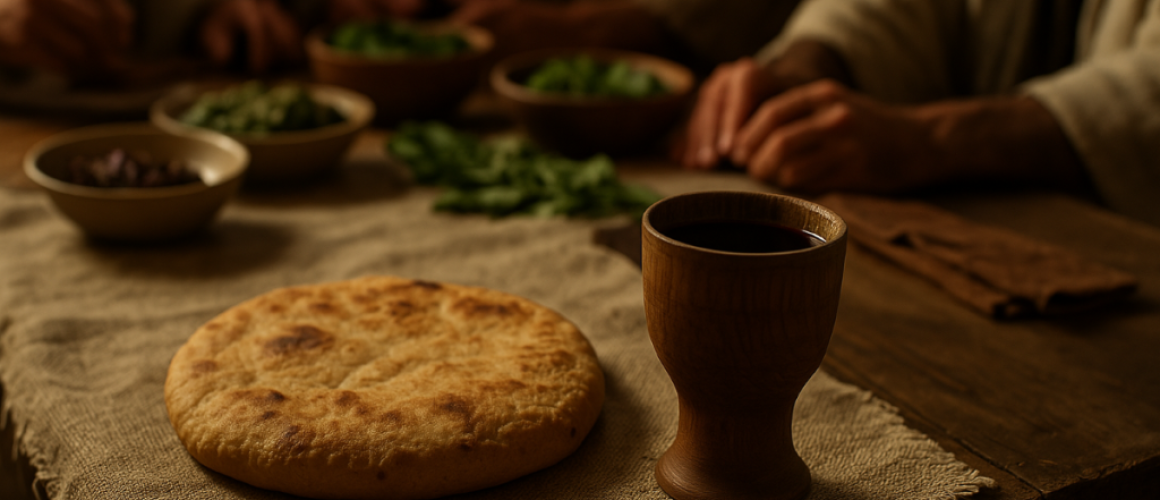
Luke 22: (19) And he took bread, gave thanks and broke it, and gave it to them, saying, “This is my body given for you; do this in remembrance of me.” (20) In the same way, after the supper he took the cup, saying, “This cup is the new covenant in my blood, which is poured out for you. (21) But the hand of him who is going to betray me is with mine on the table. (22) The Son of Man will go as it has been decreed. But woe to that man who betrays him!”
Simon prompted John to ask Jesus who would betray him, and Jesus responded to him in a way that made clear it was Judas.
Before John (or Simon, if he overheard) could react, Jesus immediately sends Judas away to carry out his task:
John 13: (26) Jesus answered, “It is the one to whom I will give this piece of bread when I have dipped it in the dish.” Then, dipping the piece of bread, he gave it to Judas, the son of Simon Iscariot. (27) As soon as Judas took the bread, Satan entered into him. So Jesus told him, “What you are about to do, do quickly.” … (30) As soon as Judas had taken the bread, he went out. And it was night.
Free Will at the Table
Indeed, darkness had fallen. So much just happened in that fraction of a conversation.
I would imagine that John, and also Simon, would have wanted to immediately try to stop Judas, but Jesus made it clear that Judas should be allowed to leave… that he be allowed to choose.
Jesus, having described what the bread and wine were—symbols of his broken body, of his very own blood given for the sake of a new covenant, and forgiveness of sin—HANDED it to Judas!
It was a gesture of immense magnitude, demonstrating divine forgiveness, even for the man who was headed away to betray him to his suffering. Judas still had free will, and a choice to make in the same way that we ourselves still have a choice.
We Still Have a Choice to Make
Believe that Jesus is the Son of God, or not.
Share the news to others so they can know the same freedom we know, or not.
Obey his commands and strive to live without sin, or not.
Love one another and forgive our enemies, or not.
Seek first the Kingdom of Heaven… or not.
The breaking of bread and sharing of wine at The Last Supper symbolized the ultimate act of selfless love.
We, too, can give of ourselves—whether it’s time, resources, or empathy—to make a positive impact on the lives of others.
Or not.
A Prayer of Surrender and Love
Lord, I pray you will give me a heart like yours.
I ask you to let me see all your children the way you see them.
I want walk on my journey with you, leaving the baggage of past grudges and hurts behind. I want to let go so I can live wholly in step with your purpose for my life.
I know that hurt, and fear, and anger are not of you Lord, but are afflictions set upon us in this world through our struggles with sin.
You are the only path to redemption… the Way, the Truth and the Life.
Please Lord, let the lessons you gave your disciples reach our hearts today, so we can live in earnest and pure alignment with your greatest command – to love one another.
By this Lord, let them know me as your disciple.
In Jesus’ Holy and Precious name I pray. Amen.
Misty Surine is a Local Ministerial Candidate (LMC), a worship leader, and a member of the Least of These Riders Microchurch.
As we enter the final stretch of our 40 Days of Sharing, we focus on the importance of boldly sharing our faith. This week, we explore The Art of Sharing and The Art of Speaking Out, recognizing that our words have the power to introduce people to Jesus.
It has taken us this long, through learning 8 Arts of Spiritual Conversations, to actually get to Sharing. Why share our faith?
In research done by Luis Palau, it shows that “75% of all those who come to Christ do so through a relationship with a Christian friend, relative, or coworker.” The Institute of American Church Growth shows that actually, “90% of the 14,000 Christians recently polled said they came to Christ through a friend or relative who invested in a relationship with them.”
Notice these statistics didn’t say they received Christ from a stranger knocking on their door or a tract left at a restaurant. They came to Jesus through a relationship with someone who invested in them. This takes time and commitment.
Our first and most important reason to share our faith in Jesus should always be genuine love for the other person, not our own agenda or sense of obligation. If we are sharing with them to check off the boxes on our 40-day commitment, they can tell, and we will alienate people when they detect our motives. Remember, we are not salespeople—we don’t need to “sell” Jesus to those around us.
An important part of sharing Jesus with people who believe differently is being aware of how God might already be at work in their life, drawing them to Himself. Then, as the Spirit leads you, share how God has done a similar thing in your life. Every one of us has a story worth sharing!
When we share with others, remember:
Tell Your Story:
Be brief – No more than a few minutes. You don’t want to make it all about you or lose their attention.
Be clear – Use real language, no “Christianese” or Bible terms that they may not understand. Just tell what you were like before Jesus, how you met Jesus, and what He has done for you since you’ve given your life to Him.
Be humble – Don’t criticize other churches, denominations, or people. Acknowledge that your own sinfulness is what led you to God.
Tell God’s Story:
Good Judge – God is loving and just. Not one or the other. There is a penalty for sin, and we have all sinned (Romans 3:23).
The Sacrifice – Because sin deserves a penalty that we couldn’t pay, Jesus Himself paid that penalty by dying on the cross for our sins.
Victory – He rose from the grave and defeated the power of sin, so we can now live victoriously in Him.
Pray with Them:
Give them an opportunity to pray with you to receive Jesus as their Savior:
Acknowledge – Confess that they are a sinner and choose to repent of their sins.
Believe – Choose by faith to believe that Jesus died for them.
Choose – Confess Jesus as their Lord and choose to follow Him.
Sharing your faith with others is an honor and a privilege, but it is also a command of God. In the Great Commission (Matthew 28:19-20), we see that it is what Jesus has left us to do here on the earth. I am praying for opportunities for you to share your faith with others this week!
The Art of Speaking Out
Today we are going to focus on the value of Speaking Out. I was disheartened to see early in the ministry that most leaders had never shared their faith with someone or led someone to the Lord. This is a problem! How will the church grow if we don’t tell others the Gospel? Are we really leading His Church if we are not leading people to Jesus?
Why do we Speak Out? Because:
Hell is real.
It strengthens your faith.
It builds the Church.
It blesses the world around you.
It pleases God.
The Bible commands us to.
In scripture, we see the command to speak out:
Psalm 107:2 “Has the Lord redeemed you? Then speak out! Tell others he has redeemed you from your enemies.”
Two of the main reasons that we don’t share our faith are because we say that we don’t know WHO to tell or WHAT to say.
WHO needs to hear?
Everyone! Especially your acquaintances. Chances are that you’ve shared with your immediate circle (if you haven’t, start today!). Acquaintances are important because they unlock access to their networks—people that we otherwise would not have known. These people can be Persons of Peace.
Who are Persons of Peace?
They are people who have been prepared by God to hear and respond to the Gospel.
They have influence over others in their social networks.
They will be drawn to you and show you favor.
People of peace in scripture are Zacchaeus, the Woman at the Well, the Jailer in Acts, Cornelius, and many others. These are people who were drawn to Jesus or the believers and were open to the Good News. And they told others!
Have you ever led someone to Jesus? Tell the story in the comments. Who are your Persons of Peace that God may have sent you today?
Have you ever held a secret? A BIG one? Maybe it was an upcoming surprise for a friend, or perhaps you knew something that was going to devastate someone when they found out.
Can you imagine holding the secret that Jesus was keeping as he entered the final week of his life?
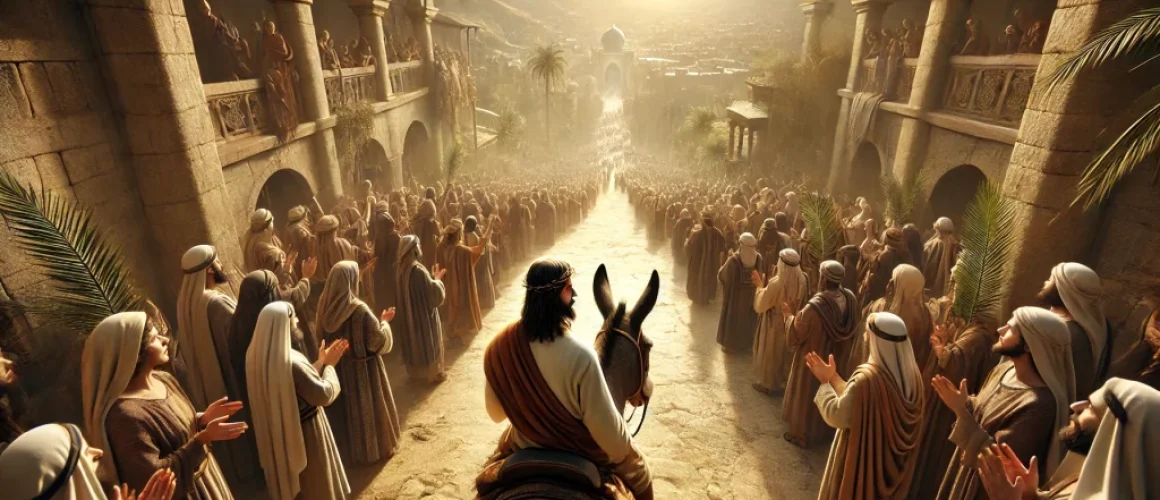
In John 12, we are given a glimpse into the scene in Jerusalem as Jesus, whose fame had spread far and wide, came riding in on a donkey, moving steadily toward the climax of a beautiful redemption for all mankind.
(12) The next day the great crowd that had come for the festival heard that Jesus was on his way to Jerusalem. (13) They took palm branches and went out to meet him, shouting,
“Hosanna!” “Blessed is he who comes in the name of the Lord!” “Blessed is the king of Israel!”
A King Welcomed, Yet Misunderstood
In Matthew 21, we learn that as Jesus made his way through the city streets, huge crowds scrambled to see him, throwing their cloaks on the road before him—cloaks that were likely among their most valuable possessions.
The people cheered in adoration, shouting Hosanna!—calling on him to save them.
But how his heart must have broken, knowing what was to come.
Many believed the Messiah would be a military leader, one who would overthrow the occupying Romans. Perhaps it would have been easier to fight a battle of swords than to ride through those crowds, knowing that though many would be saved through his sacrifice, others would not.
Some would not understand. Some would not believe.
Jesus knew that soon, a choice would be put before them. He understood well the danger he was heading into—so that they would HAVE that choice. This is surely the heaviest burden the world has ever seen.
Are We Any Different Today?
I wonder, how different are we today from the crowds in Jerusalem?
We still shout and pray to God for salvation… but are we actually taking that final, required step to truly be saved?
If there is one lesson mankind should have learned from biblical history, it’s that our relationship with God is exactly that—a relationship. And relationships require commitment from both sides to be healthy.
As we head into this week, remembering the amazing sacrifice that our Lord Jesus Christ made for us, I want to reflect on the health of my relationship with Him.
Is my commitment as strong as His?
Is my relationship with God one-sided, or is it a healthy representation of a Savior, Provider, Protector, Redeemer—and his loyal servant?
What can I do to honor His sacrifice—not just in my heart, but through action?
Faith in Action: A Call to Live Differently
(14) What good is it, my brothers and sisters, if someone claims to have faith but has no deeds? Can such faith save them? (15) Suppose a brother or a sister is without clothes and daily food. (16) If one of you says to them, “Go in peace; keep warm and well fed,” but does nothing about their physical needs, what good is it? (17) In the same way, faith by itself, if it is not accompanied by action, is dead.
James 2 reminds us that faith without action is dead.
What is dead has surely not been born again through the sacrifice of Jesus Christ. It is the equivalent of standing on the side of the street in Jerusalem, calling out for salvation to the Lord—but never bringing our faith to life through action.
A Prayer for Reflection and Action
Lord, I pray that you will give me eyes to see how my life may not be in alignment with your will.
Help me to know you more, day by day, so that I might reflect your loving light into this world in all its fullness. Show me where I can take action on behalf of your kingdom, bringing boldness to my heart and divine truth to the words I speak on your behalf.
Light a fire in my heart that will burn brightly in the darkness. Above all, please don’t ever let me forget the Holy Sacrifice that was made so that I could know your love.
I do not want to be a bystander, Lord, but an active participant in your kingdom and in your plans.
Thank you for your patience and your kindness as I reflect on my actions this week.
I pray these things in Jesus’ precious name. Amen.
Misty Surine is a Local Ministerial Candidate (LMC), a worship leader, and a member of the Least of These Riders Microchurch.
Our God is a welcoming God, constantly pursuing, seeking, and inviting people into His loving community. When we welcome someone, we bring them from being a vulnerable outsider to being connected. But welcoming is more than just entertaining guests or inviting people to church—it’s about cultivating a welcoming presence wherever we go. It all starts with our intention and attitude.
Creating a truly welcoming space requires: honesty, authenticity, common interests, flexibility, generous hospitality, good conversation, genuine listening, empathy, fun, and humor. We see all of these qualities in Jesus as He interacted with His followers.
Luke 15:1-2 “Now the tax collectors and sinners were all gathering around to hear Jesus. But the Pharisees and the teachers of the law muttered, ‘This man welcomes sinners and eats with them.’”
Jesus embraced people just as they were, meeting them where they were. He calls us to do the same. How can we intentionally create a welcoming presence in our everyday lives? Let’s look at four key aspects:
1. Your Face: The First Welcome
Ever heard the saying, “Are you happy? Then tell it to your face”? Sometimes we unintentionally project stern or unapproachable expressions, even when we’re not upset. A simple smile and warm eye contact can go a long way in making others feel seen and welcomed. Be intentional about how your face reflects your heart toward others.
2. Your Space: Making Others Feel Comfortable
Some people naturally struggle with relational awkwardness, whether they’re introverts or extroverts. Ask yourself:
Do I make an effort to help people feel at ease around me?
Do I try to find common ground in conversations? Building comfort takes intentionality, but when we create a safe and inviting relational space, we bridge the gap between strangers and community.
3. Your Place: Setting the Atmosphere
Where we welcome people matters. The goal isn’t perfection—it’s warmth and invitation.
A home that’s too spotless can feel intimidating.
A space that’s too chaotic can feel uncomfortable. Think about the places where you feel most relaxed and accepted. How can you create that same atmosphere for others?
4. Your Grace: Accepting People as They Are
A truly welcoming presence extends grace. It means:
Being a person others feel safe with.
Accepting people where they are, not where we think they should be.
Creating an environment where people feel comfortable being real and vulnerable.
Welcoming grace is acknowledging that life is messy and we don’t have all the answers—but we walk together toward Jesus, who does.
How Will You Welcome Others This Week?
Wherever we are, we can carry the atmosphere of God’s love. A welcoming presence doesn’t just happen inside the church—it happens at work, in our homes, and in everyday moments. Who can you intentionally welcome into your life today?