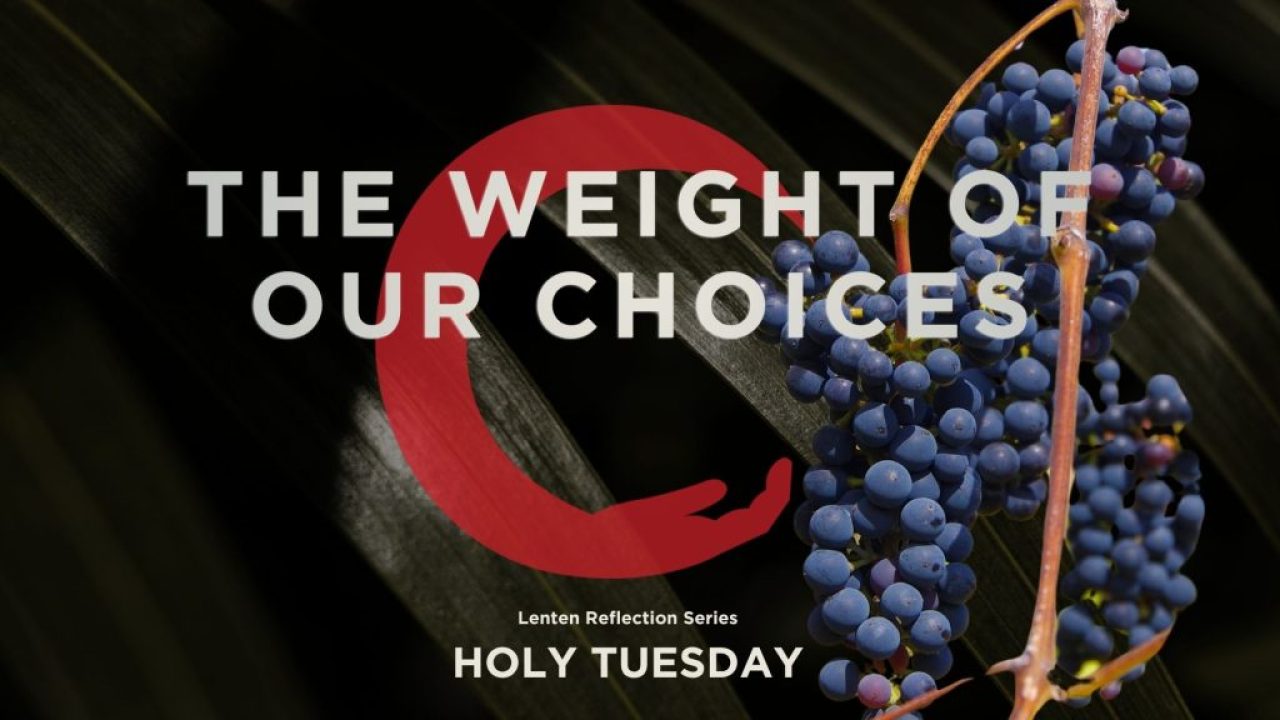
The Authority of Jesus and the Weight of Our Choices
Holy Tuesday
We are in the midst of Holy Week, and we are finding that it moves quickly, but not quietly. By Tuesday, the tone has shifted. The cheers of Palm Sunday have faded, and the tension is rising. Jesus is no longer simply teaching—He is confronting. The religious leaders are no longer curious—they are threatened.
What unfolds in Matthew 21 is a clash over authority, obedience, and ultimately, our hearts.
Matthew 21: 23 “Jesus entered the temple courts, and, while he was teaching, the chief priests and the elders of the people came to him. “By what authority are you doing these things?” they asked. “And who gave you this authority?”
That question from the chief priests and elders isn’t just political—it’s personal. They aren’t seeking truth; they are protecting control.
Jesus, in His wisdom, responds with a question of His own, exposing their unwillingness to recognize what is clearly from God:
Matthew 21: 24-27 “24Jesus replied, “I will also ask you one question. If you answer me, I will tell you by what authority I am doing these things. 25 John’s baptism—where did it come from? Was it from heaven, or of human origin?” They discussed it among themselves and said, “If we say, ‘From heaven,’ he will ask, ‘Then why didn’t you believe him?’ 26But if we say, ‘Of human origin’—we are afraid of the people, for they all hold that John was a prophet.” 27So they answered Jesus, “We don’t know.” Then he said, “Neither will I tell you by what authority I am doing these things.”
That’s where the issue begins: not lack of evidence, but resistance to surrender.
Jesus follows with a parable that cuts straight to the heart:
Matthew 21:28-32 28 “What do you think? There was a man who had two sons. He went to the first and said, ‘Son, go and work today in the vineyard.’ 29 “ ‘I will not,’ he answered, but later he changed his mind and went. 30 “Then the father went to the other son and said the same thing. He answered, ‘I will, sir,’ but he did not go. 31 “Which of the two did what his father wanted?” “The first,” they answered. Jesus said to them, “Truly I tell you, the tax collectors and the prostitutes are entering the kingdom of God ahead of you. 32 For John came to you to show you the way of righteousness, and you did not believe him, but the tax collectors and the prostitutes did. And even after you saw this, you did not repent and believe him.”
One son says “no” but later obeys. The other says “yes” but never follows through. The religious leaders give the right answer—but miss the point. Obedience is not about what we say; it’s about what we do.
This is the uncomfortable truth of Holy Tuesday: God is not impressed by appearances of righteousness. He is looking for surrendered hearts.
The shock comes when Jesus declares that tax collectors and prostitutes are entering the kingdom ahead of them—not because of their past, but because of their repentance. They responded. They changed. They obeyed.
Jesus doesn’t stop there. In the Parable of the Tenants, He reveals a deeper rebellion—a pattern of rejecting God’s messengers, culminating in the rejection of His Son:
Matthew 21:33-41 33 “Listen to another parable: There was a landowner who planted a vineyard. He put a wall around it, dug a winepress in it, and built a watchtower. Then he rented the vineyard to some farmers and moved to another place.34When the harvest time approached, he sent his servants to the tenants to collect his fruit. 35 “The tenants seized his servants; they beat one, killed another, and stoned a third. 36 Then he sent other servants to them, more than the first time, and the tenants treated them the same way. 37 Last of all, he sent his son to them. ‘They will respect my son,’ he said. 38 “But when the tenants saw the son, they said to each other, ‘This is the heir. Come, let’s kill him and take his inheritance.’39So they took him and threw him out of the vineyard and killed him. 40 “Therefore, when the owner of the vineyard comes, what will he do to those tenants?” 41“He will bring those wretches to a wretched end,” they replied, “and he will rent the vineyard to other tenants, who will give him his share of the crop at harvest time.”
It’s a sobering picture: people entrusted with something sacred, yet unwilling to yield it back to its rightful owner. And then comes the warning:
Matthew 21: 42 Jesus said to them, “Have you never read in the Scriptures: ‘The stone the builders rejected has become the cornerstone; the Lord has done this, and it is marvelous in our eyes’ ?”
Jesus is making it clear—He is the cornerstone. Accept Him, and everything aligns. Reject Him, and everything falls apart.
The thread running through it all is choice. From the garden in Genesis to the temple courts in Jerusalem, one truth remains: We are given a choice. God does not force obedience. He invites it.
But our choices are never isolated. They carry consequences—not just for us, but for others. Choosing obedience leads to life and fruitfulness. Choosing self leads to distance, disorder, and ultimately, destruction.
Holy Tuesday reminds us: Delayed obedience is still disobedience. Empty words cannot replace faithful action.
Through Christ, we are free—truly free. But freedom is not permission to live however we want. It is the power to live as we were created to. We can use our freedom to serve, love, and build others up, or we can misuse it in ways that harm ourselves and those around us.
Real freedom always comes with responsibility.
Scripture does not soften the reality of unrepentant sin. It speaks clearly about its consequences—judgment, separation, and loss. Not because God is harsh, but because He is loving.
He is merciful. He is patient. But He is also holy and just.
So what does obedience actually look like? Not a checklist. Not legalism.
It looks like walking with the Spirit. When we are led by the Spirit, our lives begin to produce something different: Love. Joy. Peace. Patience. Kindness. Goodness. Faithfulness. Gentleness. Self-control. (Galatians 5:22-23)
The real question of Holy Tuesday is: Who is on the throne? Self—or is it God?
Because choosing God means something has to die: Our pride. Our sin. Our control.
Where am I saying “yes” but living “no”? Where is God calling me to follow through?
Because in the end, it’s not what we claim—It’s what we choose.
And our choices matter.