What Is All Saints’ Day? Remembering the Faithful and Finding Hope Beyond Death
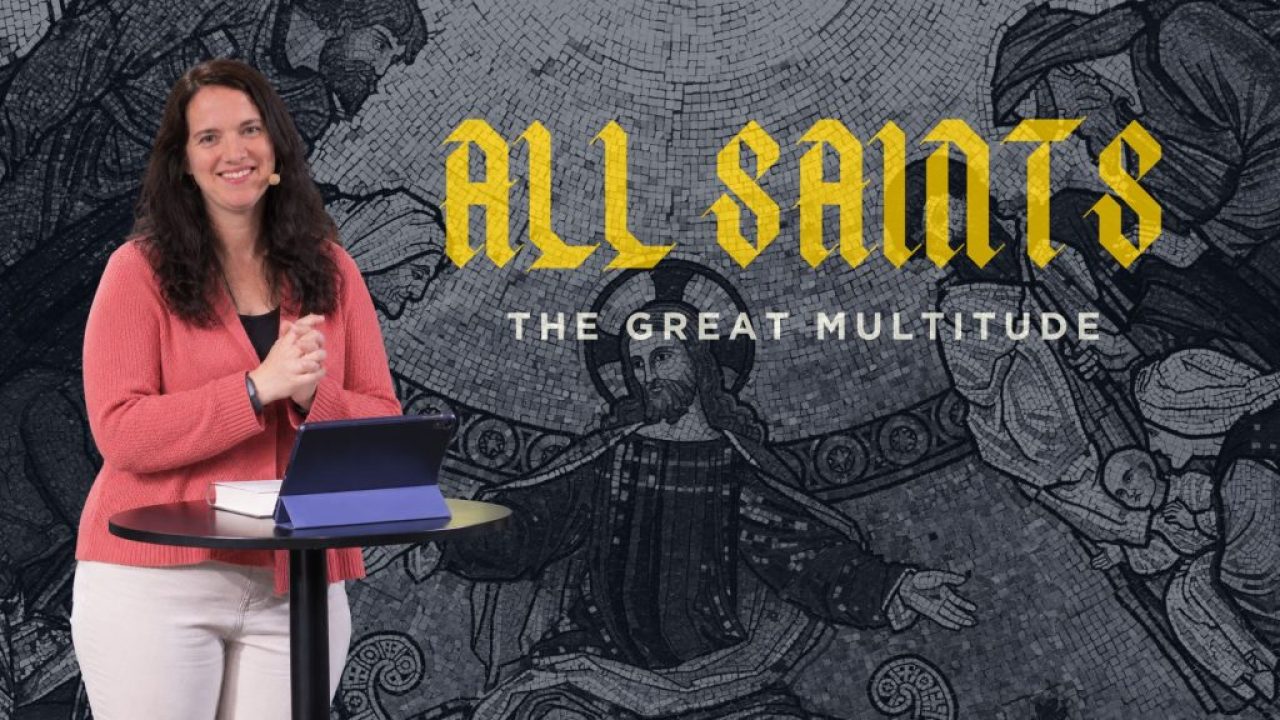
What happens to those who die in Christ, and how can their lives inspire us to follow Jesus more faithfully today? On November 1, 2026, Open Arms Community Church in Bradford, PA, celebrated All Saints’ Day with a special message called The Great Multitude. Pastor Zoe Hatcher explored the meaning of All Saints’ Day, the great cloud of witnesses described in Hebrews, and the beautiful picture of heaven found in Revelation 7:9–17. Through these Scriptures, we discover that the story of God’s people stretches across generations, that death does not have the final word, and that every follower of Jesus has a place in the unfolding story of God’s Kingdom.
What Is All Saints’ Day, and Why Do Christians Celebrate It?
All Saints’ Day has sometimes been described as the Church’s Memorial Day.
Traditionally observed on November 1, it is a time to remember those who have died in the faith of Jesus Christ and to honor the faithful witnesses who have gone before us.
For some Christians, particularly within Protestant traditions, the idea of celebrating saints may seem unfamiliar or even uncomfortable. Throughout church history, the remembrance of saints sometimes developed into practices that placed too much attention on particular individuals rather than on Jesus Christ.
But the heart of All Saints’ Day is something much more beautiful.
We are celebrating the victory of the grace of Christ in ordinary people who did extraordinary things in His name.
We remember their lives because their faithfulness points us toward Jesus.
We remember their testimonies because they remind us of what God can accomplish through people who surrender their lives to Him.
And we remember them because the story of God’s people is much bigger than our own lifetime.
All Saints’ Day invites us to look backward with gratitude, live faithfully in the present, and look forward with hope.
Who Are the Saints According to the Bible?
When we hear the word saint, we might imagine someone from centuries ago whose name appears in a history book or on a church calendar.
But the New Testament uses the word much more broadly.
The Greek word hagioi, commonly translated as “saints,” refers to people who are set apart for God and His purposes.
Throughout the New Testament, ordinary followers of Jesus are described as saints.
Read Scripture: Romans 1:7 (NIV) · Romans 8:27 (NIV) · Romans 12:13 (NIV) · 1 Corinthians 1:2 (NIV)
That means something remarkable.
If you are a Christian, you are a saint!
Not because you are perfect.
Not because you’ve performed miracles, achieved great recognition, or lived without making mistakes.
You are a saint because you belong to Jesus Christ and have been set apart for God’s purposes.
The same grace that worked through the faithful Christians of previous generations is at work in the lives of believers today.
Every follower of Jesus is called to live a life of holiness, love, and service, bearing witness to God’s Kingdom in the world.
And that includes you.
What Is the Great Cloud of Witnesses in Hebrews 12?
One of the most powerful images in Scripture is found in the book of Hebrews.
Hebrews 11 tells the stories of men and women who trusted God through extraordinary circumstances. Some experienced great victories. Others endured suffering, persecution, and death.
Their lives are remembered because of their faith.
Then Hebrews 12 brings their stories together with an invitation for us.
Read Scripture: Hebrews 11:4–40 (NIV)
Read Scripture: Hebrews 12:1–2 (NIV)
Scripture describes us as being surrounded by a great cloud of witnesses and calls us to throw off everything that hinders us, turn away from the sin that entangles us, and run with perseverance the race marked out for us.
Imagine the generations of faithful believers who have already run that race.
Men and women who endured hardship, made sacrifices, proclaimed the Gospel, loved their neighbors, and remained faithful to Jesus.
Their stories remind us that we aren’t the first people to struggle with fear, temptation, suffering, or uncertainty.
Others have walked this road before us.
Others have stumbled and gotten back up.
Others have experienced the faithfulness of God in circumstances that seemed impossible.
Their testimonies encourage us to keep going.
We can imagine that great cloud of witnesses cheering us on as we follow Jesus.
“Get back up!”
“Keep going!”
“Jesus is strong in you!”
But there is an important distinction.
We don’t fix our eyes on the saints. Together, we fix our eyes WITH THEM on JESUS!
Jesus is the pioneer and perfecter of our faith.
The saints point us toward Him.
Why Should We Remember Christians Who Have Gone Before Us?
The history of Christianity is filled with remarkable stories of faithfulness.
People like Francis of Assisi, Teresa of Ávila, Bernard of Clairvaux, Thomas Aquinas, Joan of Arc, Martin Luther, Julian of Norwich, John of the Cross, John Wesley, Francis Asbury, Billy Graham, and Mother Teresa.
Others, including Dietrich Bonhoeffer, Martin Luther King Jr., and Florence Nightingale, left powerful examples of faith expressed through courage, service, and sacrifice.
Their lives weren’t perfect. They were ordinary human beings who experienced the same kinds of struggles, limitations, and weaknesses that we do.
Yet God worked through them.
Their stories deserve to be remembered.
And beyond the well-known names are millions of faithful Christians whose stories may never appear in history books.
The grandmother who prayed faithfully for her family.
The neighbor who quietly cared for people in need.
The missionary who served in difficult circumstances.
The church member who taught children about Jesus for decades.
The believer who remained faithful through suffering.
Their lives matter, too.
To revere the saints doesn’t mean to worship them or pray to them.
To revere someone is to respect them, remember the life they lived, and learn from their example as they followed Christ.
We can honor their faithfulness without giving them the worship that belongs to God alone.
And we can allow their stories to challenge us.
What can we learn from their courage?
What can we learn from their prayer lives?
How did they demonstrate love, generosity, perseverance, and obedience?
Our lives are only a small moment in the long history of God’s people. We have so much to learn from those who came before us.
Their stories remind us that God has been faithfully working through His Church for generations.
And He is still working today.
What Is the Communion of Saints?
All Saints’ Day also reminds us of a profound truth about the Church.
The body of Christ stretches beyond the people gathered in a church building on Sunday morning.
It includes believers throughout the world and across the generations.
Those who have died in Christ and those who are still following Him on earth belong to the same Lord.
This is what Christians have historically called the communion of saints.
Death cannot sever the bond of belonging to Christ.
We are part of something far greater than our individual congregations, communities, or lifetimes.
When we gather to worship Jesus, we join in the praise of a Church that reaches across time and place.
This should expand our understanding of what it means to be a Christian.
We sometimes become so focused on our immediate concerns that we forget the vastness of God’s Kingdom.
Our struggles are real. Our responsibilities matter. Our lives have purpose.
But the Kingdom of God is so much bigger than the moment we’re living in.
Millions of faithful believers have gone before us, and countless others continue following Jesus around the world.
We belong to this great family of faith.
And one day, through the resurrection, God’s people will experience the fullness of His promised Kingdom.
What Does Revelation 7 Tell Us About Heaven?
All Saints’ Day is ultimately a day of hope.
It reminds us that death is not the end of the story for those who belong to Jesus.
In Revelation 7, the apostle John receives an extraordinary vision of worship before the throne of God.
Read Scripture: Revelation 7:9–17 (NIV)
John sees an enormous multitude standing before God’s throne and before the Lamb.
They come from every nation, tribe, people, and language.
Their number is so great that nobody can count them.
Imagine that scene.
People from every part of the world, from every generation and background, gathered together in worship.
Different languages. Different cultures. Different stories.
Yet all united in praise to the same Savior.
This is a picture of the universal Church.
God’s Kingdom reaches far beyond our own communities and experiences.
And at the center of this heavenly gathering is Jesus Christ, the Lamb of God.
The Song of the Great Multitude
In Revelation 7:9–10, the multitude stands before the throne wearing white robes and holding palm branches.
They cry out in praise to God and to the Lamb.
Their song celebrates the greatness of the God who saves.
They aren’t praising themselves for their faithfulness or boasting about what they accomplished.
They are praising God because salvation belongs to Him.
Everything they have received is the result of His grace.
The Song of the Angels
Then, in verses 11–12, the angels join the worship.
They fall before God’s throne and proclaim His blessing, glory, wisdom, thanksgiving, honor, power, and strength.
The praise of the multitude becomes part of an even greater chorus of worship.
All attention is directed toward God.
This is the ultimate destination of the saints: gathered in the presence of the One who has redeemed them, worshiping Him together.
Who Is the Great Multitude Dressed in White?
As John watches this heavenly vision, one of the elders asks him a question.
Who are these people dressed in white robes, and where have they come from?
Read Scripture: Revelation 7:13–14 (NIV)
The elder explains that these are the ones who have come out of the great tribulation.
They have washed their robes and made them white in the blood of the Lamb.
The great tribulation describes a time of extraordinary suffering and persecution.
Read Scripture: Daniel 12:1 (NIV) · Matthew 24:21 (NIV) · Joel 2:2 (NIV)
These believers experienced intense hardship because of their faith.
Some endured violent persecution and death.
Yet they remained loyal to God.
Their faith withstood the suffering they experienced, and God fulfilled His promise of eternal life.
Before, they were being prepared.
Now, they are victorious.
Their example challenges us to consider the depth of our own commitment to Jesus.
Are we willing to live for our faith in such a way that we would also be willing to die for it?
Following Jesus may require sacrifice.
Faithfulness may bring suffering.
But the promise of eternal life reminds us that our present circumstances do not have the final word.
God does.
How Can the Blood of Jesus Make Us Clean?
One of the most striking images in Revelation 7 is the description of robes being made white through the blood of the Lamb.
At first, that image seems impossible.
How can something red make something white?
But the symbolism reveals the extraordinary power of Jesus Christ to cleanse us from sin.
Read Scripture: Isaiah 1:18 (NIV)
Read Scripture: Romans 3:21–26 (NIV)
Sin leaves a stain that we cannot remove through our own efforts.
People try all kinds of ways to escape guilt.
Some attempt to make up for their mistakes by doing enough good deeds.
Others try to explain away their behavior, blame someone else, or convince themselves that their sin doesn’t matter.
But none of these things can remove the guilt of sin.
Only Jesus can do that.
The blood of Jesus Christ is the world’s greatest purifier because His sacrifice removes the stain of sin.
The white robes symbolize the holiness and cleansing that come through the sinless Lamb of God, who gave His life on our behalf.
We are saved through faith in Jesus Christ.
Not because we have earned salvation.
Not because our good deeds outweigh our failures.
But because Jesus died for our sins and rose again.
And through repentance and faith in Him, we can be forgiven and made clean.
Have you received that forgiveness?
Have you allowed Jesus to remove the guilt and stain of sin from your life?
The same grace that saved the saints who have gone before us is available to you today.
Does Death Have the Final Word?
Death is one of the most painful realities of human existence.
When someone we love dies, the grief is real.
Their absence is real.
No amount of religious language can erase the pain of losing someone.
And the suffering experienced by those who were persecuted for their faith should never be dismissed or treated as though violence itself were somehow good.
Suffering is painful.
Death brings genuine loss.
But the vision in Revelation reminds us that our human experience does not contain the final word on God’s character or the extent of His salvation.
Jesus Christ has conquered the grave.
And those who belong to Him have the promise of eternal life.
Read Scripture: Revelation 7:15–17 (NIV)
John describes a future in which God’s people dwell in His presence.
They will no longer hunger or thirst.
They will be sheltered by God.
The Lamb will be their Shepherd, leading them to springs of living water.
And God will wipe away every tear from their eyes.
Think about what that means.
Every tear.
Every grief.
Every experience of loss and suffering.
The God who knows our pain has promised a future in which suffering and death no longer hold us captive.
This is the hope of the resurrection.
This is the promise of Jesus Christ.
In remembering the dead, we are in fact celebrating LIFE.
Why Are the Saints Holding Palm Branches?
The multitude in Revelation holds two powerful symbols of victory: white robes and palm branches.
The white robes represent the cleansing and victory received through Jesus Christ.
The palm branches point toward another familiar moment in Scripture.
Read Scripture: John 12:12–13 (NIV) · Matthew 21:1–9 (NIV)
When Jesus entered Jerusalem, crowds welcomed Him with palm branches, celebrating His arrival as King.
In Revelation, the great multitude once again gathers with palm branches.
They are welcoming the King of Kings.
The One who suffered and died has risen victorious.
The One who conquered death reigns forever.
And those who have remained faithful are gathered in His presence.
The picture is one of unimaginable joy, worship, restoration, and peace.
The saints have reached the fulfillment of the hope they carried throughout their lives.
The Story of the Saints Isn’t Finished
All Saints’ Day invites us to remember those who have gone before us.
But it also challenges us to consider the lives we are living right now.
The story of God’s people continues.
Every generation has the opportunity to bear witness to Jesus Christ.
Every believer is called to live faithfully, love others, serve their community, and share the hope of the Gospel.
The STORY of the saints isn’t FINISHED. We’re still WRITING it today.
The saints of previous generations have left us an extraordinary legacy.
Their stories remind us that God can use ordinary people to accomplish extraordinary things.
Now it is our turn.
What kind of legacy are we leaving?
What will our children and grandchildren remember about the way we followed Jesus?
Will they remember lives marked by faithfulness, generosity, courage, and love?
Will our neighbors remember people who cared for them, prayed for them, and showed them the grace of Christ?
Will our community be different because we chose to live faithfully?
At Open Arms Community Church in Bradford, PA, we have the privilege of continuing that story together.
We are called to take our place in the history of God’s people, living in the light of Christ and sharing His hope with the world.
We don’t know how many years we have or what challenges may come.
But we know who holds our future.
And we know that the same Jesus who sustained the saints before us will be faithful to us as well.
A Prayer of Remembrance and Hope
Take a moment to remember the faithful people who have influenced your life.
Perhaps it was a parent or grandparent who taught you to pray.
A pastor who encouraged you.
A friend who helped you find your way back to Jesus.
Someone whose faithfulness shaped your understanding of God’s love.
Remember their stories.
Give thanks for their lives.
And consider how their example can help you follow Jesus more faithfully today.
Gracious God, revive our connection with all who have come before us in faith, especially those dear to us whom we remember today.
Surrounded by a great multitude of faithful witnesses, give us the strength to walk the path before us faithfully, with our eyes fixed on Jesus, our guide and our hope.
By Your Spirit, unite us with Christ, with one another, and with Your Church across all times and places, until the day when Christ returns in glory and we join the heavenly feast.
Through Christ, in the unity of the Holy Spirit, we offer You all praise and thanksgiving, now and always. Amen.
Find Hope and Community at Open Arms Community Church in Bradford, PA
Are you searching for a church in Bradford, Pennsylvania? Are you grieving the loss of someone you love, exploring what Christians believe about heaven, or looking for a community where you can grow in faith?
You’re welcome at Open Arms Community Church.
We believe everyone needs a place to belong, a community of people who will walk alongside them, and the opportunity to experience the hope found in Jesus Christ.
Whether you’ve attended church your whole life or haven’t stepped inside one in years, we’d love to meet you.
Sunday Worship: 10:00 AM
Location: 71 Congress Street, Bradford, PA 16701
Give to Support the Mission of Open Arms
The faithful Christians who came before us left a legacy of generosity, service, and love.
We have the opportunity to continue that legacy today.
Your generosity helps Open Arms Community Church share the Gospel, serve families, disciple believers, and bring practical help and hope to people throughout Bradford and the surrounding communities.
Give to Open Arms Community Church
Warm Hearts, Open Arms
Our church building is a gathering place for worship, prayer, discipleship, children’s ministry, and community outreach.
Our Warm Hearts, Open Arms campaign is raising $30,000 to replace our failing boiler and ensure that our building remains a warm, welcoming place for the people of Bradford.
By supporting this campaign, you’re helping us continue the work of serving our neighbors and sharing the hope of Jesus Christ.