What is the Church? What the Bible Says About Why We Need Christian Community
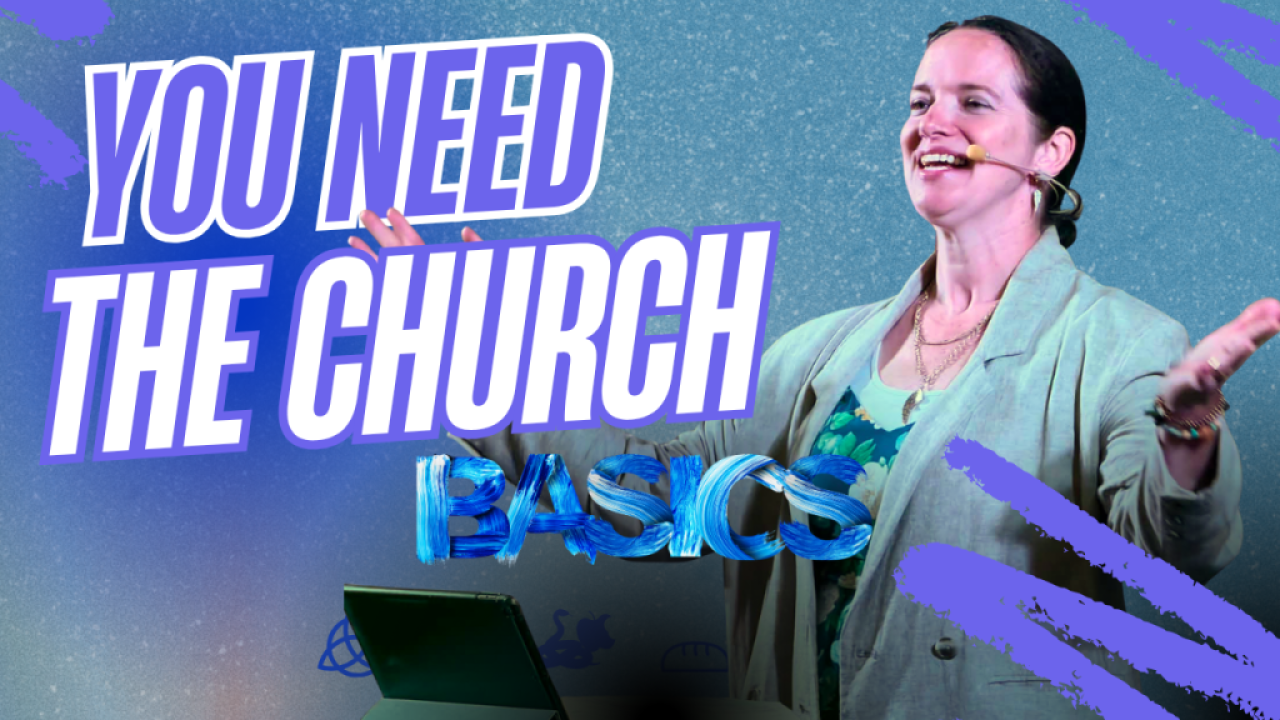
On a historic Sunday for Open Arms Community Church, as we dedicated our newly renovated sanctuary to God, Pastor Zoe Hatcher continued our BASICS series with a question that was especially appropriate for the day: What is the Church? We often use the word church to describe a building, a Sunday service, or a place we go. But Scripture gives us a much bigger picture. The Church is the community of God who worship Jesus together on mission. The building may be where the Church gathers, but the people are the Church.
Watch the message on our Youtube channel
The Church Is Not a Building
There is something special about a space that has been set apart for worship. Buildings can become places where lives are changed, children learn about Jesus, families find community, people grieve together, prayers are answered, and the Gospel is proclaimed.
But the building itself is not the Church.
That’s an important distinction. We commonly say, “I’m going to church,” when what we really mean is that we’re going to the place where the Church is gathering. The Church is made up of people—followers of Jesus who have been brought together as the Body of Christ.
That means the Church is bigger than a sanctuary, bigger than a congregation, and bigger than a denomination.
Romans 12:4–5
“For just as each of us has one body with many members, and these members do not all have the same function, so in Christ we, though many, form one body, and each member belongs to all the others.”
All followers of Jesus, regardless of denomination, location, age, or nationality, are part of the Body of Christ.
So when a congregation dedicates a sanctuary, the Church isn’t dedicating itself. The Church is dedicating a space where it will worship, grow, serve, and carry out the mission God has given it.
What Did God Design the Church to Be?
Our experiences with church can be very different.
For some people, church has been a place of safety. Maybe it was a sanctuary in the truest sense—a place where you were loved, cared for, taught about Jesus, and surrounded by people who gave you stability when the rest of life felt unstable.
For others, even hearing the word church brings painful memories. People have experienced disappointment, rejection, hurt, and even abuse in places that were supposed to represent Christ.
Those experiences shouldn’t be dismissed. But neither our best experiences nor our worst experiences ultimately define what the Church is.
If we want to understand the Church, we have to ask what God designed the Church to be.
And to do that, we can go back to its beginning.
The Birth of the Church
Acts 2 gives us a picture of the earliest Church immediately after Pentecost. Peter proclaimed Jesus to the crowd, and the people were confronted with the reality of their sin.
They were “cut to the heart.”
Their response was to ask, “What shall we do?”
Acts 2:37–38
“When the people heard this, they were cut to the heart and said to Peter and the other apostles, ‘Brothers, what shall we do?’ Peter replied, ‘Repent and be baptized, every one of you, in the name of Jesus Christ for the forgiveness of your sins.’”
The Church began with repentance and faith in Jesus.
That’s still where becoming part of the Church begins today. We aren’t part of the Church because our parents attended one, because we grew up in a Christian family, or because we sit in a sanctuary on Sunday mornings. We become part of the Body of Christ through repentance and faith in Jesus.
Then something remarkable happened.
Those who received the message were baptized, and about 3,000 people were added to their number that day.
And they didn’t simply make individual decisions to follow Jesus and then go their separate ways.
They became a community.
Acts 2:42–47
“They devoted themselves to the apostles’ teaching and to fellowship, to the breaking of bread and to prayer… All the believers were together and had everything in common… Every day they continued to meet together… praising God and enjoying the favor of all the people. And the Lord added to their number daily those who were being saved.”
They studied God’s Word. They prayed. They worshiped. They ate together. They gave generously. They cared for people in need. They shared life with one another. They were discipled, and they participated together in God’s mission.
From the very beginning, following Jesus was never presented as an isolated life.
We need to gather with the Church.
We Need More Than Sunday Morning
When we think about “gathering with the Church,” it’s easy to immediately picture a Sunday morning worship service.
But the Church gathers in many different ways and at different sizes.
Jesus modeled this throughout His ministry. There were Peter, James, and John—the few people He brought especially close. There were the twelve disciples who shared daily life with Him. There were larger groups of disciples who were sent out to minister. There were larger gatherings and crowds.
We need those different expressions of Church in our lives too.
We need a few trusted people who know us deeply enough to encourage us, pray for us, challenge us, and hold us accountable.
We need smaller communities where we can share life, eat together, study Scripture, serve, pray, and actually know what is happening in one another’s lives.
We need serving teams where we use the gifts God has given us alongside other believers.
We need the larger corporate gathering where the Church comes together to worship, learn, pray, give, and be equipped.
And we need the larger Body of Christ beyond our own congregation—the beautiful reality that God’s Church is much bigger than one local church.
Each expression serves a different purpose. None of them needs to compete with the others.
We need all of them.
Open Arms is a church, but it isn’t the entirety of the Church. A Sunday morning gathering matters deeply, but Sunday morning alone was never intended to carry the full weight of our Christian relationships, discipleship, accountability, service, and spiritual growth.
God placed us in a body.
When Our Expectations of Church Get in the Way
One reason people sometimes become frustrated with the Church is that we expect one particular expression of Church—or one particular person within it—to provide everything we need.
Maybe we expect a pastor to know what we’re going through without ever telling them. Then we expect that same pastor to personally have the time, resources, wisdom, and capacity to meet every need.
No human being can do that.
That’s one of the reasons God didn’t design the Church around one person.
Romans 12:4–5
“For just as each of us has one body with many members… so in Christ we, though many, form one body, and each member belongs to all the others.”
Jesus is the head of the Church. The rest of us are members of His Body.
That means we don’t merely come to the Church asking, “Who is going to meet my needs?”
We also come asking, “Whose needs has God equipped me to meet?”
Someone else in the Body needs the gifts, resources, encouragement, wisdom, service, and love God has entrusted to you.
You aren’t just someone the Church is supposed to serve.
You are part of the Church.
What Makes a Church a Church?
If buildings, budgets, programs, and even pastors aren’t ultimately what make a church a Church, what does?
Acts 2 gives us three qualities woven throughout the life of the early Church:
Worship. Community. Mission.
They devoted themselves to the apostles’ teaching and prayer. That’s worship.
They gathered together, shared meals, broke bread, and lived life together. That’s community.
They gave sacrificially, met needs, witnessed the work of God, and saw people being saved. That’s mission.
These three weren’t separate departments of the Church. They were woven together into the everyday life of God’s people.
Acts 2:44–47
“All the believers were together and had everything in common. They sold property and possessions to give to anyone who had need… They broke bread in their homes and ate together with glad and sincere hearts, praising God… And the Lord added to their number daily those who were being saved.”
This is why worship, community, and mission are at the heart of our microchurch strategy as well. A group doesn’t need its own building, budget, stage, or paid pastor to be the Church. When God’s people gather to worship Jesus, live in genuine community, and participate together in His mission, we see the life of the Church taking shape.
And all three matter.
Take away worship, and you may have community and people doing good things, but you’ve created something more like a social club.
Take away community, and you may worship and serve alongside other people, but nobody really knows you. There is no family around you who knows your struggles, hears your needs, prays for you, and walks through life with you.
Take away mission, and the focus turns inward. We become consumers, continually asking what we’re getting out of church rather than allowing God to send us into the world to serve others and make disciples.
Worship. Community. Mission.
Together, they give us a beautiful picture of the Church God designed.
God Designed the Church for Our Good
Why does any of this matter personally?
Why wake up on Sunday morning? Why join a microchurch? Why serve? Why allow other people into your life?
Because God designed His Church with our good in mind.
In the Church, we are discipled and grow in our faith through worship.
In the Church, we become part of a larger family through community.
In the Church, we participate in a purpose larger than ourselves through mission.
But there is a simple requirement if we’re going to experience those things:
We have to show up.
Think about a family. You cannot experience the benefits of a healthy family relationship while continually refusing to participate in the family. Relationships require presence. They require being known and taking the time to know others.
Church works the same way.
A livestream can be an incredible ministry. It allows people who cannot physically gather to worship, hear the Word, and remain connected. But watching a service can never completely replace being known by the Body of Christ.
We need people who know when we’re struggling.
We need people whose needs we know.
We need opportunities to pray for someone, serve someone, encourage someone, forgive someone, carry someone’s burden, and allow someone else to do those things for us.
Christian community cannot remain theoretical.
Eventually, we have to show up.
Don’t Walk Away From the Family
Family can be difficult.
There are days when we don’t feel like showing up. There are times when relationships disappoint us. There are moments when withdrawing feels easier than working through difficulty.
But repeatedly checking out of relationships eventually destroys the relationship itself.
The Church is a family, and our presence matters.
That doesn’t mean ignoring genuine hurt or pretending unhealthy behavior is acceptable. It means understanding that God’s answer to imperfect people isn’t isolation. He calls imperfect people into a Body under the perfect headship of Jesus Christ.
The Church needs you.
And you need the Church.
Not because every church will always get everything right. Not because every relationship will be easy. Not because every gathering will perfectly meet your expectations.
We need the Church because God designed us to follow Jesus together.
Jesus Prayed for His Church
Before the Church described in Acts 2 even existed, Jesus prayed for it.
And remarkably, He prayed not only for the disciples standing around Him at the time. He prayed for the people who would eventually believe because of their message.
That includes us.
John 17:20–23
“My prayer is not for them alone. I pray also for those who will believe in me through their message, that all of them may be one… Then the world will know that you sent me and have loved them even as you have loved me.”
Think about what that means.
Two thousand years ago, Jesus was praying for His future Church. He was praying for believers who hadn’t been born yet, in places those first disciples had never heard of.
He was praying for us.
And what did He desire for His Church?
That we would be one.
Our unity with Christ and our unity with one another are part of our witness to the world. Our love for each other, our service to one another, and the way we live together as the Body of Christ show people something about who Jesus is.
The believers in Acts 2 kept showing up. The generations after them kept showing up. Through persecution, suffering, sacrifice, and enormous cultural change, believers continued worshiping Jesus, living in community, and carrying His mission into the world.
Because of their faithful witness, the Gospel eventually reached us.
Now it’s our turn.
Take Your Place in His Church
The Church isn’t a building.
It’s not a Sunday event you attend when it’s convenient. It’s not a religious product we consume, and it’s not an organization that exists merely to meet our individual needs.
The Church is the community of God who worship Jesus together on mission.
God has invited us into something much larger than ourselves: a Body, a family, a people united with Christ and sent into the world to make Him known.
We need worship.
We need community.
We need mission.
We need one another.
And the Church needs the gifts and calling God has placed in each of us.
So the question isn’t simply, “Do I go to church?”
The better question is:
Am I willing to take my place in His Church?