What Is Baptism? Answering the Big Questions About Baptism
Baptism is one of the most recognizable practices in Christianity. Even people who have never spent much time in church have probably seen a baptism at some point. Maybe they watched someone lowered beneath the water in a church baptistry, saw a pastor pour water over someone’s head, or grew up in a tradition where baptism meant being sprinkled with water as an infant.
But recognizing baptism isn’t the same thing as understanding it. Why do Christians do this? What does the water actually represent? Does baptism save us, or does salvation happen before baptism? Who should be baptized? What if you were baptized as a baby? Does it matter whether someone is immersed, poured, or sprinkled? Can you be baptized more than once? And when Christians talk about the “baptism of the Holy Spirit,” are they talking about the same thing?
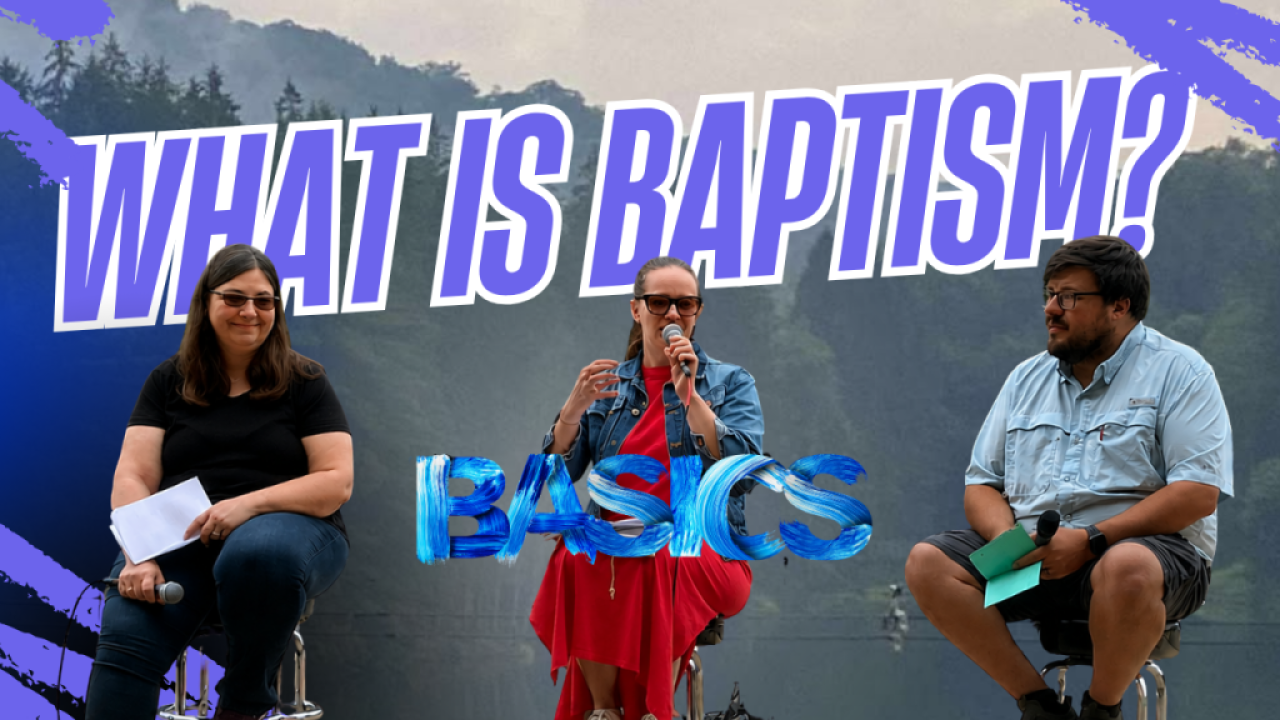
Those were some of the questions we explored during our special Baptism Sunday at Marilla Landing. Pastor Dan Robinson and Pastor Zoe Hatcher from Open Arms Community Church were joined by Pastor Misty Surine from B-Free Church for a conversation about baptism before our churches had the privilege of celebrating baptisms together.
There probably couldn’t have been a more appropriate place for the conversation. We weren’t discussing baptism in the abstract. The water was right there, and before the morning was over, people would step into it and publicly declare their faith in Jesus.
Watch the full message on Youtube
Baptism has been part of the life of the Church from the beginning. Jesus Himself was baptized. He commanded His disciples to baptize others, and when the Gospel began spreading after His resurrection, new believers responded with repentance, faith, and baptism. Two thousand years later, followers of Jesus are still stepping into the water.
So why does baptism matter so much?
What Is Baptism?
A good place to begin is with Jesus Himself.
Matthew 3:13–17 (NIV) — The Baptism of Jesus
Matthew tells us that Jesus traveled from Galilee to the Jordan River to be baptized by John. John immediately recognized that there was something unusual about this. His ministry had been calling people to repentance, yet standing in front of him was Jesus, who had no sin from which He needed to repent. John initially resisted baptizing Him, but Jesus insisted that it was the right thing to do in fulfillment of God’s purposes.
That raises an important question. If Jesus was without sin, why would He submit to a baptism associated with repentance?
Part of the answer is obedience. Jesus was completely submitted to the will of His Father, and His baptism was part of that obedience. But He was also identifying Himself with the people He had come to save. Jesus did not enter the water because He was guilty of sin; He entered the water alongside guilty people. In a sense, this moment points forward to the cross, where the sinless Son of God would once again stand in the place of sinners and take upon Himself what belonged to us.
His baptism also marked a visible transition into His public ministry. As Jesus came out of the water, the Spirit of God descended like a dove and the Father’s voice declared His love and pleasure in His Son. The Father, Son, and Holy Spirit are all present in this moment, and John’s prophetic ministry is affirmed as Jesus willingly receives baptism from him.
Jesus didn’t merely tell His followers that baptism was important. He went first.
When Christians are baptized today, we are following His example while also declaring something about what He has done in us. Paul gives us one of the clearest pictures of this in Romans:
“We were therefore buried with him through baptism into death in order that, just as Christ was raised from the dead through the glory of the Father, we too may live a new life.”
The imagery is powerful. Baptism identifies us with the death, burial, and resurrection of Jesus. The old life is being surrendered and buried, and the believer rises from the water as a picture of the new life we have received in Christ. The water itself isn’t creating that new life; it is visibly expressing what Jesus has already begun within us.
This is why we often describe baptism as an outward expression of an inward faith. Something has happened in the heart: we have recognized our sin, turned toward Jesus, believed the Gospel, and surrendered ourselves to Him. Baptism brings that private decision into public view.
Jesus then made baptism part of the mission He gave to His followers.
Matthew 28:18–20 (NIV) — The Great Commission
These were among Jesus’ final instructions to His disciples before He left them. They were to go into the world, make disciples, baptize those disciples in the name of the Father, Son, and Holy Spirit, and teach them to obey everything Jesus had commanded.
We tend to give special attention to someone’s final words because they tell us what that person considers important. Jesus’ words leave no doubt that His followers were not supposed to keep the Good News to themselves. They were being sent into the world to make more disciples, and baptism would become one of the visible markers that a person had become part of this new community of faith.
That is exactly what we see happen in Acts.
When Peter preached the Gospel on the day of Pentecost, the people who heard him were deeply convicted and asked what they should do. Peter called them to repent and be baptized. About three thousand people accepted the message and were baptized that day.
Those people weren’t simply participating in a religious ceremony and then going home unchanged. They were turning away from an old way of life, publicly identifying themselves with Jesus, and becoming part of a new community. They would learn together, pray together, worship together, share life together, and grow as disciples together.
That gives us an important part of the meaning of baptism that can be easy to overlook. Baptism identifies us with Christ, but it also identifies us with His people. Christianity was never intended to be a private arrangement between an individual and God in which we have no meaningful connection to anyone else. When we follow Jesus, we become part of His family.
What Is a Sacrament?
The word sacrament can sound intimidating if you didn’t grow up in a church tradition that uses it regularly, but the idea behind it is actually very beautiful. Sacraments are signs of God’s gracious ministry toward us. Through them, God works within His people to strengthen and confirm our faith.
That doesn’t mean the water used in baptism is magical. There isn’t something chemically or spiritually different about baptismal water that physically removes sin from a person’s soul. At the same time, baptism shouldn’t be dismissed as an empty ritual that has no significance beyond symbolism.
God knows that we are physical beings. We don’t experience life only through abstract ideas; we see, hear, touch, taste, remember, and participate. Throughout Scripture, God repeatedly uses physical things to communicate spiritual realities. In baptism, an invisible work of grace is expressed through something we can see and experience.
A person has encountered the grace of God. They have recognized their need for Jesus, responded to Him in repentance and faith, and chosen to follow Him. Then, before the gathered Church, that person steps into the water and allows what has happened inwardly to be expressed outwardly.
The water doesn’t create the faith. Rather, baptism becomes a visible sign of God’s grace and a powerful reminder of the faith we have received.
What Is a Covenant?
Understanding baptism also means understanding the idea of covenant. A covenant is more than a casual agreement or a contract we abandon when it becomes inconvenient. It is a sacred promise involving God and His people, a commitment to live as disciples in response to the grace God has already extended toward us.
One of the pictures used in our conversation at Marilla was that baptism is both a wedding and a funeral.
Think about a wedding. Two people may already love one another before the ceremony begins, but something significant happens when they stand publicly before God and witnesses and make promises to each other. They are declaring that their lives now belong together in covenant. The ceremony doesn’t create their love, but it gives public expression to the commitment they are making.
There is something similar happening in baptism. The person entering the water is publicly identifying with Jesus and declaring before the Church that they belong to Him. Baptism is not merely saying, “I agree with some Christian beliefs.” It is a declaration that Jesus is Lord and that we intend to live as His disciples.
At the same time, baptism is a funeral because something is being left behind.
Romans 6 connects baptism with the death and resurrection of Jesus. When we identify ourselves with Christ, we also identify ourselves with His death. The old life ruled by sin and self is surrendered to Him. The water becomes a picture of burial, and coming out of the water becomes a picture of resurrection.
That doesn’t mean a newly baptized Christian suddenly becomes perfect. There is still a lifetime of discipleship ahead. There will be habits to change, sins to surrender, wounds that need healing, things to learn, and countless opportunities to become more like Jesus. Baptism isn’t a declaration that the process is finished. It is a declaration about who now has our allegiance.
We belong to Jesus, and because He was raised from the dead, we have been invited to walk with Him in new life.
Is Baptism Necessary for Salvation?
This may be one of the most important questions in the entire conversation. If Jesus commands baptism, and if the early Christians consistently connected repentance, faith, and baptism, does that mean a person is saved by being baptized?
The answer presented in the message was clear: baptism is not what saves us. Jesus saves us.
Paul writes:
“For it is by grace you have been saved, through faith—and this is not from yourselves, it is the gift of God—not by works, so that no one can boast.”
Salvation is the gift of God’s grace, received through faith. We aren’t saved because enough water touched us, because a pastor performed the correct ceremony, or because our parents made a religious decision for us when we were young.
We are saved because Jesus Christ died for our sins and rose again.
There comes a point when we have to face the reality of our own sin. It isn’t enough to recognize that the world is broken or that other people do terrible things. We have to recognize that sin is present in us, that it separates us from God, and that we cannot rescue ourselves from it.
The Good News is that Jesus has done for us what we could never do for ourselves. He took the punishment for our sin upon Himself at the cross. Through repentance and faith, we receive forgiveness and new life as a gift of grace.
Baptism does not purchase that grace. It publicly declares that we have received it.
That distinction, however, should never become an excuse for dismissing baptism as unimportant. Sometimes we can hear, “Baptism doesn’t save you,” and turn that into, “Then baptism doesn’t really matter.” But that isn’t the conclusion Scripture gives us. Jesus commanded His followers to be baptized, and obedience matters when we call Him Lord.
We don’t get baptized in order to convince Jesus to save us. We are baptized because the One who saved us has called us to follow Him.
Who Can Be Baptized? What About Infant Baptism?
Different Christian traditions have approached this question differently, and it has sometimes become a source of unnecessary division among believers. The approach presented in this message begins with two simple ideas: belief and a readiness to identify with Christ.
Do you believe in Jesus? Do you believe that He died on the cross and rose again? Have you trusted Him as Savior and surrendered yourself to Him as Lord? And are you ready to publicly identify yourself as one of His followers?
Those are the central questions.
For many people, however, another question immediately follows: What if I was already baptized as a baby? Does that count?
The tradition represented in this message recognizes infant baptism as a valid form of baptism and points, in part, to the household baptisms we find in Scripture.
Acts 16:31–34 (NIV) — The Philippian Jailer and His Household
When the Philippian jailer encounters Paul and Silas, the Gospel doesn’t remain an individual matter for him. The Word of the Lord is spoken to the people of his household, and the household is baptized. The account gives us a picture of faith affecting an entire family rather than remaining isolated within one person.
This speaks to the responsibility parents have for the spiritual formation of their children. Parents cannot save their children, and they cannot ultimately make the decision to follow Jesus for them. What they can do is establish a household where Jesus is known, Scripture is taught, prayer is practiced, the Church is part of ordinary life, and children are continually exposed to the Gospel.
Infant baptism can therefore express a parent’s covenant commitment to raise a child within a household of faith. Some churches express a similar commitment through child dedication. Either way, the parents are saying that they intend to raise this child among the people of God and teach them what it means to know and follow Jesus.
Eventually, though, every child must personally respond to the Gospel. There comes a point when the faith spoken over us by our parents has to become faith we personally confess.
This is why churches that practice infant baptism have historically also practiced confirmation or another form of public profession of faith. As a child grows old enough to understand the Gospel, that young person has an opportunity to say, in effect, “The faith my family taught me is now the faith I personally confess. Jesus is my Lord, and I choose to follow Him.”
So if you were baptized as an infant, you don’t need to look back on that moment as meaningless. You can be grateful that someone desired to raise you in the faith. The more important question now is whether you have personally responded to Jesus.
How Many Times Can—or Should—You Be Baptized?
People sometimes reach a significant moment in their spiritual life and wonder whether they should be baptized again. Maybe they were baptized when they were young and later wandered away from God. Perhaps they have recently experienced a profound spiritual renewal, or maybe they simply understand the meaning of their faith in a much deeper way than they did before.
The distinction made during the message was between baptism itself and reaffirming our baptismal vows. Technically, baptism is received once, while reaffirmation can happen at meaningful moments throughout a believer’s life.
A helpful comparison is the renewal of wedding vows. When a married couple renews their vows, they aren’t declaring that their first wedding didn’t count. They aren’t getting married for the first time all over again. They are taking an opportunity to publicly reaffirm the covenant they have already made.
In the same way, there may be moments when someone feels led to publicly reaffirm their commitment to Christ. The emphasis shouldn’t be on accumulating baptisms, as though each trip into the water somehow adds another layer of salvation. The significance is in the covenant being affirmed and the continuing work of the Holy Spirit in a person’s life.
What Is the Baptism of the Holy Spirit? How Is It Different From Water Baptism?
Water baptism is an act of obedience in which a follower of Jesus publicly identifies with Him. But the New Testament also talks about the work of the Holy Spirit in believers, including experiences where the Spirit comes upon people and empowers them for ministry.
When we repent and believe in Jesus, the Holy Spirit takes up residence within us. Jesus promised His disciples that He would not leave them alone but would send the Spirit to be with them.
John 14:16–17 (NIV) — Jesus Promises the Holy Spirit
The language Jesus uses gives us a beautiful picture of the Spirit’s presence. He is the Advocate and the Spirit of truth, not distant from God’s people but with them and in them. The message at Marilla explored this idea of the fullness of the Holy Spirit and the desire of God not only to dwell within His people but also to empower them for the mission He has given them.
Jesus tells us that the Father delights in giving the Holy Spirit to those who ask Him:
“If you then, though you are evil, know how to give good gifts to your children, how much more will your Father in heaven give the Holy Spirit to those who ask him!”
One of the illustrations used during the message was a parachute. A parachute equips a person to do something that would be impossible through natural human ability. You don’t become capable of safely jumping from an airplane because you have developed exceptional jumping skills. You are relying on something beyond your natural capacity.
In a much greater way, the Christian life was never intended to be lived entirely through natural human strength. We can have talent, intelligence, discipline, resources, and good intentions, but there is a mission before the Church that requires more than human ability.
We need the Holy Spirit to empower us to do what God has called us to do.
Does It Matter If I Was Immersed, Poured, or Sprinkled?
Another question that comes up frequently is whether the method of baptism determines whether a baptism is valid. If someone was sprinkled rather than completely immersed, were they really baptized?
The answer given in the message was that the heart is more important than the method. The tradition represented in the conversation recognizes immersion, pouring, and sprinkling as valid modes of baptism.
Immersion certainly provides a vivid picture of Romans 6. Going beneath the water resembles burial, and rising from it gives us a powerful visual representation of resurrection and new life. There is good reason that many churches practice baptism this way.
But the amount of water isn’t what gives baptism its meaning. God sees the heart of the person who is believing in Jesus and publicly identifying with Him. The water is the sign; Christ is the One to whom the sign points.
This also keeps us from allowing disagreements about the mechanics of baptism to obscure the much greater reality being celebrated. Whether a person is immersed, poured, or sprinkled, the central declaration remains the same: I belong to Jesus Christ.
What Are the Different Baptisms We See in the New Testament?
Part of the confusion surrounding baptism comes from the fact that the New Testament uses baptism language in several contexts. The message identified three baptisms that help us understand the progression of the New Testament story: John’s baptism of repentance, baptism in the name of Jesus, and the baptism or empowerment of the Holy Spirit.
John the Baptist appeared before Jesus’ public ministry calling Israel to repentance and preparing the way for the Messiah.
Mark 1:4 (NIV) — John’s Baptism of Repentance
John’s ministry was important, but it was always pointing beyond itself. He was preparing people for Someone who was coming after him.
After Jesus’ death and resurrection, baptism in the name of Jesus identified believers with Christ and with the new life He gives. The New Testament also records believers receiving the empowering presence of the Holy Spirit.
Acts 19 brings these ideas together in one fascinating encounter.
Acts 19:1–6 (NIV) — Baptism and the Holy Spirit at Ephesus
When Paul arrives in Ephesus, he meets disciples whose understanding is incomplete. When he asks whether they received the Holy Spirit when they believed, they tell him they haven’t even heard that there is a Holy Spirit. Paul then asks what baptism they received, and they answer that they received John’s baptism.
They understood the call to repentance, but they didn’t yet understand the full significance of Jesus’ death and resurrection or the work of the Holy Spirit. Paul explains that John’s baptism had pointed forward to Jesus. After hearing this, they are baptized in the name of the Lord Jesus, and when Paul lays his hands on them, the Holy Spirit comes upon them.
What happens next is especially important because it reveals why the empowerment of the Holy Spirit matters.
Why Do We Need the Empowerment of the Holy Spirit?
The supernatural work of the Holy Spirit can easily become the center of our attention, but the Book of Acts consistently connects the Spirit’s power with the mission Jesus gave His Church. God’s Spirit isn’t given merely so Christians can have dramatic spiritual experiences. The Holy Spirit empowers God’s people to participate in God’s mission.
The story in Ephesus continues:
Acts 19:8–10 (NIV) — The Gospel Spreads Through Asia
Paul begins speaking boldly about the Kingdom of God. When opposition develops, he continues teaching and equipping disciples elsewhere. This goes on for two years, and Luke tells us that the Word of the Lord spread throughout the province of Asia.
It’s difficult for us to appreciate how remarkable that is. They didn’t have the communication tools available to us today. There was no internet, livestreaming, social media, radio, television, or modern transportation network. Yet the Gospel spread across an enormous region because disciples were being equipped and disciples were making more disciples.
That is the result we should be looking for when we talk about the empowerment of the Holy Spirit. Spiritual gifts aren’t trophies proving that someone has reached an advanced level of Christianity. The Spirit equips the Church so that the Church can accomplish the mission of Jesus.
That same mission remains in front of us today.
What Will It Take to Reach Our Community With the Gospel?
It can be easy to read the Book of Acts and think of the mission field as somewhere far away, but the Great Commission includes the places where God has already planted us. Bradford is a mission field. So are our surrounding communities, workplaces, schools, neighborhoods, and homes.
The question raised during the message was simple but challenging: What would it take to see our city and region reached with the Gospel?
That question isn’t directed only toward pastors or people who consider themselves evangelists. The Great Commission belongs to the whole Church. God has given different gifts to different people, and not everyone’s role in the mission will look the same.
Some people teach. Others serve quietly. Some have a remarkable ability to encourage people who are hurting. Others are generous, hospitable, creative, practical, or gifted at building relationships. Some can explain the Gospel clearly, while others seem to recognize needs before anyone else sees them. None of those gifts need to look impressive to be useful in the hands of God.
The important question is whether what God has given us is available to Him.
Acts reminds us that ordinary disciples, empowered by the Holy Spirit, can have an extraordinary impact. We have access to tools the early Church could never have imagined, but none of those tools can replace the work of God. Technology can distribute a message, but it cannot transform a heart. Programs can create opportunities, but they cannot make someone spiritually alive.
Only God can do that.
And yet, amazingly, He chooses to involve us in the work.
Is Baptism for You?
After all of the theology, explanations, and questions, baptism eventually becomes personal. It’s possible to spend a great deal of time asking what baptism means without ever asking what Jesus is asking of us.
Have you put your faith in Jesus? Do you believe that He died for your sins and rose from the dead? Have you recognized your own need for forgiveness and turned toward Him in repentance? Have you surrendered your life to Him as Savior and Lord?
If so, have you publicly identified yourself with Him through baptism?
If you were baptized as an infant, have you personally confessed the faith that was spoken over you? Is Jesus simply the Lord your parents taught you about, or can you now say for yourself, “Jesus is my Lord, and I choose to follow Him”?
Maybe you’ve already been baptized, but God is doing a significant work of renewal in your life. Perhaps the question for you isn’t whether your first baptism “counted,” but whether God is inviting you to reaffirm the covenant and surrender represented by it.
There is also a question that extends beyond baptism itself. Are you asking God to fill and empower you with His Holy Spirit, not merely so that you can have a spiritual experience, but so that you can participate fully in the work He has placed before you?
Jesus has given His Church a mission, and our communities are filled with people who need the hope of the Gospel. We were never expected to carry that responsibility in our own strength. God has given us His Spirit, He has placed us within His Church, and He has given each of us ways to participate.
The challenge at Marilla was straightforward: You are needed on the field.
From Talking About Baptism to Celebrating It
After talking about baptism that morning, we had the privilege of watching the teaching become something we could see.
People came forward to publicly confess their faith in Jesus. Before entering the water, they were asked whether they believed in Jesus Christ as Savior and Lord, whether they had assurance that their sins were forgiven through faith in Him, whether they intended to live in obedience to Christ, and whether their baptism was a testimony to the world that they were followers of Jesus.
Those questions get to the heart of baptism because ultimately baptism isn’t about the water. It’s about Jesus.
Baptism is a visible sign of the grace God has already been working in a person’s life. It identifies us with the death, burial, and resurrection of Christ and publicly joins our confession with the community of believers who have made that same declaration across generations and around the world.
It also reminds us that baptism isn’t a graduation ceremony. Coming out of the water doesn’t mean that discipleship is complete. In many ways, it represents the beginning of a life spent learning to follow Jesus.
There will still be things to learn and areas of our lives to surrender. There will be seasons of joy and seasons that require perseverance. God will expose things in us that need to change, heal places that have been wounded, teach us to forgive, call us to serve, and continually shape us into the image of Christ.
Through all of those seasons, baptism gives us something tangible to remember. There was a moment when we publicly declared that the old life would no longer have the final word. We identified ourselves with Jesus and with His people, and we chose to follow wherever He leads.
That is why Baptism Sunday is worth celebrating. We aren’t merely celebrating people getting wet. We’re celebrating the grace of God that saves people, the resurrection of Jesus that makes new life possible, and the courage of believers willing to stand before the world and say:
I belong to Jesus.