What Is Holy Communion? More Than Bread and Juice
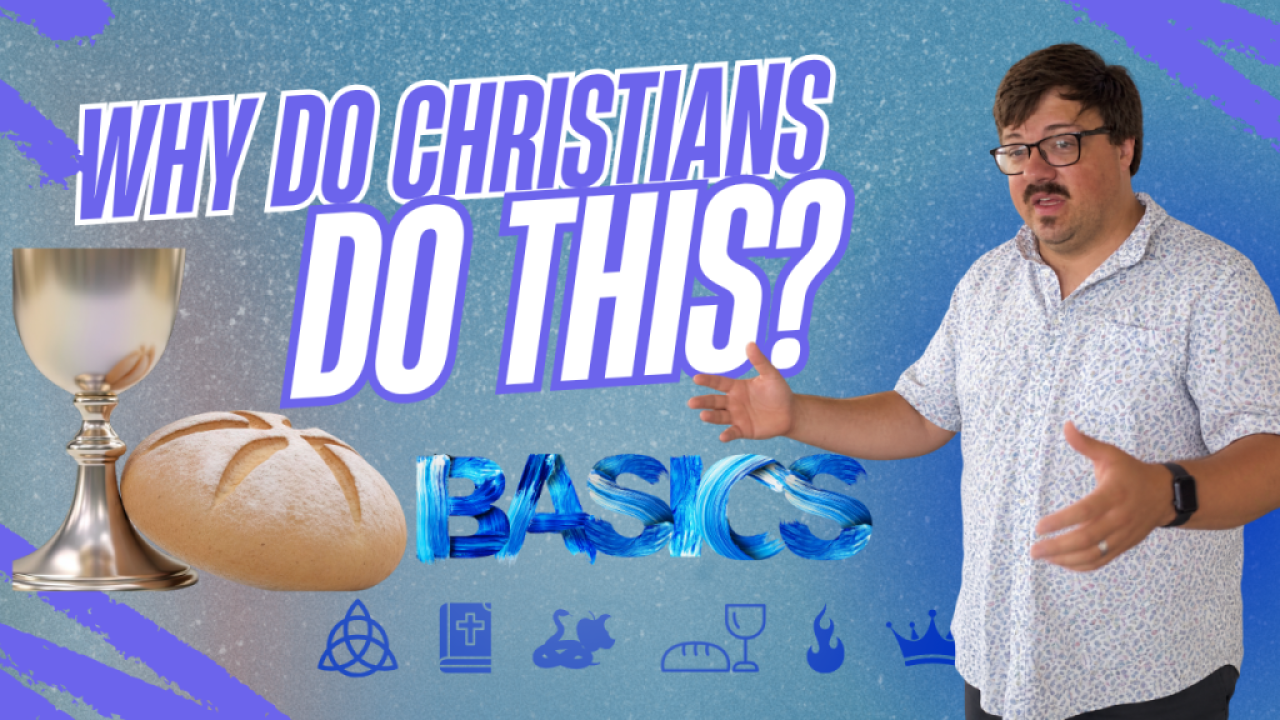
If you have spent much time in church, you have probably experienced Communion in some form. Bread and juice are brought out, a prayer is offered, we eat, we drink, and the service continues. But why? Why has the Church continued this practice for nearly 2,000 years? Why did Jesus choose bread and a cup? Is Communion simply something Christians do to remember Jesus, or is something deeper happening when we gather at His table? In Part 15 of our BASICS series, Assistant Pastor Dan Robinson explores what Scripture teaches about Holy Communion and why this sacred meal continues to matter for followers of Jesus today.
Watch the Sermon
What Is Holy Communion?
Holy Communion is one of two sacraments, and the Church’s ongoing act of thanksgiving and remembrance by which we participate in Jesus’ death and resurrection. It is also known as the Lord’s Supper, because Jesus instituted it and is its host, and the Eucharist, a name rooted in the idea of thanksgiving. Whatever name we use, Communion is a sacred meal given by Jesus Christ to His Church.
Paul gives us one of the clearest biblical descriptions of Communion in his first letter to the Corinthians:
For I received from the Lord what I also passed on to you: The Lord Jesus, on the night he was betrayed, took bread, 24 and when he had given thanks, he broke it and said, “This is my body, which is for you; do this in remembrance of me.” 25 In the same way, after supper he took the cup, saying, “This cup is the new covenant in my blood; do this, whenever you drink it, in remembrance of me.” 26 For whenever you eat this bread and drink this cup, you proclaim the Lord’s death until he comes.
1 Corinthians 11:23–26
Communion was not an idea the early Church came up with later. Jesus intentionally gave this meal to His disciples on the night before His crucifixion. He took ordinary elements—bread and the cup—and connected them to what He was about to do on the cross.
That means Communion is much more than a religious tradition or a small snack near the end of a church service. When we come to the table, we remember Jesus Christ: His body given for us, His blood shed for us, His death for our sin, and His victory that gives us life.
Why Is Communion a Sacrament?
The Free Methodist Church recognizes two sacraments instituted by Christ: Baptism and Holy Communion. A sacrament is a sacred action through which something physical and visible points us toward an invisible spiritual reality.
In Baptism, there is water. In Communion, there is bread and the cup. These are ordinary, tangible things. We can see them, touch them, and taste them. Yet God has chosen to use these physical actions in the spiritual lives of His people.
We are physical beings, so God gives us tangible things to do as Christians. We are also spiritual beings, and God graciously uses these physical actions as a means through which He gives grace. Through the sacraments, we learn to imitate Jesus and become participants in His story.
Recognizing Communion as a sacrament keeps us from treating it casually. Jesus gave His disciples this meal on the night before His suffering and death and told them to do it in remembrance of Him.
And he took bread, gave thanks and broke it, and gave it to them, saying, “This is my body given for you; do this in remembrance of me.”
Luke 22:19
Communion takes us back to the cross. It reminds us that Christianity is built on something God has actually done. Jesus gave His body for us. His blood was shed for us. He died for our sin, defeated death, and gave us life.
The bread and juice matter because Jesus chose them, but ultimately they point beyond themselves. Communion is about Jesus.
Why Do Christians Take Communion?
Paul’s teaching in 1 Corinthians shows us several important reasons Christians regularly receive Communion. At the table, we remember what Christ has done, proclaim the Gospel, examine our hearts, and experience our unity as the body of Christ.
We Remember
Jesus tells His followers to receive Communion in remembrance of Him.
and when he had given thanks, he broke it and said, “This is my body, which is for you; do this in remembrance of me.”
1 Corinthians 11:24
Remembering is deeper than simply recalling the fact that Jesus died. The cross should never become so familiar to us that we stop being moved by what happened there. Communion deliberately brings the reality of Christ’s sacrifice back to the center of our lives.
Humanity was consumed by sin and separated from God, yet the only perfect One to ever live took upon Himself the sin of the world. Jesus willingly gave Himself for us. When we receive Communion, we remember that the cross is not merely an event from ancient history. Christ’s death was for us. His sacrifice is the reason forgiveness, reconciliation, and new life are possible.
We Proclaim
Communion also makes a proclamation.
For whenever you eat this bread and drink this cup, you proclaim the Lord’s death until he comes.
1 Corinthians 11:26
Communion is a sermon without a pulpit. Every time the Church eats the bread and drinks from the cup, we proclaim the central truths of the Christian faith: Christ died. Christ rose. Christ saves. Christ is coming again.
Together, those truths tell the story of the Gospel. We remember a Savior who gave His life for us, celebrate a Savior who defeated death, trust the Savior who rescues us from sin, and look forward to the return of our King. Communion is therefore not merely something we receive. Through this simple meal, the Church continues to tell the story of Jesus.
We Examine Ourselves
Communion also calls us to look inward.
Everyone ought to examine themselves before they eat of the bread and drink from the cup.
1 Corinthians 11:28
That instruction can easily be misunderstood. Examining ourselves does not mean asking, “Am I perfect enough to receive Communion?” If perfection were the requirement, none of us could approach the table.
Instead, we should ask, “Am I willing to bring my sin honestly before Jesus?”
Communion should produce reflection and repentance. It gives us an opportunity to stop, examine the posture of our hearts, and invite the Holy Spirit to reveal what needs to be surrendered to God.
Sin can be uncomfortable to confront. We may hide it from other people or convince ourselves that because no one else knows about it, it does not matter. But Christ knows our hearts. We do not need to hide from Him.
The Communion table is not a reward for people who have everything together. We come because we need the grace of Jesus.
We Experience Unity
Communion also reminds us that Christianity is not simply about “me and Jesus.”
Is not the cup of thanksgiving for which we give thanks a participation in the blood of Christ? And is not the bread that we break a participation in the body of Christ? 17 Because there is one loaf, we, who are many, are one body, for we all share the one loaf.
1 Corinthians 10:16–17
Paul connects the one bread with the one body. Communion is not merely me and Jesus; it is us and Jesus. Jesus did not die only to reconcile isolated individuals to God. He created a people, a family, and a body.
When we receive Communion together, we are reminded that we belong to something larger than ourselves. We are connected to the people beside us, but we are also connected to followers of Jesus around the world who gather at the same table.
Different churches may worship differently. Christians come from different cultures, nations, backgrounds, and traditions. Yet in Christ, we are one body.
Communion Is a Means of Grace
Free Methodist doctrine describes the sacraments as a means of grace through faith. Through them, God works within believers to “quicken, strengthen, and confirm” our faith.
This does not mean that eating the bread and drinking the cup saves us. Communion is not a religious transaction in which performing the right action earns salvation or favor from God. It means God has graciously given His Church tangible practices through which He ministers His grace to His people.
We do not come to the table because we have earned grace. We come because we need grace.
That distinction matters. Grace, by definition, cannot be earned. There is nothing we can do or say to deserve the never-ending grace God has for His people. Yet God continually provides a way for us to draw near to Him. Communion is one of those ways.
As we come in repentance and faith, Communion strengthens us to continue trusting and following Christ.
What Happens to the Bread and the Cup?
Jesus’ words at the Last Supper have led to centuries of discussion among Christians about exactly what happens in Communion.
And he took bread, gave thanks and broke it, and gave it to them, saying, “This is my body given for you; do this in remembrance of me.”
20 In the same way, after the supper he took the cup, saying, “This cup is the new covenant in my blood, which is poured out for you
Luke 22:19–20
There are several major ways Christian traditions have understood these words.
Transubstantiation, traditionally associated with Roman Catholic theology, teaches that the substance of the bread and wine becomes the actual body and blood of Christ, even though the outward characteristics of bread and wine remain the same.
Consubstantiation or sacramental union, often discussed in connection with Lutheran theology, holds that the bread and wine remain bread and wine while Christ’s body and blood are truly present with them.
The Free Methodist understanding is described here as real spiritual presence. We do not teach that the elements literally transform into Christ’s physical body and blood, nor do we affirm the literal bodily presence of Christ “with” the elements. But neither do we treat Communion as an empty symbol.
We affirm the real presence of Christ in the sacrament. Christ’s body is received in a “heavenly and spiritual manner” through faith. The bread and cup remain bread and the fruit of the vine, but Christ truly meets His people at His table through the Holy Spirit, and we receive Him by faith.
Communion is therefore more than remembering something that happened long ago. The risen Christ meets His people at His table as we receive by faith.
Why Bread and Grape Juice?
The simplest reason we use bread and the fruit of the vine is because these are the elements Jesus chose. But Scripture also gives them rich meaning.
Bread was ordinary in Jesus’ day, but it was a staple of life. Jesus Himself used bread to describe who He is:
Then Jesus declared, “I am the bread of life. Whoever comes to me will never go hungry, and whoever believes in me will never be thirsty.
John 6:35
The broken bread points toward the body of Christ given for us. The cup points toward His blood poured out for our salvation and connects Communion with the biblical idea of covenant.
Moses then took the blood, sprinkled it on the people and said, “This is the blood of the covenant that the Lord has made with you in accordance with all these words.”
Exodus 24:8
That covenant language appears again when Jesus gives the cup to His disciples:
20 In the same way, after the supper he took the cup, saying, “This cup is the new covenant in my blood, which is poured out for you.[a]
Luke 22:20
Methodists have historically become associated with the use of unfermented grape juice for Communion, in part because of the Methodist connection to the temperance movement and pastoral concerns surrounding alcohol. The important distinction, however, is not the fermentation. The fruit of the vine represents Christ’s blood in the new and everlasting covenant.
The elements themselves are simple. Their significance comes from the One who gave them to us and what they proclaim about Him.
Who Can Receive Communion?
The Wesleyan and Free Methodist tradition practices an open table. This means you do not need to be a Free Methodist or a member of Open Arms Community Church to receive Communion.
But an open table does not mean a meaningless table.
The invitation is for those who truly and earnestly repent of their sins, seek to live in love and charity with their neighbors, and intend to follow Christ and draw near to Him through faith. This posture is deeply connected to Paul’s instruction that we examine ourselves before receiving Communion.
You do not need to have your entire life together. You do not need to pretend you have conquered every struggle. You do not need to reach some spiritual level where you no longer need grace.
Quite the opposite. If you recognize that you need Jesus, are willing to repent of your sins and turn toward Him, and desire to trust and follow Him, His table is exactly where you should be.
Age alone is not the defining issue, either. If someone can understand and articulate that Jesus loves them, Jesus died for them, they trust Jesus with their life, and the bread and cup remind us of what Jesus has done, those are the important pieces for understanding what it means to come to the table.
The table is open because grace is a gift. But we should never approach that gift casually.
Communion Looks Back, Within, Around, and Forward
One helpful way to bring all of this together is to consider the directions in which Communion asks us to look.
Communion Looks Back
We look back to the cross. Jesus told us to do this in remembrance of Him. We remember His body given for us and His blood shed for us. We remember the price of our salvation and the love that took Jesus to the cross.
Communion keeps us rooted in what Christ has already done. Our hope does not rest in our ability to save ourselves or make ourselves worthy of God. It rests in the finished work of Jesus Christ.
We remember what Christ has done.
Communion Looks Within
We examine our hearts. We invite the Holy Spirit to show us where sin has taken root, where repentance is needed, and where we have resisted God. We do not do this to determine whether we have finally become good enough for Jesus. We do it because honest repentance is part of drawing near to Him.
At the table, we acknowledge our need and open ourselves again to the grace God is giving us.
We receive what Christ is doing.
Communion Looks Around
We recognize the Church. There is one loaf because we who are many have been made one body in Christ. The people around us are not simply other individuals attending the same service. In Christ, they are family.
The table reminds us that following Jesus was never meant to be an individual pursuit. We belong to Christ, and through Christ we belong to one another.
We recognize who Christ has made us.
Communion Looks Forward
Finally, Communion points toward the future. Paul tells us that when we eat the bread and drink the cup, we proclaim the Lord’s death until He comes.
We are not merely waiting around to see what happens next. We anticipate the return of Christ. There is hope and expectation in anticipation. We anticipate the things we long for because we believe something good is coming.
Every celebration of Communion therefore points beyond itself. We remember the cross, but we also look toward the day when Christ returns.
We anticipate what Christ has promised to do.
Come to the Table
Holy Communion is much more than bread and juice. It is more than a church tradition we continue simply because Christians before us did it. Jesus gave this meal to His Church, and every time we gather at His table we are brought again to the heart of the Gospel.
We remember His sacrifice. We proclaim His death and resurrection. We examine our hearts. We experience our unity with His Church. We receive His grace through faith, and we look with hope toward His return.
So when you approach the Communion table, do not rush through the moment. Look back at the cross. Look honestly within your heart. Look around at the family Christ has created. Look forward to the return of the King.
We do not come because we have earned a place at His table. We come recognizing how desperately we need His grace.
We remember what Christ has done. We receive what Christ is doing. We recognize who Christ has made us. And we anticipate what Christ has promised to do.