Looking for things to do in Bradford, PA this summer? Open Arms Community Church is excited to offer a series of Summer Fun Nights designed for students ages 11–18 and their families.
Instead of our regular weekly youth gatherings, we’re spending the summer making memories together through outdoor adventures, bonfires, water games, community events, and family-friendly activities throughout Bradford and McKean County.
Whether you’re already connected to Open Arms or you’re simply looking for family activities in Bradford PA, we’d love to have you join us.
Summer Fun Nights Schedule
June 14 – Marilla Walk & Picnic
Kick off the summer with a walk through the beautiful Marilla area followed by a picnic and time together.
Meet at Open Arms Community Church at 6:00 PM.
Transportation is available from the church, or families are welcome to drive separately and meet us there.
June 28 – Bonfire Night
Join us for an evening around the fire with hot dogs, s’mores, games, and great conversation.
This event is being hosted together with our Sunday Dinner Microchurch and is open to students, families, and young adults.
Location: 869 W. Washington Street Bradford, PA
Need a ride? Meet at the church at 6:00 PM.
July 19 – Water Fun Day
Beat the summer heat with water games, fun activities, and plenty of laughs.
Meet at Open Arms Community Church at 6:00 PM.
Bring clothes you don’t mind getting wet.
July 30–31 – Super Summer VBS
Our annual Super Summer VBS is one of the highlights of the year.
Kids and families can expect exciting activities, Bible lessons, games, music, and opportunities to build friendships.
More details will be announced soon.
August 1 – Super Summer Block Party
The celebration continues with our community-wide Super Summer Block Party.
This free event includes food, activities, entertainment, and fun for the entire family.
August 16 – Ice Cream Social
We’ll wrap up the summer with a trip to Foster Brook Creamery for ice cream and fellowship.
Meet at Open Arms Community Church at 6:00 PM if you’d like transportation.
Looking for Teen Activities in Bradford PA?
Many families struggle to find safe, positive activities for teenagers during the summer months. Youth Summer Fun Nights provide opportunities for students to build friendships, grow in their faith, and connect with caring adults in a welcoming environment.
Students do not need to be regular attenders of Open Arms Community Church to participate.
Friends are welcome.
About Open Arms Community Church
Open Arms Community Church is located at 71 Congress Street in Bradford, Pennsylvania.
Our mission is simple: Real people helping people become more like Jesus as a family.
We offer services every Sunday at 9:00 AM and 11:00 AM, along with programs for children, youth, adults, and families throughout the week.
If you’re looking for a church in Bradford PA or searching for family-friendly events this summer, we’d love to meet you.
For more information, contact Pastor Zoe Hatcher at zoe@oachurch.com.
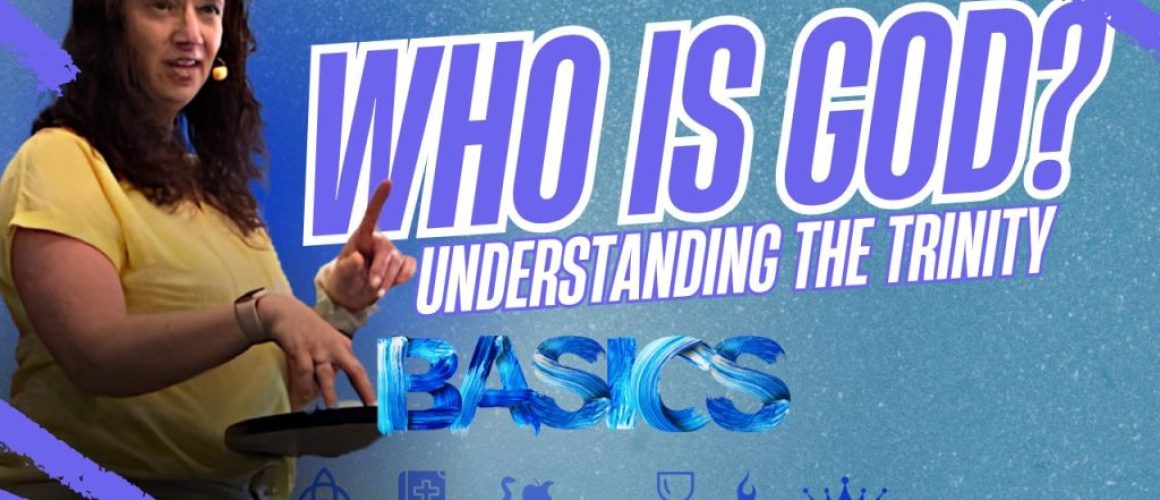
As we begin our new summer series, Basics, we’re tackling some of the biggest questions of the Christian faith. When people hear words like theology, doctrine, or catechism, it’s easy to assume the conversation will become complicated or overwhelming. But at its core, Christianity is built on foundational truths that every believer can understand and every seeker can explore.
This week, Pastor Zoe Hatcher begins at the most important place possible: Who is God? While entire libraries have been written on this subject, understanding who God is provides the foundation for everything else we believe. On Trinity Sunday, we explore one of the most important doctrines of the Christian faith—the Trinity—and discover why knowing God as Father, Son, and Holy Spirit changes everything.
Watch the full message below:
The Most Important Question
Every worldview attempts to answer the same basic questions.
Why are we here?
What is the purpose of life?
What happens after we die?
But before we can answer any of those questions, we have to answer a more foundational one:
Who is God?
The Christian answer is both simple and profound.
God is the Holy Trinity.
Father.
Son.
Holy Spirit.
Three persons.
One God.
This truth can feel difficult to understand at first, but it is one of the most important realities revealed in Scripture.
Dear brothers and sisters, I close my letter with these last words: Be joyful. Grow to maturity. Encourage each other. Live in harmony and peace. Then the God of love and peace will be with you. Greet each other with a sacred kiss. All of God’s people here send you their greetings. May the grace of the Lord Jesus Christ, the love of God, and the fellowship of the Holy Spirit be with you all. 2 Corinthians 13:11-14 (NLT)
One God in Three Persons
The Trinity teaches that God exists eternally as three distinct persons who share one divine nature.
The Father is God.
The Son is God.
The Holy Spirit is God.
Not three gods.
One God.
Three persons existing together in perfect unity and harmony.
A helpful picture is a musical chord.
When three notes are played together, they create a single chord. Each note is distinct, yet together they produce one unified sound.
The Trinity is infinitely greater than any illustration, but it gives us a glimpse of how God can be both three and one at the same time.
The Father, Son, and Holy Spirit have always existed.
They were never created.
There was never a moment when one existed without the others.
They have always lived in perfect relationship with one another.
Before Creation, There Was Love
One of the most beautiful implications of the Trinity is this:
Before there was a universe, there was love.
Before there were people.
Before there were angels.
Before there was time itself.
There was the loving relationship between the Father, Son, and Holy Spirit.
This is why Scripture can confidently say:
Dear friends, let us continue to love one another, for love comes from God. Anyone who loves is a child of God and knows God. But anyone who does not love does not know God, for God is love. God showed how much he loved us by sending his one and only Son into the world so that we might have eternal life through him. This is real love—not that we loved God, but that he loved us and sent his Son as a sacrifice to take away our sins. Dear friends, since God loved us that much, we surely ought to love each other. No one has ever seen God. But if we love each other, God lives in us, and his love is brought to full expression in us. 1 John 4:7-12 (NLT)
God is love.
Love requires relationship.
Love requires someone to give and someone to receive.
Because God exists eternally as Father, Son, and Holy Spirit, love is not something God learned.
Love is who He is.
The very foundation of reality is not power.
It is not chaos.
It is not chance.
It is love.
As C.S. Lewis observed, if God were only a single person, then before creation there would have been no one for Him to love. But because God exists eternally as Father, Son, and Holy Spirit, love has always existed.
The Trinity Is Everywhere in Scripture
One common objection is that the word “Trinity” never appears in the Bible.
That’s true.
The word itself isn’t found in Scripture.
But the reality of the Trinity appears throughout the entire biblical story.
At Creation
The Trinity appears on the very first page of Scripture.
In the beginning God created the heavens and the earth. The earth was formless and empty, and darkness covered the deep waters. And the Spirit of God was hovering over the surface of the waters. Then God said, “Let there be light,” and there was light. Genesis 1:1-3 (NLT)
In the beginning the Word already existed. The Word was with God, and the Word was God. He existed in the beginning with God. God created everything through him, and nothing was created except through him. The Word gave life to everything that was created, and his life brought light to everyone. The light shines in the darkness, and the darkness can never extinguish it. John 1:1-5 (NLT)
God the Father creates.
The Spirit hovers over the waters.
The Son, the Word of God, is present and active in creation.
The Trinity is present from the very beginning.
At Abraham’s Tent
Later, Abraham encounters three mysterious visitors.
The Lord appeared again to Abraham near the oak grove belonging to Mamre. One day Abraham was sitting at the entrance to his tent during the hottest part of the day. He looked up and noticed three men standing nearby. When he saw them, he ran to meet them and welcomed them, bowing low to the ground. Genesis 18:1-2 (NLT)
Many Christians throughout history have seen this moment as a glimpse of the Trinity revealed to Abraham.
The Lord appears, yet Abraham encounters three distinct persons.
At Jesus’ Birth
The Trinity is present in the miraculous conception of Jesus.
All three persons are involved in the incarnation of Christ.
At Jesus’ Baptism
One of the clearest pictures of the Trinity appears at the beginning of Jesus’ public ministry.
One day when the crowds were being baptized, Jesus himself was baptized. As he was praying, the heavens opened, and the Holy Spirit, in bodily form, descended on him like a dove. And a voice from heaven said, “You are my dearly loved Son, and you bring me great joy.” Luke 3:21-22 (NLT)
Jesus stands in the water.
The Holy Spirit descends like a dove.
The Father speaks from heaven.
All three persons are present at the same time.
After the Resurrection
The Trinity continues to work together after Jesus rises from the dead.
The Trinity remains central to God’s plan even in the final pages of Scripture.
I am the Alpha and the Omega, the First and the Last, the Beginning and the End.” Blessed are those who wash their robes. They will be permitted to enter through the gates of the city and eat the fruit from the tree of life. Outside the city are the dogs—the sorcerers, the sexually immoral, the murderers, the idol worshipers, and all who love to live a lie. “I, Jesus, have sent my angel to give you this message for the churches. I am both the source of David and the heir to his throne. I am the bright morning star.” The Spirit and the bride say, “Come.” Let anyone who hears this say, “Come.” Let anyone who is thirsty come. Let anyone who desires drink freely from the water of life. Revelation 22:13-17 (NLT)
The Father, Son, and Spirit continue their work of inviting people into God’s kingdom.
The invitation remains:
“Come.”
The Father, The Son, and The Spirit
Throughout Scripture, a consistent pattern emerges.
The Father is the source.
The Son is the way.
The Holy Spirit is the power.
The Father initiates.
The Son accomplishes.
The Holy Spirit applies and empowers.
Together they accomplish the work of creation, redemption, and restoration.
Jesus summarized this beautifully in the Great Commission.
Then the eleven disciples left for Galilee, going to the mountain where Jesus had told them to go. When they saw him, they worshiped him—but some of them doubted! Jesus came and told his disciples, “I have been given all authority in heaven and on earth. Therefore, go and make disciples of all the nations, baptizing them in the name of the Father and the Son and the Holy Spirit. Teach these new disciples to obey all the commands I have given you. And be sure of this: I am with you always, even to the end of the age.” Matthew 28:16-20 (NLT)
Believers are baptized in the name of the Father, the Son, and the Holy Spirit because all three persons of the Trinity are involved in our salvation.
The Trinity and Prayer
One way to understand the Trinity is through prayer.
When believers pray, they approach the Father.
They do so through Jesus Christ.
And they are empowered by the Holy Spirit.
The Father is above us.
Jesus stands beside us.
The Holy Spirit lives within us.
All three persons working together so we can have a relationship with God.
The Trinity isn’t just a doctrine to understand.
It’s the reality believers experience every day.
Why This Matters
The Trinity isn’t a theological puzzle to solve.
It’s the answer to who God is.
God is not distant.
God is not lonely.
God is not impersonal.
God is Father, Son, and Holy Spirit.
Perfectly united.
Perfectly loving.
Perfectly good.
And this triune God invites us into relationship with Him.
The God who existed before creation now welcomes us into His family through Jesus Christ.
That invitation remains open today.
What Is Your Next Step?
Maybe you’ve believed in God for years but never truly understood who He is.
Maybe you’ve thought of God as distant, unknowable, or disconnected from your life.
Or maybe today is the first time you’ve heard that God is inviting you into a relationship with Him.
The Father loves you.
Jesus made a way for you.
The Holy Spirit wants to fill and empower you.
If you’re ready to learn more about Jesus, ask questions, or connect with our church family, we’d love to meet you. Plan Your Visit
If Open Arms Community Church has encouraged you and you’d like to help us continue sharing the hope of Jesus in Bradford and beyond, Give Online
Open Arms Community Church
71 Congress Street Bradford, PA 16701
Join us Sunday mornings at Open Arms Community Church.
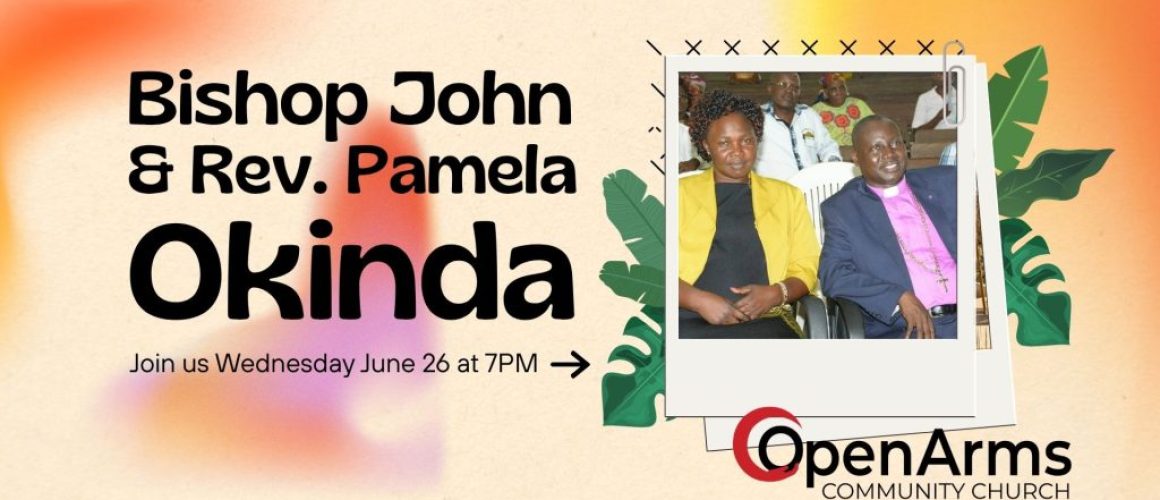
For many years, Open Arms Community Church has had the privilege of partnering with and supporting the Okinda family and their ministry in Kenya. Over the years, they’ve become far more than missionaries we support — they’ve become dear friends and an important part of our church family.
We’re excited to welcome them back to Open Arms Community Church on Wednesday, May 27 at 7PM for a special evening together.
Every time the Okindas visit, they bring encouragement, joy, perspective, and powerful reminders of what God is doing not only here in Bradford, PA, but all around the world. Their stories, faith, and heart for people have strengthened and inspired our church community many times through the years.
This won’t just be a “missions update.” It will be a chance to reconnect with friends, hear what God is doing in Kenya, worship together, and be encouraged as the global Church gathers together as one family.
Whether you’ve known the Okindas for years or you’ll be meeting them for the first time, we would love for you to join us for this meaningful evening.
Wednesday, May 27 at 7PM Open Arms Community Church 71 Congress Street Bradford, PA
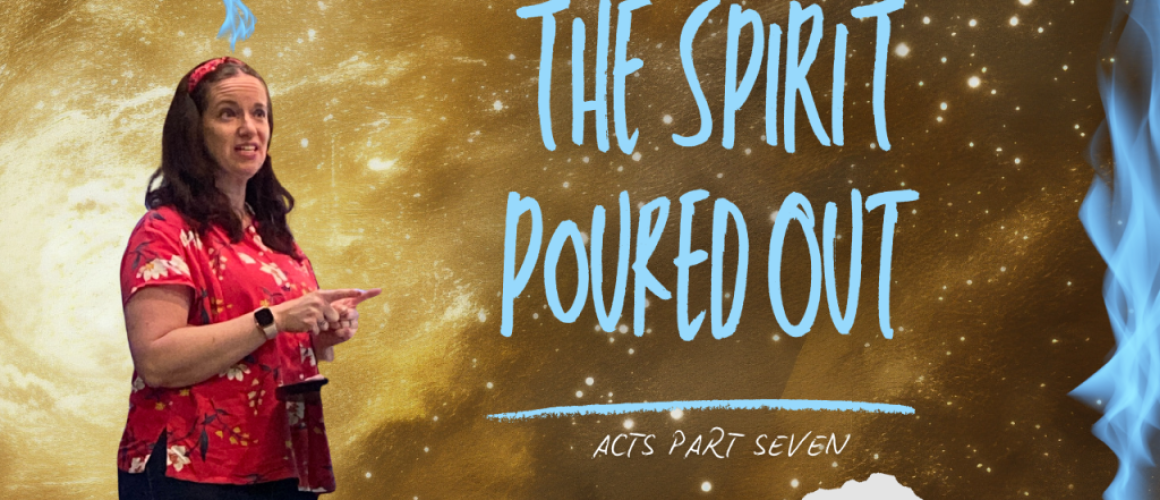
As we conclude our ACTS series, we arrive at one of the most significant moments in the history of the Church: Pentecost. For weeks, we’ve followed the disciples through the death, resurrection, and ascension of Jesus. They had seen miracles. They had witnessed the risen Christ. They had received His instructions. But now, ten days after Jesus ascended into heaven, something extraordinary happened.
The Holy Spirit was poured out.
What began as a Jewish festival celebrating God’s provision became the day God poured out His presence on His people in a new and powerful way. In this message, Pastor Zoe Hatcher explores what happened on Pentecost, what it means to be filled with the Holy Spirit, and why the Holy Spirit still makes all the difference in the lives of believers today.
Watch the full message below:
More Than a Festival
Pentecost was already an important celebration long before Acts chapter 2.
It was one of the major Jewish festivals, a time of thanksgiving for the harvest and a remembrance of God’s gift of the Law. People from all over the known world gathered in Jerusalem to celebrate together.
But on this particular Pentecost, God had something greater in mind.
What the crowds expected was a celebration.
What they received was an outpouring.
1On the day of Pentecost all the believers were meeting together in one place. 2Suddenly, there was a sound from heaven like the roaring of a mighty windstorm, and it filled the house where they were sitting. 3Then, what looked like flames or tongues of fire appeared and settled on each of them. 4And everyone present was filled with the Holy Spirit and began speaking in other languages, as the Holy Spirit gave them this ability. 5At that time there were devout Jews from every nation living in Jerusalem. 6When they heard the loud noise, everyone came running, and they were bewildered to hear their own languages being spoken by the believers. 7They were completely amazed. “How can this be?” they exclaimed. “These people are all from Galilee, 8and yet we hear them speaking in our own native languages! 9Here we are—Parthians, Medes, Elamites, people from Mesopotamia, Judea, Cappadocia, Pontus, the province of Asia, 10Phrygia, Pamphylia, Egypt, and the areas of Libya around Cyrene, visitors from Rome 11(both Jews and converts to Judaism), Cretans, and Arabs. And we all hear these people speaking in our own languages about the wonderful things God has done!” 12They stood there amazed and perplexed. “What can this mean?” they asked each other. 13But others in the crowd ridiculed them, saying, “They’re just drunk, that’s all!” Peter Preaches to the Crowd 14Then Peter stepped forward with the eleven other apostles and shouted to the crowd, “Listen carefully, all of you, fellow Jews and residents of Jerusalem! Make no mistake about this. 15These people are not drunk, as some of you are assuming. Nine o’clock in the morning is much too early for that. 16No, what you see was predicted long ago by the prophet Joel: 17‘In the last days,’ God says, ‘I will pour out my Spirit upon all people. Your sons and daughters will prophesy. Your young men will see visions, and your old men will dream dreams. 18In those days I will pour out my Spirit even on my servants—men and women alike— and they will prophesy. 19And I will cause wonders in the heavens above and signs on the earth below— blood and fire and clouds of smoke. 20The sun will become dark, and the moon will turn blood red before that great and glorious day of the Lord arrives. 21But everyone who calls on the name of the Lord will be saved.’
Acts 2:1-21
The followers of Jesus gathered together in obedience, waiting for what Jesus had promised.
Then suddenly everything changed.
A sound like a rushing wind filled the room.
Tongues of fire rested on each believer.
And they were filled with the Holy Spirit.
The Gift Behind Pentecost
The coming of the Holy Spirit wasn’t a random event.
Jesus had promised it.
For years, God’s people had lived under the Law. The Law was a gift from God that guided His people and revealed His standards.
But Pentecost introduced something new.
The Holy Spirit became the guide.
The Holy Spirit became the helper.
The Holy Spirit became the presence of God living within His people.
Instead of striving endlessly to fulfill the Law through human effort, believers were now empowered to follow God through the Spirit’s work in their lives.
The New Covenant didn’t simply offer forgiveness.
It offered transformation.
God wasn’t just giving people a new set of instructions.
He was giving them the power to live them out.
Filled to Overflowing
Many Christians talk about having the Holy Spirit.
But Pentecost introduces another important concept: being filled with the Holy Spirit.
The disciples had already received the Holy Spirit after the resurrection of Jesus.
That Sunday evening the disciples were meeting behind locked doors because they were afraid of the Jewish leaders. Suddenly, Jesus was standing there among them! “Peace be with you,” he said. 20As he spoke, he showed them the wounds in his hands and his side. They were filled with joy when they saw the Lord! 21Again he said, “Peace be with you. As the Father has sent me, so I am sending you.” 22Then he breathed on them and said, “Receive the Holy Spirit. 23If you forgive anyone’s sins, they are forgiven. If you do not forgive them, they are not forgiven.” John 20:19-23
When Jesus appeared to them, He breathed on them and said, “Receive the Holy Spirit.”
Yet in Acts 2, they experienced something more.
The Holy Spirit filled them in a powerful and visible way.
A helpful picture is a glass of water.
Most people would consider a glass full when it’s nearly full.
But God’s idea of fullness goes beyond the brim.
The Holy Spirit desires to fill believers until they overflow.
Not simply enough to get by.
Not enough for Sunday morning.
Enough to spill into every part of life.
The Spirit doesn’t want to merely occupy a corner of our lives.
He wants every part of us.
God’s Spirit Is for Everyone
One of the most important truths of Pentecost is that God’s Spirit is no longer limited to a select few.
In the Old Testament, the Spirit would come upon individuals for specific purposes.
Prophets.
Leaders.
Kings.
Judges.
But Pentecost changed everything.
God poured out His Spirit on all believers.
Men and women.
Young and old.
People from every nation.
People from every background.
People from every walk of life.
The promise wasn’t just for the disciples.
The promise wasn’t just for first-century believers.
The promise extends to all who call on the name of Jesus.
The Holy Spirit is not reserved for spiritual elites.
He is a gift available to every believer.
Why Did They Speak in Other Languages?
One of the most visible signs of Pentecost was that believers began speaking in languages they had never learned.
This wasn’t chaos.
This wasn’t confusion.
This was communication.
The people gathered in Jerusalem heard the message of God in their own languages.
The miracle wasn’t just that believers were speaking.
The miracle was that people could understand.
God chose ordinary believers to communicate an extraordinary message.
He didn’t shout from heaven.
He used His people.
The Holy Spirit empowered them to communicate the Gospel in a way that was compelling rather than repelling.
Thousands listened.
Thousands responded.
Thousands were saved.
The Holy Spirit wasn’t drawing attention to the speakers.
He was drawing attention to Jesus.
Spiritual Gifts Are Meant to Build the Church
Pentecost wasn’t simply about one supernatural moment.
It was the beginning of a Spirit-empowered Church.
The Holy Spirit gives gifts to believers.
Some are visible.
Some are quiet.
Some happen publicly.
Some happen behind the scenes.
But all of them have the same purpose.
To build up the Body of Christ.
To strengthen the Church.
To point people to Jesus.
Too often, Christians compare gifts.
Some gifts seem more impressive than others.
But Scripture never treats them that way.
Hospitality.
Serving.
Encouragement.
Leadership.
Mercy.
Teaching.
Giving.
Prayer.
Prophecy.
Healing.
Tongues.
All are gifts from the same Spirit.
All matter.
All are necessary.
And all are meant to glorify God rather than the person using them.
So I want you to know that no one speaking by the Spirit of God will curse Jesus, and no one can say Jesus is Lord, except by the Holy Spirit. 4There are different kinds of spiritual gifts, but the same Spirit is the source of them all. 5There are different kinds of service, but we serve the same Lord. 6God works in different ways, but it is the same God who does the work in all of us. 7A spiritual gift is given to each of us so we can help each other. 8To one person the Spirit gives the ability to give wise advice; to another the same Spirit gives a message of special knowledge. 9The same Spirit gives great faith to another, and to someone else the one Spirit gives the gift of healing. 10He gives one person the power to perform miracles, and another the ability to prophesy. He gives someone else the ability to discern whether a message is from the Spirit of God or from another spirit. Still another person is given the ability to speak in unknown languages, while another is given the ability to interpret what is being said. 11It is the one and only Spirit who distributes all these gifts. He alone decides which gift each person should have. One Body with Many Parts 12The human body has many parts, but the many parts make up one whole body. So it is with the body of Christ. 13Some of us are Jews, some are Gentiles, some are slaves, and some are free. But we have all been baptized into one body by one Spirit, and we all share the same Spirit.
1 Corinthians 12:3-13
The goal is never personal recognition.
The goal is unity and growth in the Church.
Don’t Put God in a Box
One of the greatest barriers to experiencing the Holy Spirit’s work is our desire to control Him.
We become comfortable with what we’ve seen before.
We expect God to work only in familiar ways.
We create categories for what feels safe.
But God has never been limited by human expectations.
The Holy Spirit cannot be reduced to a formula.
He cannot be controlled.
He cannot be boxed in.
He is still moving.
Still speaking.
Still empowering.
Still transforming lives.
The question isn’t whether God is willing to move.
The question is whether we’re willing to surrender.
Worship the Giver, Not the Gift
Whenever spiritual gifts become the focus, believers can miss the point.
The gifts themselves are not the destination.
The Holy Spirit always points beyond the gift to the Giver.
Every gift is meant to reveal God’s goodness.
Every gift is meant to glorify Jesus.
Every gift is meant to strengthen His Church.
The goal is never to become fascinated with spiritual experiences.
The goal is to become more like Christ.
The Holy Spirit doesn’t draw attention to Himself.
He points people to Jesus.
And when the Church remembers that, the gifts become a blessing rather than a distraction.
The Holy Spirit Wants More for You
Many believers settle for a spiritual life that feels mostly full.
Comfortable.
Predictable.
Manageable.
But God offers more.
The same Holy Spirit that filled the disciples at Pentecost still fills believers today.
The same Spirit that empowered the early Church still empowers the Church today.
The same Spirit that transformed fearful followers into bold witnesses still transforms lives today.
God doesn’t merely want to top off our spiritual lives.
He wants to fill us to overflowing.
Not so we can keep it to ourselves.
But so His life can overflow into others.
The invitation of Pentecost remains open.
Come thirsty.
Come hungry.
Come ready.
And receive what God desires to pour out.
What Is Your Next Step?
Maybe you’ve been trying to follow Jesus in your own strength.
Maybe you’ve believed in Him for years but never asked for a fresh filling of the Holy Spirit.
Maybe you’ve been settling for comfort when God is inviting you into something deeper.
The Holy Spirit is not distant.
He is not reserved for a select few.
He is God’s gift to every believer.
If you’re ready to learn more about Jesus, take your next step in faith, or connect with our church family, we’d love to meet you. Plan Your Visit
If Open Arms Community Church has helped you grow in your faith and you’d like to partner with us as we share the hope of Jesus in Bradford and beyond, Give Online
Open Arms Community Church
71 Congress Street Bradford, PA 16701
Join us Sunday mornings at Open Arms Community Church.
As our ACTS series continues, we come to one of the most pivotal moments in the history of the Church: the ascension of Jesus. For forty days after His resurrection, Jesus appeared to His disciples, teaching them about the Kingdom of God and preparing them for what would come next. Then, before their eyes, He ascended into heaven.
But while the disciples stood staring into the sky, angels asked a surprising question:
“Why do you stand here looking into the sky?”
In this message, Pastor Dan Robinson explores what that question means for believers today. The ascension wasn’t the end of Jesus’ mission—it was the beginning of the Church’s mission. And just like the disciples, many of us can become so focused on what we’re waiting for that we miss what God has already called us to do.
Watch the full message below:
Jesus Ascended, but the Mission Didn’t
The opening chapter of Acts records Jesus’ final moments with His disciples before His ascension.
Jesus reminded them that they would soon receive the power of the Holy Spirit and be His witnesses in Jerusalem, Judea, Samaria, and to the ends of the earth.
Yet even after everything they had witnessed—His teaching, miracles, death, and resurrection—the disciples were still asking whether Jesus was finally going to restore the kingdom to Israel.
They were looking for a political kingdom.
Jesus was preparing them for a spiritual mission.
After Jesus ascended, they stood staring into the sky until angels appeared and asked:
“Men of Galilee, why do you stand here looking into the sky?”
This wasn’t merely an observation.
It was a correction.
The disciples were focused on what they thought they had lost instead of what God was about to give them.
Looking Up Instead of Looking Out
The disciples believed Jesus would continue doing all the work.
Instead, Jesus was preparing them to carry the mission forward.
He had already taught them.
He had already commissioned them.
He had already shown them what it meant to proclaim the Gospel.
Now it was their turn.
The same challenge exists for believers today.
Many Christians spend their lives waiting for a sign, a perfect opportunity, or a dramatic moment of clarity before stepping into obedience.
We pray for God to remove every obstacle.
We wait for ideal circumstances.
We hope someone else will take responsibility.
But often, God has already given us the next step.
The disciples were looking in the wrong direction.
The mission wasn’t above them.
It was in front of them.
Ascension Is Not Absence
One of the most powerful ideas in this message is simple:
Ascension is not absence. It’s transition.
Jesus didn’t abandon His followers.
He prepared them.
Before His ascension, Jesus clearly explained what mattered most.
If Open Arms Community Church has encouraged you and you’d like to help us continue reaching people with the hope of Jesus in Bradford and beyond. Give Online
Open Arms Community Church
71 Congress Street Bradford, PA 16701
Join us Sunday mornings at Open Arms Community Church.
Women from across the Bradford area are invited to join us for a special Community Movie Night on Friday, May 29, at Open Arms Community Church in Bradford, PA.
Hosted by the Engage Prayer and EmpowHer microchurches, this evening is designed to create a welcoming space for women to gather, connect, and be encouraged through a powerful documentary-style film focused on healing, identity, and the love of a perfect Heavenly Father.
Many women carry wounds from broken relationships, rejection, abandonment, or difficult experiences growing up. This event is meant to offer hope, encouragement, and the reminder that no one has to walk through those struggles alone.
The evening will include pizza, popcorn, snacks, drinks, and time together with other women in a relaxed and supportive environment.
The featured film is appropriate for teen girls and adult women, though some sensitive themes are discussed. Parents are encouraged to use discretion for younger teens.
Event Details
Friday, May 29, 2026 6:30 PM Open Arms Community Church – Fellowship Hall 71 Congress Street Bradford, PA
Registration is encouraged but not required.
Whether you’re coming with friends, family, your microchurch, or walking in by yourself, you are welcome here.
If you’re looking for a church in Bradford, PA where you can find community, healing, and hope, we’d love to meet you.
As our ACTS series continues, we follow the early church beyond Jerusalem and into the wider world. After witnessing the martyrdom of Stephen and the persecution that scattered believers, we now see a transformed Paul boldly carrying the Gospel to the Gentiles. In Acts 17, Paul arrives in Athens, a city filled with idols, philosophy, and religious ideas. Rather than beginning with Jewish history, he meets people where they are and introduces them to the God they do not yet know. In this message, Pastor Zoe Hatcher explores Paul’s approach to evangelism, the unchanging message of Jesus Christ, and the incredible gift of the Holy Spirit who lives within every believer.
Watch the full message below:
The Altar to an Unknown God
As Paul walked through Athens, he noticed something fascinating.
The city was filled with objects of worship. The Athenians had gods for nearly everything imaginable. Yet among all their idols was one altar bearing a unique inscription:
“To an Unknown God.”
Paul saw an opportunity.
Rather than condemning them immediately, he used something familiar to start a conversation about the One True God.
The Athenians were afraid they might miss a god and lose out on blessings or incur judgment. Paul took that fear and redirected it toward truth.
The God they did not know was the God who created the world, gave them life, and was already closer than they realized.
How Paul Shared His Faith
Paul’s approach offers a powerful example for believers today.
Use Examples People Understand
Paul pointed to something already familiar to his audience.
He didn’t begin with a history lesson about Israel because that would have meant little to the people of Athens. Instead, he started with their altar to an unknown god.
He entered their world before inviting them into God’s.
When sharing faith today, people may not understand church language, theological terms, or Bible stories. But they understand everyday experiences, relationships, fears, hopes, and questions.
Like Paul, we can begin where people are.
Establish Common Ground
Paul also quoted one of their own poets.
“For in him we live and move and have our being.”
By doing so, he showed that he understood their culture and could connect their search for truth to the Gospel.
Paul knew enough about their worldview to speak their language.
He wasn’t compromising truth.
He was building a bridge.
Christians are called to understand the culture around them well enough to point people toward Jesus without losing the message itself.
Tell the Gospel Story
Paul didn’t stop with common ground.
Eventually, he brought people to a decision.
He spoke about repentance.
He spoke about Jesus.
He spoke about the resurrection.
He spoke about coming judgment.
The bridge led somewhere.
It led to Christ.
When we share our faith, we should do the same. We can start with relationships, stories, and common experiences, but eventually we must point people to Jesus.
Why Many Christians Don’t Share Their Faith
Research consistently shows that many believers hesitate to talk about Jesus because they don’t feel like they know enough about the Bible.
That fear is understandable.
But it cannot become an excuse.
Paul certainly knew Scripture, culture, and philosophy, but he also shared what he knew.
We don’t need a seminary degree to tell people what Jesus has done in our lives.
We simply need to be willing.
The more we grow in our understanding of Scripture, the more confident we become. But faith is not something we wait to share until we feel fully prepared.
If we wait until we know everything, we’ll never begin.
Religious People Can Still Miss Jesus
The Athenians were deeply religious.
But they didn’t know God.
That reality still exists today.
Many people talk about faith.
Many people identify as spiritual.
Many people even call themselves Christian.
Yet they may not actually know Jesus.
Paul understood that religion alone cannot save anyone.
People need a relationship with the living Christ.
That is why believers cannot assume that everyone understands who Jesus is or what He has done.
The Gospel must still be proclaimed.
God Is Revealed and God Is Near
One of the central truths in Paul’s message is that God is not hidden.
He has revealed Himself through creation.
The world around us points to a Creator.
The beauty of nature.
The complexity of life.
The order of the universe.
All of it points beyond itself.
But Paul goes even further.
Not only has God revealed Himself, He is also near.
God is sovereign and in control of all things, yet He is close and personal.
He is not distant.
He is not uninvolved.
He is not unaware of what is happening in our lives.
Too often people try to shape God into what they want Him to be.
But God does not conform to our expectations.
Instead, we are invited to know Him as He truly is.
If you’ve ever struggled to understand God, the answer is not to reinvent Him.
The answer is to ask Him to reveal Himself.
And He does.
The Gospel Is Accessible and Non-Negotiable
Paul adapted his approach for every audience he encountered.
He spoke differently to Jews than he did to Greeks.
He quoted Scripture to some audiences and poets to others.
But one thing never changed.
The message.
The Gospel is accessible.
It is available to everyone.
It can be understood by children and scholars alike.
But it is also non-negotiable.
The message of Jesus Christ never changes.
Cultures change.
Styles change.
Technology changes.
Church methods change.
But Jesus remains the same.
He is still the Way, the Truth, and the Life.
The Gospel is still the power of God for salvation.
This was not simply a replacement for Jesus’ physical presence.
This was the very presence of God dwelling within believers.
What the Holy Spirit Does
From Jesus’ teaching in John 14, we learn several powerful truths about the Holy Spirit.
The Holy Spirit:
Never leaves us.
Lives with us and in us.
Teaches us.
Reminds us of Jesus’ words.
Convicts us of sin.
Reveals God’s righteousness.
Announces God’s judgment on evil.
Guides us into truth.
Gives wisdom and insight.
Brings glory to Jesus.
Empowers believers to live faithfully.
The Holy Spirit is not merely a theological concept.
He is God’s active presence in the lives of believers.
Through faith, we have access to His power every day.
Love Is More Than a Feeling
Jesus makes an important statement in John 14.
“If you love me, keep my commands.”
Love is not merely emotion.
Love is expressed through obedience.
Many people wait until they “feel” spiritual before following God.
But biblical love works differently.
Love chooses obedience.
Love chooses commitment.
Love chooses faithfulness.
The feelings often follow.
Just as healthy relationships require commitment, our relationship with Jesus grows as we trust Him enough to follow where He leads.
Learning the Dance
The Christian life can sometimes feel confusing.
Jesus says we are in Him.
He is in the Father.
The Spirit is in us.
The Trinity can feel difficult to understand.
Yet Jesus never asks believers to master the mystery before following Him.
He simply invites them into relationship.
A helpful picture is that of a dance.
When learning to dance with an instructor, the student does not need to know every step in advance.
The instructor leads.
The student follows.
The Holy Spirit works the same way.
He teaches.
He guides.
He corrects.
He encourages.
Our role is not to lead.
Our role is to follow.
He knows the steps.
We simply need to trust Him enough to move when He moves.
The Holy Spirit Is Our Super Friend
The Greek word used for the Holy Spirit in John 14 is Parakletos.
It means one who comes alongside.
An advocate.
A comforter.
A helper.
A friend.
Unlike a distant memory of someone we once knew, the Holy Spirit actively speaks, guides, convicts, comforts, and encourages believers today.
Many people wonder whether they have ever heard God’s voice.
Often, the Holy Spirit speaks through thoughts that draw us toward obedience, forgiveness, love, truth, and righteousness.
He guides us toward Jesus.
He points us toward God’s will.
He speaks because He is alive.
The God Paul preached in Athens was not an idol made of stone.
He was not distant.
He was not unknown.
He was alive.
And through the Holy Spirit, He is still drawing people into relationship with Himself today.
What Is Your Next Step?
Maybe you’ve been treating God as someone distant or unknown.
Maybe you’ve had questions about Jesus but never taken the next step toward Him.
Or maybe you’ve been trying to follow God in your own strength instead of relying on the Holy Spirit He has given you.
The same God Paul proclaimed in Athens is still calling people to Himself today. He is not distant. He is not unknowable. He is inviting you into a relationship with Him.
Plan a Visit
If you’re ready to learn more about Jesus, ask questions, or connect with our church family, we’d love to meet you. Plan Your Visit..
Give Online
If Open Arms Community Church has encouraged you, helped you grow in your faith, or become a place you call home, consider partnering with us as we continue sharing the hope of Jesus in Bradford and beyond. Give Online.
Open Arms Community Church
71 Congress Street Bradford, PA 16701
Join us Sunday mornings at Open Arms Community Church.
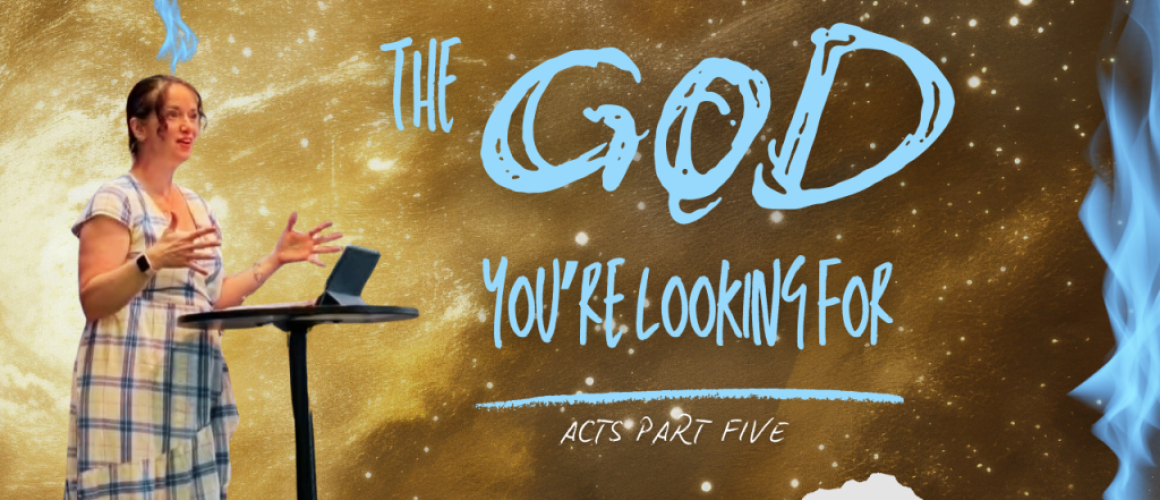
In this message from the Acts series, Pastor Zoe Hatcher continues exploring the early church as it begins to grow, multiply, and share the Good News—while also facing increasing opposition. In Acts Part 4: The Vision of Stephen, the focus turns to Stephen, a faithful servant and the first Christian martyr, whose life and death reveal what it means to be full of the Spirit and to stand boldly for truth, even at great cost.
When the Gospel Disrupts Everything
The early church was never promised an easy path. As the Good News spread, opposition followed quickly.
Stephen, a faithful Jew who became a devoted disciple of Jesus, was accused of blasphemy and brought before the religious council.
Then they secretly persuaded some men to say, “We have heard Stephen speak blasphemous words against Moses and against God.” Acts 6:11
Rather than defending himself, he turned the moment into a proclamation. He walked through the history of God’s people and revealed a hard truth—they had consistently resisted God, rejected His messengers, and failed to keep the law.
you who have received the law that was given through angels but have not obeyed it.” Acts 7:53
This wasn’t new. Each time the resurrection was proclaimed, conflict followed. Healing led to interrogation. Obedience led to persecution.
But this pattern reveals something important: simple obedience to God has the power to disrupt entire systems.
Where there is much fruit, there will also be opposition.
A Servant Who Changed Everything
Stephen wasn’t one of the apostles. He was a deacon—set apart to serve, specifically to care for widows and ensure needs were met within the church.
Yet it is no small detail that the first martyr of the church was not a preacher, but a servant.
His life proves something foundational: kingdom practice is just as important as kingdom preaching.
His authority didn’t come from position. It came from how he lived.
A Life Marked by Fullness
Stephen is described in Scripture with a repeated word: full.
Brothers and sisters, choose seven men from among you who are known to be full of the Spirit and wisdom. We will turn this responsibility over to them Acts 6:3
This proposal pleased the whole group. They chose Stephen, a man full of faith and of the Holy Spirit; also Philip, Procorus, Nicanor, Timon, Parmenas, and Nicolas from Antioch, a convert to Judaism. Acts 6:5
Now Stephen, a man full of God’s grace and power, performed great wonders and signs among the people. Acts 6:8
He was full of the Spirit, full of faith, and full of grace and power.
This wasn’t partial devotion. It was an integrated life—spirit, soul, and body fully surrendered to God.
This is what resurrection life looks like. Not just coming back to life physically, but living an entirely new life—marked by love, presence, and obedience.
A Vision in the Middle of Suffering
At the height of the confrontation, Stephen is given a vision.
But Stephen, full of the Holy Spirit, looked up to heaven and saw the glory of God, and Jesus standing at the right hand of God. 56 “Look,” he said, “I see heaven open and the Son of Man standing at the right hand of God.”
57 At this they covered their ears and, yelling at the top of their voices, they all rushed at him, 58 dragged him out of the city and began to stone him. Meanwhile, the witnesses laid their coats at the feet of a young man named Saul.
59 While they were stoning him, Stephen prayed, “Lord Jesus, receive my spirit.” 60 Then he fell on his knees and cried out, “Lord, do not hold this sin against them.” When he had said this, he fell asleep. Acts 7:55–60
As the crowd turns violent and begins to stone him, heaven opens. The glory of God is revealed, and Jesus is seen standing at the right hand of the Father.
This moment confirms three powerful truths:
The ascension—Jesus is alive and reigning with God
The empowerment—the Holy Spirit gives strength to stand in the face of persecution
The reign—nothing can stop the authority and mission of Christ
Even in suffering, God is present. Even in death, there is victory.
Forgiveness That Defies Death
In his final moments, Stephen responds in a way that mirrors Jesus.
Then he fell on his knees and cried out, “Lord, do not hold this sin against them.” Acts 7:60
Jesus said, “Father, forgive them, for they do not know what they are doing.” And they divided up his clothes by casting lots. Luke 23:34
Instead of anger, there is forgiveness. Instead of retaliation, there is mercy.
This reveals something deeper: the way death is faced reveals where life is rooted.
Because identity was secure in Christ, fear had no control.
The Call to Examine Ourselves
This story is not just about Stephen—it is a mirror.
It asks a hard question:
Are we standing firm like Stephen… or resisting truth when it challenges us?
Then he said to them all: “Whoever wants to be my disciple must deny themselves and take up their cross daily and follow me. Luke 9:23
The call of Jesus is clear—deny self, take up the cross, and follow daily.
In today’s world, it is easy to surround ourselves with voices that reinforce what is already believed. But this passage calls for something different—to listen with discernment, even when truth is difficult.
Because hard truths are often the ones that lead to transformation.
A Glimpse of What’s Coming
There is a small but significant detail in this moment—Saul is present.
He stands there watching, holding coats, approving what is happening.
But this same man will soon encounter Jesus. He will be transformed, and he will go on to face the same persecution he once supported.
In this moment, he is witnessing his future.
It is a reminder that God’s story is always bigger than what can be seen in the moment.
Jesus Prepares His Followers
This moment connects back to Jesus’ words to His disciples before His death.
“Do not let your hearts be troubled. You believe in God[a]; believe also in me. 2 My Father’s house has many rooms; if that were not so, would I have told you that I am going there to prepare a place for you? 3 And if I go and prepare a place for you, I will come back and take you to be with me that you also may be where I am. 4 You know the way to the place where I am going.”
Jesus the Way to the Father 5 Thomas said to him, “Lord, we don’t know where you are going, so how can we know the way?”
6 Jesus answered, “I am the way and the truth and the life. No one comes to the Father except through me. 7 If you really know me, you will know[b] my Father as well. From now on, you do know him and have seen him.”
8 Philip said, “Lord, show us the Father and that will be enough for us.”
9 Jesus answered: “Don’t you know me, Philip, even after I have been among you such a long time? Anyone who has seen me has seen the Father. How can you say, ‘Show us the Father’? 10 Don’t you believe that I am in the Father, and that the Father is in me? The words I say to you I do not speak on my own authority. Rather, it is the Father, living in me, who is doing his work. 11 Believe me when I say that I am in the Father and the Father is in me; or at least believe on the evidence of the works themselves. 12 Very truly I tell you, whoever believes in me will do the works I have been doing, and they will do even greater things than these, because I am going to the Father. 13 And I will do whatever you ask in my name, so that the Father may be glorified in the Son. 14 You may ask me for anything in my name, and I will do it. John 14:1–14
These words bring comfort, but they also prepare.
Jesus does not ask anything of His followers that He has not already endured Himself. He laid down His life—and He prepares His followers for the same reality.
But He also gives hope: there is more than this life. There is a place prepared.
And there is a promise.
The Way, the Truth, and the Life
In response to uncertainty, Jesus gives clarity.
Jesus answered, “I am the way and the truth and the life. No one comes to the Father except through me. John 14:6
He is the way—not just a path to follow, but a life to live. To follow Him means to embody His values, His posture, and His mission.
This truth is exclusive—but it is also an open invitation to all.
for all have sinned and fall short of the glory of God, Romans 3:23
Humanity carries both the image of God and the reality of sin. There is a need for a cure—and Jesus is that cure.
This truth is not meant to condemn. It is meant to invite.
An Invitation, Not a Weapon
Jesus never used truth to force or shame people into following Him.
He invited.
And that same posture is the model. Truth should be spoken boldly—but always with grace.
Because not everyone will receive it.
Stephen spoke truth in love—and it cost him his life.
The question is whether that kind of boldness still exists today.
God Has Space for You
At the heart of this message is a powerful reminder:
God has space.
My Father’s house has many rooms; if that were not so, would I have told you that I am going there to prepare a place for you? John 14:2
There is room in His house—for every person, every story, every unfinished life.
The gospel is both deeply personal and widely inclusive. A place is prepared individually, and yet there are many rooms.
Unexpected people become family.
There Is No Other Stream
The closing image brings everything into focus.
There is no other source of life.
No other path that satisfies. No other truth that saves.
Only Jesus.
The invitation remains:
Come and drink.
Not when everything is figured out. Not when life is cleaned up. Now.
Take Your Next Step
If this message spoke to you, don’t let it stop here.
There’s a lot happening at Open Arms right now—and it’s all moving us closer to what’s next.
Construction crews have been hard at work preparing the shaft for the new lift. This is a big step in making our building more accessible for everyone, and we’re excited to see the progress taking shape. The work is moving along well, and the lift installation is expected to be completed soon.
Please Help Us Keep Everyone Safe
While construction is underway, we need your help to keep everyone safe.
For the time being, please steer clear of all construction areas, including the sanctuary and overflow spaces. These areas are active work zones, and limiting foot traffic helps protect both our church family and the crews doing the work.
We’ll let you know as soon as those spaces are ready to be used again.
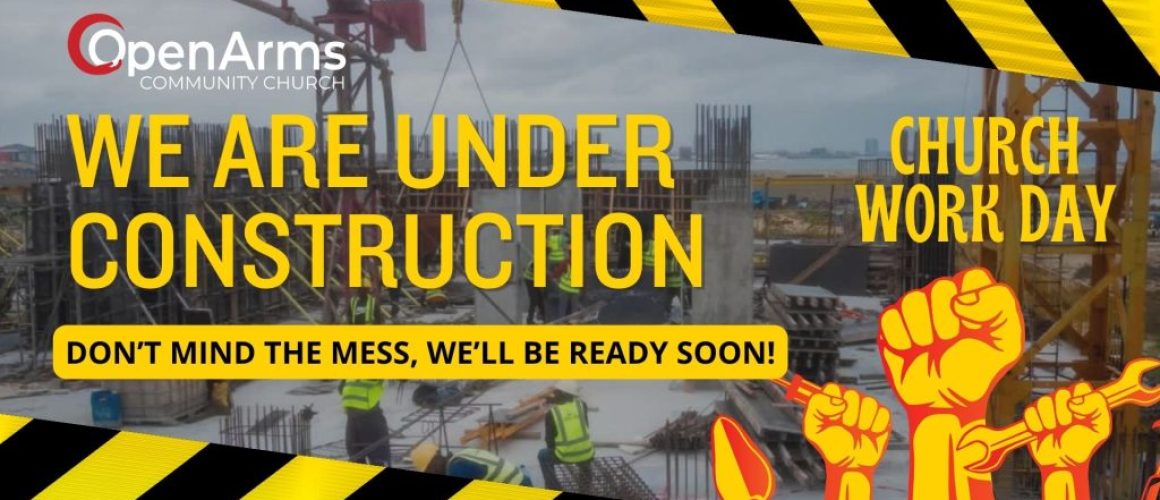
Church Work Day – This Saturday (April 25, 9 AM – 4 PM)
As we get closer to moving back into the sanctuary, we’re hosting a Church Work Day this Saturday, April 25, from 9:00 AM to 4:00 PM—and we’d love your help.
There are plenty of projects to tackle both inside the building and around the church grounds. Whether you can stay all day or just come for an hour or two, every bit of help makes a difference.
This is a great opportunity to:
Pitch in and be part of the process
Help prepare our spaces for what’s next
Connect with others as we work side by side
No special skills are required—just a willingness to jump in and help.
We’re grateful for the way our church family continues to show up, serve, and support one another through this season. The progress we’re seeing isn’t just about construction—it’s about creating space for people to encounter Jesus, find community, and grow.
If you have any questions about the project or the work day, feel free to reach out.
There are moments when the Church is invited to step outside its normal rhythm and seek God together in a deeper way.
This is one of those moments.
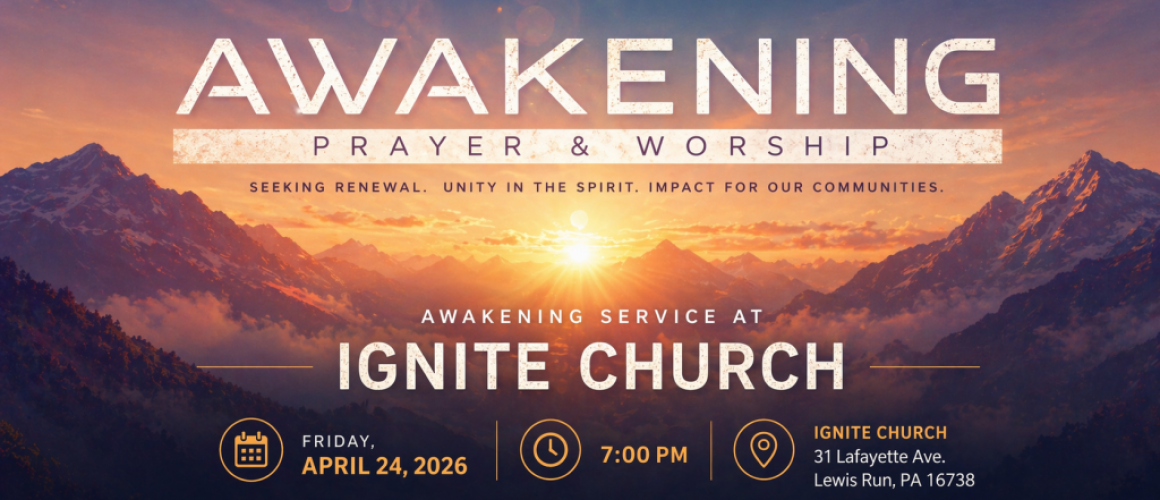
On Friday, April 24 at 7:00 PM, we’re inviting you to join us for an Awakening Service at Ignite Church — just a few minutes down the road from Bradford.
This isn’t just another event. It’s an intentional time to gather with other believers across our region to pray, worship, and ask God to move in a fresh way.
What Is an Awakening Service?
Across theFree Methodist Church USA, there’s a shared desire to see a Spirit-filled movement happening in our time—not just in isolated churches, but across entire regions.
Here in the Keystone Conference, churches have been crying out for that kind of renewal.
These Awakening Services are simple, but powerful:
Prayer for personal renewal
Prayer for our churches
Prayer for the communities God has called us to reach
No hype. No agenda beyond seeking God together.
Why This Matters for Us
At Open Arms Community Church, we talk a lot about being “real people helping people become more like Jesus as a family.”
But movements don’t happen in isolation.
They happen when the Church comes together in unity.
This night is an opportunity to:
Stand alongside other churches in our region
Worship together as one body
Ask God to do something bigger than any one church could do on its own
Our Worship Teams Are Coming Together
One of the things we’re especially excited about is that our worship team will be joining with the team from Ignite Church for this night.
That means this isn’t just attending something—it’s participating in something together.
Different churches. One voice. One purpose.
Event Details
Awakening Service at Ignite Church 📍 Ignite Church 📍 31 Lafayette Ave., Lewis Run, PA 16738 🗓 Friday, April 24, 2026 🕖 7:00 PM
Come Expecting Something
We’re not going to manufacture a moment.
But we are going to show up expectant.
Expecting that when people gather in prayer… When worship is lifted together… When hearts are open…
God moves.
Let’s Go Together
We don’t want this to be something you hear about afterward.
We want you there with us.
Make space in your schedule. Invite someone to come with you. And come ready to seek God alongside your church family and others across our region.
This is part of what God is doing—not just in one church, but across Bradford, Lewis Run, and beyond.